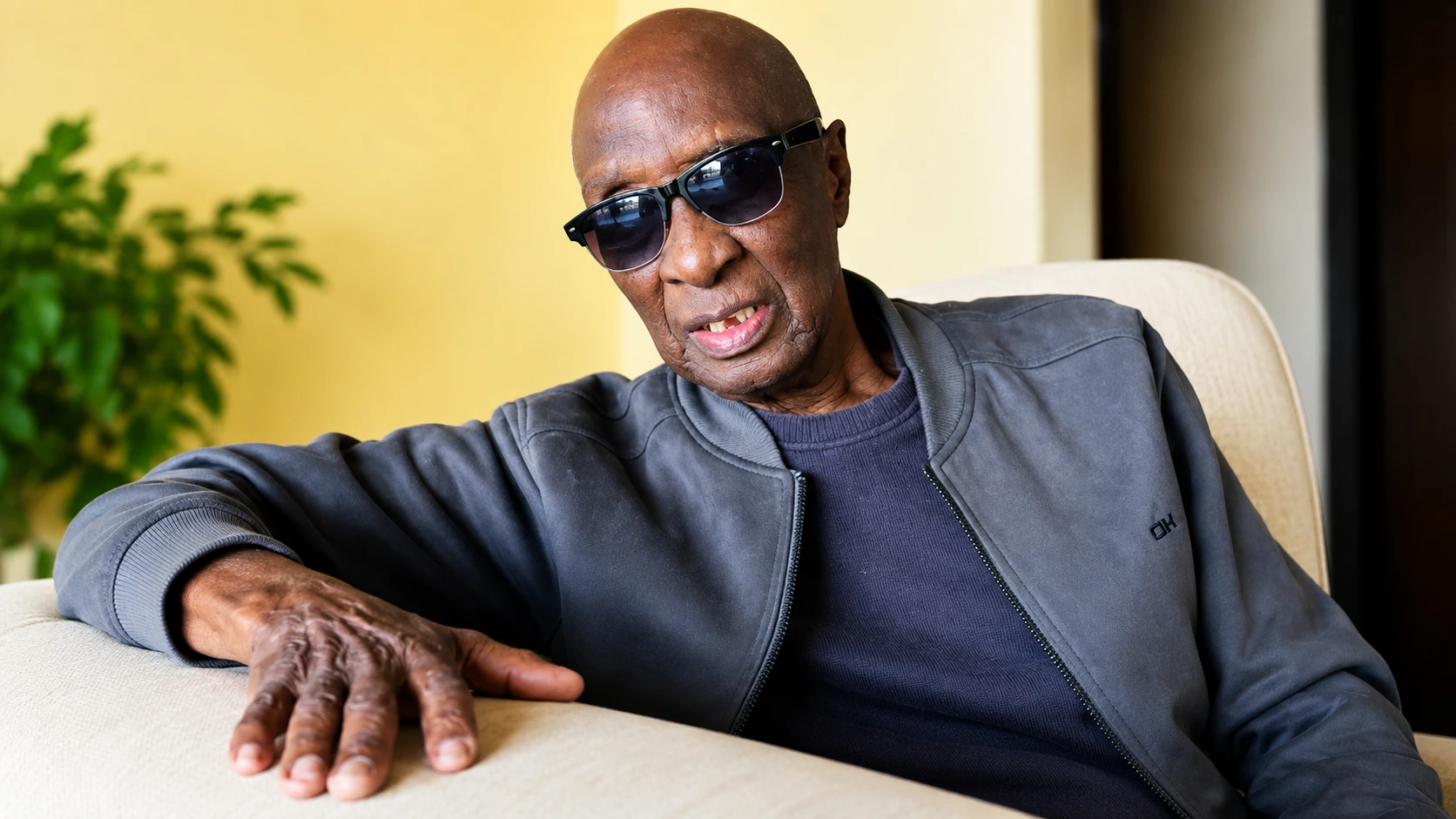
Some news stops you for a second. This morning, many of us felt that. Babsy Mlangeni has died at the age of 83, and the news broke on 2 October 2026. He had been ill for a short time.
If you grew up with the radio on, chances are his songs were already part of your life before you knew his name. That is what makes this so hard. It feels like losing someone who was always in the room.
Who Was Babsy Mlangeni?
His full name was Bernard Mlangeni, but the country knew him as Babsy. He was born in Orlando East, Soweto, in 1943. When he was only three, he lost his sight.
Think about what that meant in those days. Doors did not open easily for blind children. But music did open for him. He went to the Athlone School for the Blind in Cape Town, and that is where he learned to play the guitar.
From there, the rest is a story of grit. He became a singer, guitarist and composer, and he did it when blind musicians faced real barriers. It was never a simple road. He walked it anyway.
Many people simply call him a legend. The better description is this: he was a south african musician babsy mlangeni earned the right to be called, one song and one stage at a time.
A Career That Lasted More Than Five Decades
His career began in the 1960s. By the early 1970s, he had his big moment with Bua Nnete. That song put his name on the map and set the tone for what came next.
After that, the hits kept coming. These are the songs people keep naming in their tributes:
- Sala Emma
- Bua Nnete
- Botsotso
- Lonely Man
- Umadlembathini
You may see Sala Emma Botsotso written as one title in some reports. Others list them as two songs. Either way, if you know them, you know them.
The Southern African Music Rights Organisation, or Samro, called him an influential voice in South African music for nearly six decades. If you ever wondered how local artists get paid when their songs are played, the Samro website explains it in an easy way.
Music That Crossed Language Lines
Here is something special about Babsy Mlangeni. He recorded and performed in isiZulu, Sesotho and isiXhosa. That meant a listener in one part of the country could connect with a song even if it was not sung in their home language.
And the themes were easy to relate to. He sang about love and life, and about the times he lived through. You did not need a translator for that. You only needed a heart.
Gauteng MEC for Education, Sport, Arts, Culture and Recreation, Lebogang Maile, said the country has lost more than a gifted musician. He said Mlangeni’s voice became part of the soundtrack of generations, and that the music crosses generations, languages and communities. It remains a key part of our musical heritage.
Honoured More Than Once
He did not have to wait until the end to be appreciated. His work was recognised more than once, and it was never a polite pat on the back.
| Year | Honour |
|---|---|
| 2017 | Lifetime Achievement Award at the South African Music Awards |
| 2025 | Lifetime Achievement Award at the National Arts and Culture Awards |
Two lifetime achievement awards, eight years apart. That tells you the industry kept circling back to say thank you. If you want to learn how the national arts sector is supported, the Department of Sport, Arts and Culture is a good place to start.
A Song in the School Curriculum
This part gives me goosebumps. Bua Nnete was later included in South Africa’s Grade 10 to 12 music curriculum.
So a song that once played on the radio is now studied in classrooms. Learners sit down, listen and talk about it. That is a simple but powerful sign of respect. His music is not only remembered. It is taught.
Helping the Next Generation
Mlangeni did not keep his experience to himself. Reports say he mentored fellow visually impaired musician Steve Kekana.
That matters. Every industry needs people who reach back and pull others forward, especially artists who face extra hurdles. His influence did not stop at his own records. It lives on in the people he encouraged.
His Own Words in 2025
In a 2025 interview with 702, he spoke about growing up without sight. He talked about how hard it was and about the determination that carried him through.
He also said he believed he had been given a talent to make music that carried a message. When you think about his songs again, that makes sense. They were catchy, yes. But they were also honest, and they had something to say.
Tributes From Fans and the Industry
Social media filled up quickly. Many people wrote “Robala ka khotso, Ntate Babsy Mlangeni,” a Sesotho wish for peaceful rest.
One tribute, shared by Bhoza Mphela, called him a visionary music maestro. It said that even though he lived without sight, he shared his gift with the nation and reminded us that music is not only seen but felt deep in the soul. It ended with a thank you for the legacy.
Samro also sent its condolences, and messages from fans and officials kept arriving through the day. It is clear how many lives this one man touched.
Why His Legacy Matters
Plenty of artists have hits. Only a few become part of a country’s memory. Babsy Mlangeni was one of those few.
Here is why his story stands out:
- He overcame real barriers. He built a respected career when blind artists faced major obstacles.
- He sang across languages. His songs in isiZulu, Sesotho and isiXhosa brought people together.
- He lasted. More than five decades is a rare run in any music industry.
- He gave back. Mentoring younger artists helped build the next wave of talent.
- He was honoured. Two lifetime achievement awards show the respect he earned.
Few can claim all five. That is why the title south african musician babsy mlangeni carries so much weight for so many people.
How to Remember Him
The easiest way to honour a musician is to listen. Put on Bua Nnete or Umadlembathini, turn it up a little and let it play. Share it with someone younger who may not know his name yet.
You could also ask a parent or grandparent which song takes them back. Their answer might surprise you, and it is a simple way to keep the memories alive at home. His recordings are also easy to find on most music platforms.
Final Thoughts
The passing of Babsy Mlangeni at 83 closes a long and meaningful chapter in South African music. He was blind from childhood, yet he built a career that touched millions. He sang in several languages, earned top honours and helped younger artists find their feet.
Details about memorial arrangements had not been widely reported at the time of writing. Please look out for official announcements from his family and trusted news outlets.
For now, the best tribute is the music itself. Honest stories, a warm voice and a sound that felt like home. That is how we will remember him.
About the Author