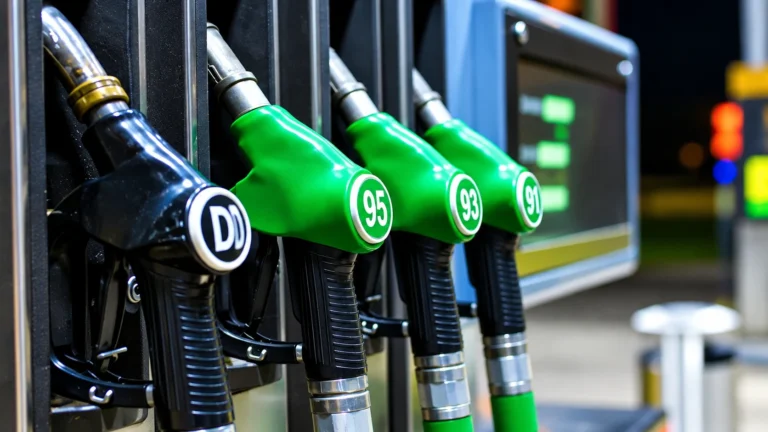
Good news is on the way for drivers. New mid month data shows a bigger petrol price cut for December than early figures suggested. The picture for diesel has also changed. This is an easy guide to what the numbers mean for fuel prices south africa motorists will see at the pump.
The latest numbers from the Central Energy Fund
The Central Energy Fund (CEF) tracks what it costs to import fuel and compares that with what is built into the pump price. When costs fall below what the pump price allows, the gap is called an over recovery. A big over recovery usually leads to a price cut.
At the midpoint of November, the numbers looked strong:
- Petrol 93 shows an over recovery of R3.06 a litre.
- Petrol 95 shows an over recovery of R3.31 a litre.
- Diesel 0.05% shows an over recovery of R1.15 a litre.
- Diesel 0.005% shows an over recovery of R1.54 a litre.
- Illuminating paraffin shows a drop of about R2.05 a litre.
This is a clear step up from the data we saw earlier in the month. Petrol was then sitting at around R2.44 and R2.73. Diesel was barely out of the red. Now the picture is much brighter.
Why the tax relief matters
Earlier this year, government agreed to cut part of the general fuel levy. This gave drivers some breathing room while prices were high. You can read more about the levy on the National Treasury website.
That help is now being scaled back. The reversal adds 50 cents a litre to petrol and R1.50 a litre to diesel in December. Think of it as a simple sum. The over recovery pushes the price down, and the returning tax pushes it back up. Whatever is left is the final change.
For petrol, the over recovery is big enough to swallow the extra tax and still leave a large cut. That is why the south africa december fuel price cut looks so solid.
What the table shows
Here is the easy way to see it. These are estimates based on mid month data, and they use November inland prices.
| Fuel type | November price (inland) | Over recovery | Tax relief added back | Likely change | December estimate |
|---|---|---|---|---|---|
| Petrol 93 | R29.87 | R3.06 | R0.50 | Cut of R2.56 | R27.31 |
| Petrol 95 | R30.24 | R3.31 | R0.50 | Cut of R2.81 | R27.43 |
| Diesel 0.05% | R30.85 | R1.15 | R1.50 | Rise of R0.35 | R31.20 |
| Diesel 0.005% | R31.60 | R1.54 | R1.50 | Cut of R0.04 | R31.56 |
Please note that these numbers leave out the slate levy and other monthly adjustments. They can still change before the end of the month.
Petrol drivers get the best deal
Petrol is the clear winner this time. A cut of more than R2.50 a litre is a big move in a single month.
Here is a simple example. Say you fill a 40 litre tank with 93 petrol. If the cut lands near R2.56 a litre, you would save about R102 on that one tank. Fill up a few times in December and the savings start to look real.
This comes just before the festive season. Many families will drive long distances to see loved ones. Cheaper petrol helps make those trips a little easier on the wallet.
Diesel is a mixed story
Diesel looks very different from petrol. The two types behave in different ways this time.
The 0.005% diesel is almost flat, with a tiny cut of about 4 cents a litre. This is the type most motorists with diesel cars and bakkies use. On a 40 litre tank, that saves you around R1.60. It is not much, but at least it is not a hike.
The 0.05% diesel is used mostly by industry. It is still on track for a rise of about 35 cents a litre. On the same 40 litres, that would cost around R14 more.
This matters beyond the pump. Businesses use diesel to move goods, and higher costs can slowly filter through to shop prices. A small rise is better than the R1 hike we saw in earlier estimates, but it is still worth watching.
Oil prices are doing the heavy lifting
The good news for petrol comes entirely from the global oil market. The price of Brent crude has fallen to around $96 a barrel. At the start of the month it was near $118.
Several things pushed the price down:
- Market mood improved after the US midterm elections. Traders hoped the war involving Iran would calm down and move closer to a deal.
- The International Energy Agency said global oil supply moved ahead of demand for the first time since the war began. It expects a surplus of around 2 million barrels a day this quarter.
- Saudi Arabia said its output rose to one of the highest levels in years in October.
- Saudi Arabia and the United Arab Emirates have lowered their official selling prices to win more market share.
- Goldman Sachs also flagged a likely glut of oil next year.
Goldman analysts noted that the risk premium in oil now looks low compared with the geopolitical risks that remain. In plain words, prices could jump again if the situation gets worse. Iran has said a path to ending the conflict is still open, but trust in the United States remains low.
The rand is working against us
Oil is only half the story. Fuel prices south africa drivers pay also depend on the rand against the dollar. Here the news is not so good.
The rand is trading at about R16.95 to the dollar. That is close to its weakest level since April. It has even tested a move towards R17.00. A weaker rand makes imported fuel more expensive, and it has eaten into some of the gains from cheaper oil.
Without the weaker rand, the cut at the pumps would have been even bigger.
Key dates to watch this week
Two events could move the rand, and so move fuel prices south africa will see later.
- Wednesday, 18 November: Statistics South Africa releases October consumer inflation data.
- Thursday, 19 November: The South African Reserve Bank announces its latest interest rate decision.
In September, the central bank raised rates by 25 basis points. It said price pressures linked to the war were still a worry. Rising fuel costs have been part of that story, so cheaper petrol could help ease some pressure in the months ahead.
Investors are also watching the coalition talks after the 2026 Local Government Elections. The rand tends to like stability. Any sign of trouble in the Government of National Unity could make markets nervous.
When will the final prices be confirmed?
The CEF numbers are a strong hint, but they are not the final word. The Department of Mineral and Petroleum Resources announces the official adjustment a few days before it takes effect. You can follow that announcement on the department’s website.
The new prices are expected to start on Wednesday, 2 December. Between now and then, oil and the rand can still swing from day to day. That means the final cut could end up smaller or bigger than today’s estimates.
Easy ways to save fuel
You cannot control the price on the pump, but you can control how much you use. These tips are simple and cost nothing.
- Check your tyre pressure. Soft tyres make your car work harder and burn more fuel.
- Combine your errands. One planned trip uses far less fuel than three short ones.
- Drive smoothly. Hard braking and fast starts waste petrol.
- Switch off the engine if you will be parked for a while.
- Clear out your boot. Extra weight means extra fuel.
You can start today, and the savings will show up by the end of the month.
What comes after December?
The fuel tax relief is due to end completely in January. When that happens, the full levy is expected to return. That could push prices up again, depending on what oil and the rand are doing at the time.
So if you are planning for the holidays, it makes sense to keep a small cushion for fuel. A simple plan now can save you stress later.
The bottom line
The latest data brings welcome news. The south africa december fuel price cut for petrol looks bigger than first expected, with 93 and 95 both set to fall by more than R2.50 a litre. Diesel is mixed. The 0.005% grade is almost flat, while the 0.05% grade may rise slightly.
Still, these are not final prices. Oil can move, and the rand is under pressure. Wait for the official announcement before you plan around exact numbers. Until then, keep an eye on the news and enjoy the good news while it lasts.
About the Author