
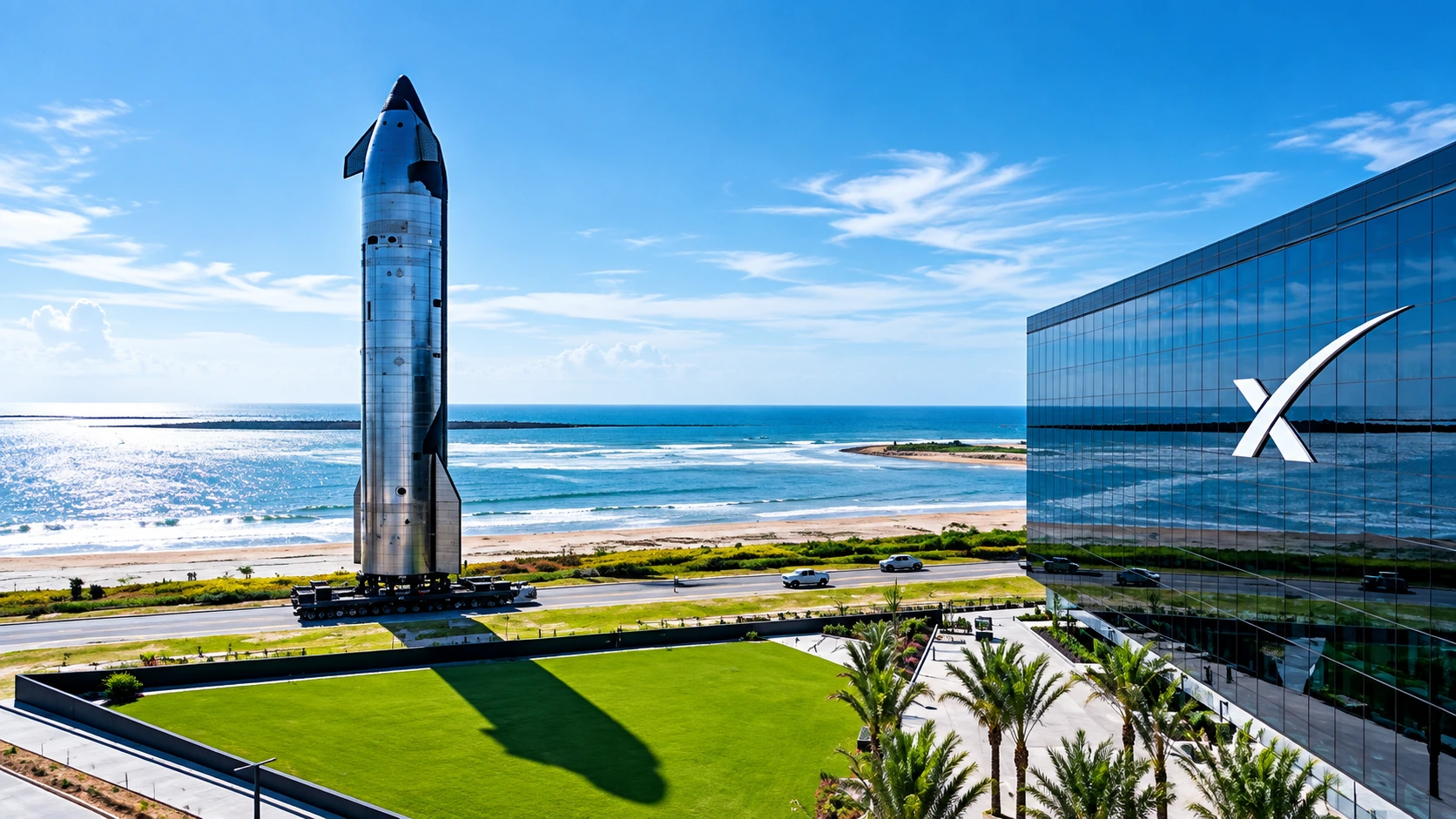
SpaceX is about to try something it has never done with Starship. The giant rocket is due to fly to orbit for the first time on Monday, 28 September 2026. The Starship launch is set for Texas, and South Africans can watch it in the afternoon.
What is happening and when
SpaceX plans to launch from its Starbase site in Texas. The launch window is 75 minutes long and opens at 8:15 a.m. US Eastern time. That is 7:15 a.m. in Texas.
The Federal Aviation Administration gave the launch and reentry licence on 26 September. This is the 14th Starship test flight. It is easy to see why so many people are watching.
Here is the timing for local readers:
| Location | Window opens |
|---|---|
| Texas, USA | 7:15 a.m. |
| GMT | 12:15 p.m. |
| South Africa (SAST) | 2:15 p.m. |
The window closes about 75 minutes after it opens, so it runs until roughly 3:30 p.m. in South Africa. Launches often slip because of weather or technical checks, so keep an eye on the official stream.
Why this flight is different
Until now, every Starship flight has been suborbital. The rocket went up, then came back down without circling Earth. Those flights each lasted about an hour.
This one aims much higher. The upper stage, called the Ship, is meant to enter orbit and circle Earth six times. The whole mission should take about 10 hours. It is due to end with a splashdown in the Pacific Ocean.
Starship is the biggest and most powerful rocket ever built. It stands about 124 metres tall when fully stacked. That is taller than a 35 storey building. It has two parts. The Super Heavy booster does the first push, and the Ship carries on into space.
The Starlink payload
The Ship will carry 26 new Starlink satellites to orbit. These belong to the next generation of the company’s internet network. If the flight works, it will be the first time Starship carries a real commercial payload to orbit.
Starlink matters a lot to SpaceX. It was the company’s biggest business and its only profitable segment in the second quarter. SpaceX has around 11,000 active satellites in orbit. Its competitor Eutelsat OneWeb has roughly 650.
Starship should make it cheaper and simpler to launch many satellites at once. That is the plan, anyway. Elon Musk has said Starlink could one day deliver most of the world’s internet in countries where it is allowed to operate.
South African readers may care about this more than most. Satellite internet is often discussed as a way to reach rural areas where fibre is hard to build. The regulator, ICASA, decides what services can operate here. A bigger and cheaper satellite network could change the options over time, but that is a long way off.
The booster will not be caught this time
Earlier flights showed a clever trick. SpaceX has caught the Super Heavy booster with giant mechanical arms on the launch tower. That will not happen on this flight.
The booster will instead fall into the Gulf of Mexico shortly after launch. Engineers still get plenty of data from that. The main focus this time is the Ship and its journey around the planet.
A bumpy record
Starship has flown 13 times since 2023. Nearly half of those flights ended in some kind of unplanned explosion. SpaceX treats these tests as a way to learn quickly. Still, a failure on this flight would be a very public setback.
An analyst quoted in coverage of the launch said that, from an engineering view, flying and getting data would count as a success. Investors and the public, she noted, expect something more dramatic. That pressure is real. SpaceX went public in June in the biggest IPO on record. The company is now valued at about $2 trillion.
There is also competition. A Chinese company has recently made progress with reusable rockets. The race to build cheaper launch systems is heating up.
Why the world is watching
Orbit is a simple test with big consequences. Getting there proves the rocket can do real work. Once Starship does that reliably, the next steps get closer.
NASA has picked the Ship to be the first crewed lunar lander for its Artemis programme. That is a major reason the space community follows every flight. A successful orbit does not put anyone on the Moon. It does show the vehicle is moving from testing towards actual operations.
The main goals for this flight are easy to list:
- Reach orbit with the Ship for the first time
- Deploy all 26 Starlink satellites
- Complete six trips around Earth
- Bring the Ship down safely in the Pacific Ocean
Each step is a hurdle. Even a partial success would give SpaceX useful information.
How to watch from South Africa
SpaceX streams its launches on its website and social media. Coverage usually starts about 30 minutes before liftoff. That means you could tune in around 1:45 p.m. South African time.
If you work during the day, a simple plan is to check the stream on your phone at lunch. Data costs can add up, so a Wi‑Fi connection is a smart choice.
For background on the space sector in our own country, the South African National Space Agency has clear, easy to read information at sansa.org.za. To understand how launch approvals work in the United States, the Federal Aviation Administration publishes details about its commercial space licensing.
What comes next
At the time of writing, the outcome of the flight was not confirmed. If Starship reaches orbit and drops off the satellites, expect SpaceX to move quickly. More flights and more Starlink launches would follow. If something goes wrong, engineers will study the data and try again. That pattern has repeated for three years.
Either way, this is a key moment for the rocket. It is also one of the easiest space events to follow this year. Just check the time, open the stream and watch.
About the Author