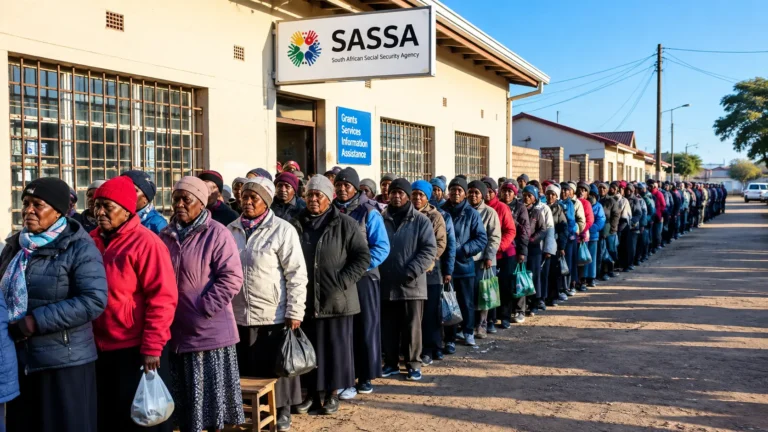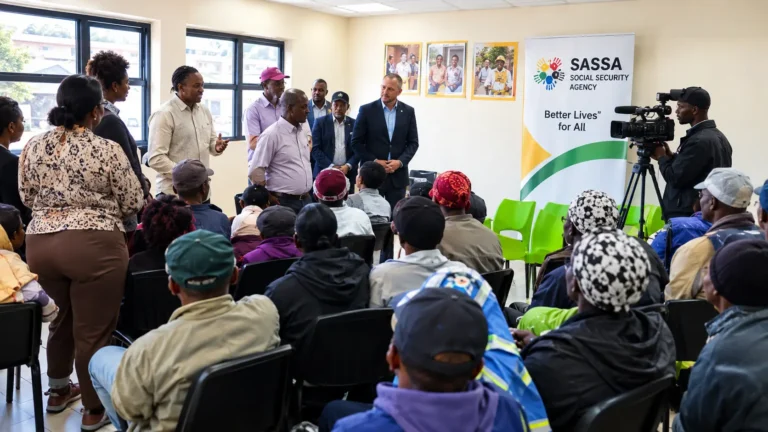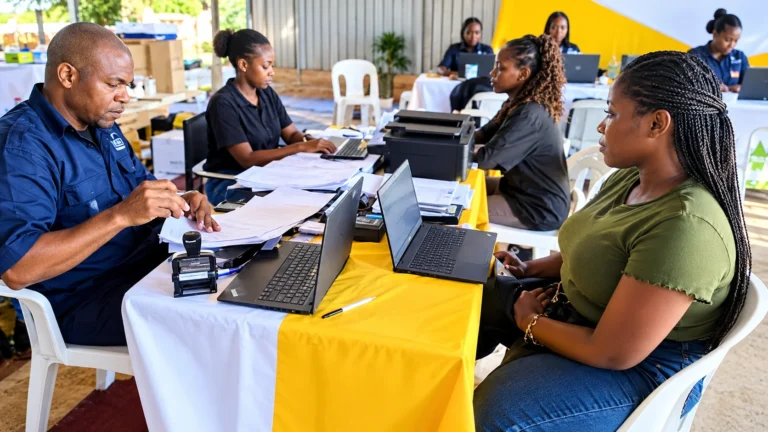
A bold proposal to lift South Africa’s social grants to at least R4,400 a month has sparked fresh debate about the country’s finances. If applied to the roughly 8.2 million people currently on the Social Relief of Distress (SRD) grant paid out by sassa, this would work out to R52,800 per person every year. Economists warn the state simply does not have the money to make this easy shift a reality.
The call comes from EFF leader Julius Malema, who raised the idea at the party’s Mpumalanga Provincial Manifesto Rally. He wants the higher amount to form part of a wider Basic Income Grant (BIG) for the country, funded by taxpayers and channelled through sassa as it is now.
But not everyone agrees this is a simple fix for poverty. Economist Dawie Roodt, chief economist at Efficient Group, has pushed back hard, calling the number “cheap politics” that the country’s tax base cannot support.
What The Numbers Actually Show
Roodt broke down the maths in an interview with Truth Report. South Africa already supports close to 28 million grant recipients across all its welfare programmes administered by sassa. Of these, about 8.2 million people receive the SRD grant, which government has said will form the base of a future BIG.
If that grant were raised to R4,400 a month for everyone on the SRD, sassa would need to find about R36.1 billion every month. Over a full year, that adds up to roughly R433 billion, and this figure does not even include the cost of running the programme or letting more people qualify.
Here is a simple breakdown of what the proposal would mean in cash terms:
| Item | Amount |
|---|---|
| Monthly grant per person | R4,400 |
| Yearly grant per person | R52,800 |
| Number of SRD recipients | 8.2 million |
| Total monthly cost | R36.1 billion |
| Total yearly cost | R433 billion |
Roodt says these figures make the plan impossible to fund right now, especially with the local economy still under pressure. “If we increase the grants to R4,400, then that’s going to break the bank without any doubt,” he said.
A Small Tax Base Carrying A Big Load
The core problem, according to Roodt, is that too few working South Africans are supporting too many grant recipients. He points out that only about 7.7 million taxpayers are funding 28 million people on grants paid through sassa nationwide. That is a heavy load for a shrinking group of contributors.
It gets more concentrated at the top too. Roodt notes that just 2.4% of South Africans pay 77% of all personal income tax collected in the country. In his view, this means the country has already hit the peak of what is known as the Laffer Curve, the point where pushing taxes any higher would actually discourage compliance and bring in less money overall, not more.
This is not a simple trade off. Raise taxes too far and revenue could fall. Leave grants too low and millions of vulnerable households struggle. It is this tension that sits at the heart of the current debate.
Treasury Adds Its Own Warning
The National Treasury has separately flagged how expensive it could be just to widen access to the SRD grant through sassa, without even raising the monthly amount. A recent High Court ruling could force government to remove some of the checks currently used to screen out ineligible applicants.
Treasury estimates this could push the number of qualifying beneficiaries from about 8.3 million up to as many as 18 million people. Simply keeping the grant amount in line with inflation while covering all these extra recipients could cost an additional R93.5 billion to R139 billion a year, on top of what government already spends. More detail on the country’s grant spending and fiscal planning is available on the National Treasury website.
Roodt’s Alternative: One Grant, Not Many
Despite his warnings, Roodt has not written off the idea of a Basic Income Grant altogether. He believes there is a smarter and more easy to manage way to structure it, all still run through sassa.
His suggestion is to scrap the various separate welfare grants South Africa currently runs and combine them into a single payment. Part of that payment would be cash the recipient can spend freely, while another part would come as vouchers, usable only for essentials like education and healthcare.
“If you approach it like that, we can get rid of all these other grants and combine them all into one single basic income grant,” Roodt explained. He believes this kind of restructuring could make the system more affordable while still giving people meaningful support.
Where Government Currently Stands
The Department of Social Development confirmed in June 2026 that work on a permanent Basic Income Grant is already underway. It has drafted a policy based on the SRD grant model administered by sassa, which was first introduced during the Covid pandemic and has been renewed every year since.
According to the department, the legislative process needed to turn this policy into law is expected to begin only in the 2027/28 financial year. That means any major changes to grant amounts are still some way off. Anyone wanting to check their own SRD status or grant details can visit the official sassa website.
How Many South Africans Rely On Grants
Fresh Ipsos polling shows just how deep this issue runs. Around four in ten South Africans depend on some form of social grant to get by. More strikingly, 52% of households across the country have either just one income earner or none at all.
Young people are especially affected. Among those aged 18 to 24, roughly 34% receive a grant, and 73% of that group say the SRD is their only or main source of income.
The divide between rural and urban areas is also clear. Grant dependence sits at 50% in rural communities, compared to 34% in metro areas. This gap shows just how unevenly the pressure on sassa and the wider social grant system is spread across the country, and why any decision on raising grants will not be a simple or quick one to make.
For now, the R4,400 figure remains a political proposal rather than confirmed policy. But it has reopened a national conversation about how South Africa balances the needs of millions of vulnerable citizens against the limits of its tax base.
About the Author