If you opened Google on Tuesday, 6 October, you may have spotted a small surprise. The Google Doodle for World Space Week 2026 places the Google logo over a shimmering cloud of gas and dust in deep space. It is a simple picture, yet it carries a big message about how far humans have come in space.
The celebration is already under way, and the Doodle is an easy way to remind millions of people about it. Here is what you need to know, explained in plain language.
What the Google Doodle shows
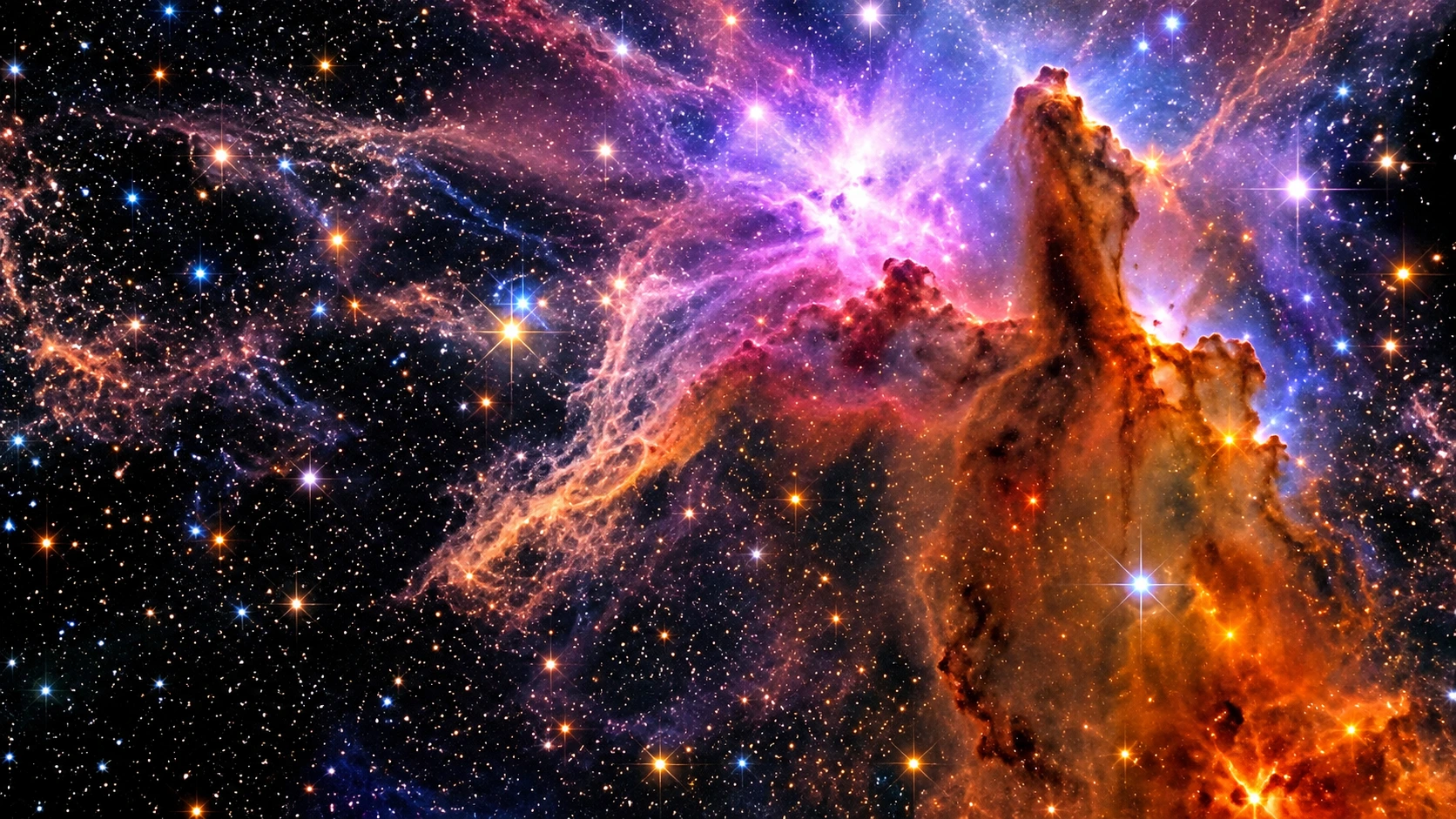
The artwork features the Google logo sitting on top of the Rosebud Nebula. The background image was captured by the James Webb Space Telescope, the powerful NASA observatory known for its sharp views of the universe. On the Google home page, the stars in the picture twinkle from time to time, which gives the scene a lively feel.
Google’s own notes on the Doodle explain the idea behind it. The design celebrates the technology behind astrophotography. In simple terms, astrophotography means taking pictures of objects in space, such as stars, planets and nebulae. It takes special cameras, large telescopes and a lot of careful science to make those images possible. The Doodle gives that hard work a moment in the spotlight.
Meet the Rosebud Nebula
The Rosebud Nebula sits about 3,300 light years from Earth. A light year is the distance light travels in one year, which is roughly 9.5 trillion kilometres. So the Rosebud Nebula is very far away, even by space standards.
It is described as a reflection nebula. That is a cloud of gas and dust that shines because it reflects the light of nearby stars. More than 130 young stars live inside this cloud. The clouds form a shape that looks like a rosebud that has not yet opened, which is how the nebula got its name. The dust in the cloud is warmed by those young stars, and that gives it a soft, rosy pink glow.
It is easy to see why the Webb team’s picture made a good Doodle. It looks beautiful, and it also shows how much detail modern space telescopes can capture.
The theme: Rocket Revolution
This year’s World Space Week 2026 runs from 4 October to 10 October. The theme is Rocket Revolution. It highlights the big leaps humans have made in spaceflight over the past decade and more.
The week also has a clear goal. It aims to bring together industry leaders, space agencies, schools and universities, students and everyday space fans from around the world. People take part through events, talks, classroom lessons and community activities.
Rockets are a fitting focus. They are the vehicles that carry satellites, telescopes and astronauts into orbit. Without them, there would be no weather satellites, no GPS signals on your phone and no images from space telescopes.
Why these dates matter
World Space Week is not a random choice of dates. The United Nations officially established it in 1999. The week marks two important moments in space history, and the table below keeps them simple to follow.
| Date | What happened | Why it matters |
|---|---|---|
| 4 October 1957 | The launch of Sputnik 1 | It was Earth’s first artificial satellite and opened the space age |
| 10 October 1967 | Signing of the Outer Space Treaty | It set the basic rules for the peaceful exploration of space |
The first date marks the start of humanity’s journey beyond Earth. The second marks an agreement on how countries should behave once they get there. Together, they explain why the week focuses on both discovery and cooperation.
Space news during the week
The Doodle arrives during a busy time for the space industry. This week, reports described how SpaceX launched a Google AI satellite on 1 October 2026. It flew on the Transporter 18 mission from the Vandenberg base in California, alongside 129 other payloads. That is a lot of cargo on a single rocket.
There was also big news for astronomy. NASA’s Roman Space Telescope recently lifted off on a SpaceX Falcon Heavy rocket, according to space news coverage. Roman is a new observatory built to study the universe in wide, detailed views.
These stories show what the “Rocket Revolution” theme is about. Reliable rockets and frequent launches make it easier to put useful machines into space. That means more satellites, more science and more pictures like the one on the Doodle.
Why this matters to South Africans
You might wonder why a Doodle about a nebula matters in South Africa. The answer is that our country has a strong place in the world of space and astronomy.
South Africa has its own national space agency, the South African National Space Agency (SANSA). It works on space science, Earth observation and satellite related services. You can read more about its work on the SANSA website.
Our country is also home to world class astronomy. The MeerKAT radio telescope in the Karoo is part of the global Square Kilometre Array project. The Southern African Large Telescope (SALT) at Sutherland is one of the biggest optical telescopes in the southern hemisphere. Many parts of the country also have dark skies away from city lights, which makes stargazing a joy.
So when Google puts a space image on its home page, it connects with something South Africans can be proud of. It also shows young learners that careers in science, technology, engineering and maths can lead to exciting work.
Easy ways to join in
You do not need a telescope or a science degree to take part in World Space Week 2026. Here are some easy ideas for this week.
- Look at the Doodle. Open Google and watch the stars shimmer around the logo.
- Learn about the Rosebud Nebula. Share the facts with friends or family. The “unopened rosebud” shape is a nice talking point.
- Visit the official website. The World Space Week Association shares information about the theme and events around the world.
- Plan a classroom activity. Teachers can ask learners to draw a rocket, build a paper model or research one space mission.
- Go stargazing. Find a dark spot away from bright lights, and look up. It is a simple habit that costs nothing.
- Talk to children about space. Ask what they would like to discover. Their questions are often the best starting point.
Even a few minutes of curiosity counts. The week is about sharing wonder, and that is easy to do with a phone, a picture and a good conversation.
The bigger picture
The Google Doodle may only be a small graphic, but it does a useful job. It turns a daily habit, opening a search page, into a moment to think about the universe. It also reminds us that the pictures we enjoy are the result of years of teamwork among engineers, scientists and launch crews.
The Rocket Revolution theme sums it up well. Over the past decade, rockets have become more frequent and more capable. They carry the tools that help us study stars, watch our weather and stay connected on Earth. Each launch builds on the one before it.
For South African readers, World Space Week 2026 is a good chance to look up, ask questions and learn something new. Whether you spend five minutes on the Doodle or a whole evening under the stars, you are joining a global celebration. The week ends on 10 October, so there is still plenty of time to take part.
About the Author