On Thursday morning, 22 October 2026, a man was beaten to death on a roadside in Durban. Police say about 50 people took part in the attack. He was declared dead at the scene.
He was believed to be in his late 30s or early 40s. Police haven’t said where he was from, only that he was a foreign national. A murder case has been opened.
The news has rattled a lot of people. It has also dragged the argument over illegal immigration back to the front of the national conversation. Let’s go through what we actually know, and what we don’t.
What police say happened
The KZN police spokesperson, Colonel Robert Netshiunda, shared the first details. A group was marching along Dr Pixley kaSeme Street towards Maud Mfusi Street. Two men reportedly split off from the crowd and walked up to a man standing at the side of the road.
After that, more people joined in. Police say about 50 in total were involved in the assault. By the time help arrived, it was too late.
According to police, the group was part of a bigger march against illegal immigration. They also say the motive is unknown. That matters. After something this shocking, it’s easy to guess and run with the guess. But guesses aren’t facts.
Detectives are chasing several leads and say they’re using every tool they have to find the people responsible. At the time of writing, no arrests had been announced.
Police also asked the public for one simple thing. Please don’t share unverified information. Old clips and false claims spread fast after incidents like this, and they can turn a tense day into a worse one.
Key facts at a glance
| Detail | What is known |
|---|---|
| Date | Thursday morning, 22 October 2026 |
| Place | Durban CBD, near Dr Pixley kaSeme Street |
| Victim | A man believed to be in his late 30s or early 40s |
| Nationality | Not shared by police |
| People involved | About 50 |
| Police action | Murder case opened, several leads followed |
| Motive | Not confirmed |
KAAX calls for arrests
Kopanang Africa Against Xenophobia, better known as KAAX, has condemned the killing. Its spokesperson, Dr Dale McKinley, wants those responsible arrested, and fast.
His point was blunt. A crime is a crime, whoever is involved. He also said police need to be on the ground whenever big marches take place.
McKinley didn’t hold back on the police either. In his view, officers often aren’t where they should be. Later, he said, the explanation is that they were overwhelmed or didn’t see it coming. He described that as a sign of weak law enforcement and told police to do their job without fear or favour.
Plenty of residents will nod along. A crowd can go from loud to violent in minutes. A visible police presence is the easy fix, at least on paper. Doing it is harder, but it’s what people expect.
A tense week in the city
This didn’t come out of nowhere. The day before, the group March and March ran a motorcade through Durban. Ride hailing drivers, vehicle owners and supporters joined in. It began at the Berea Centre, an area where many foreign nationals live.
Earlier on Thursday, protesters carrying sticks and knobkerries allegedly stormed a visa and permit office in Morningside. They left once police and private security showed up.
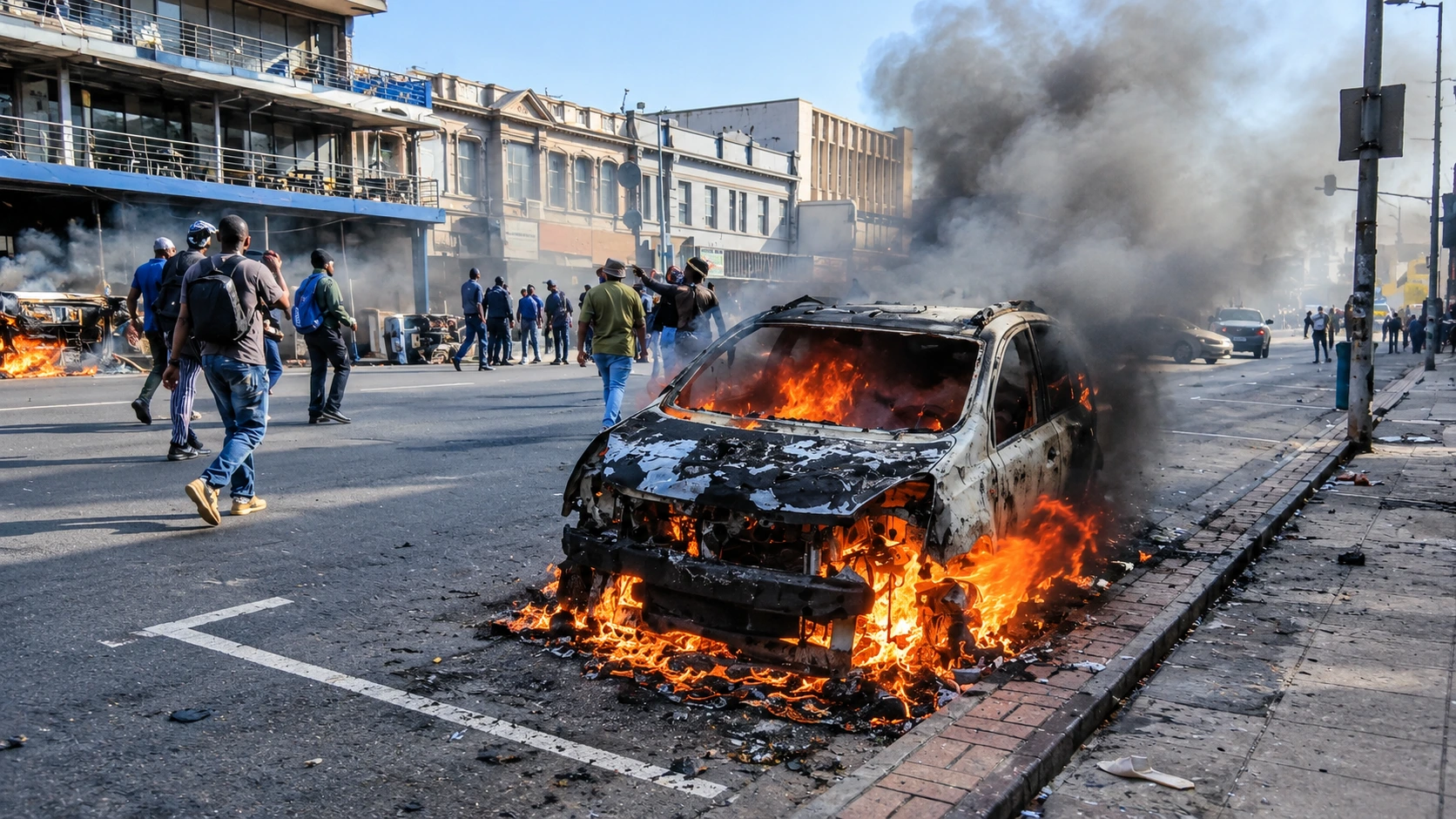
About two weeks ago, things got ugly too. During protests in Durban, shops owned by foreign nationals were looted and vehicles were set on fire. Three foreign nationals were arrested over an alleged assault on a protester. So the violence hasn’t been one sided.
Reports say defence force troops are still patrolling the city. That alone says a lot about how serious the mood has become.
Months of unrest across the country
The anger has been building for months. Thousands marched in Durban, Johannesburg and other cities around 30 June, a date that had been passed around as a deadline for undocumented migrants to leave. No such order ever came from government.
Earlier this year, a Malawian national was stoned to death during a march in Pietermaritzburg. KZN Premier Thami Ntuli called it senseless criminality. People can raise their concerns and march peacefully, he said, but no frustration excuses violence or mob justice.
President Cyril Ramaphosa has also condemned the attacks on migrants. He has admitted, though, that weak border control has let undocumented people enter and stay in the country. Both things can be true at once. Government may have a real problem to fix, and nobody gets to take the law into their own hands while it does.
What the law says
The Constitution protects the right to protest, as long as it’s peaceful and unarmed. It also protects the right to life, and that covers everyone in South Africa. Citizens, migrants, refugees, visitors, all of them.
Mob violence is a crime. Full stop. It doesn’t matter how angry the crowd is or what someone is accused of. If a person breaks the law, police and courts must deal with it. And people who join a group attack can be charged with serious offences, even if they never threw the final blow.
If you’re ever in a march that starts turning violent, the simple move is to walk away. It could save someone’s life. It could also keep you out of a murder case.
Why this matters for Durban
Durban is one of the busiest cities in the country. The CBD is packed with small shops, taxi ranks, offices and street traders. People from all sorts of backgrounds work next to each other every single day. When fear takes over, nobody wins.
Shop owners worry about looting. Workers worry about getting home. Foreign nationals worry about being targeted. Commuters worry about blocked roads. These worries are real, and they shape how people live and work.
Community leaders now have a tough job. They need to calm tempers and rebuild trust. Police need to restore order and show that killers will answer for what they did. And government needs to give clear answers on immigration policy, so frustration doesn’t keep spilling into the streets.
What readers can do
There are a few easy things ordinary people can do.
If you have information about the attack, contact the police or call Crime Stop on 08600 10111. The South African Police Service website also carries official updates and contact details.
Before you forward a video, voice note or message, check where it came from. If you can’t tell, don’t send it. Police have asked for exactly that.
If you believe someone’s rights have been abused, the South African Human Rights Commission takes complaints about discrimination and human rights violations. The process is simple, and anyone can use it.
And if a march turns dangerous, just leave. Quickly and safely.
What happens next
The investigation is still young. Police have to identify the attackers, confirm the man’s identity and nationality, and work out what triggered the assault.
The court process will take time. Families, communities and the whole country will be watching, and many people want to see justice done properly.
For now, one thing is clear. A man died on a Durban street, and about 50 people were part of it. Whatever the motive turns out to be, the rule is simple. Nobody has the right to kill another person.
South Africans have a long history of standing up against hatred and division, and this is another moment that asks for calm heads. The anger over jobs, crime and weak borders is real. But violence won’t fix any of it. It only leaves new victims, new grief and more fear.
About the Author