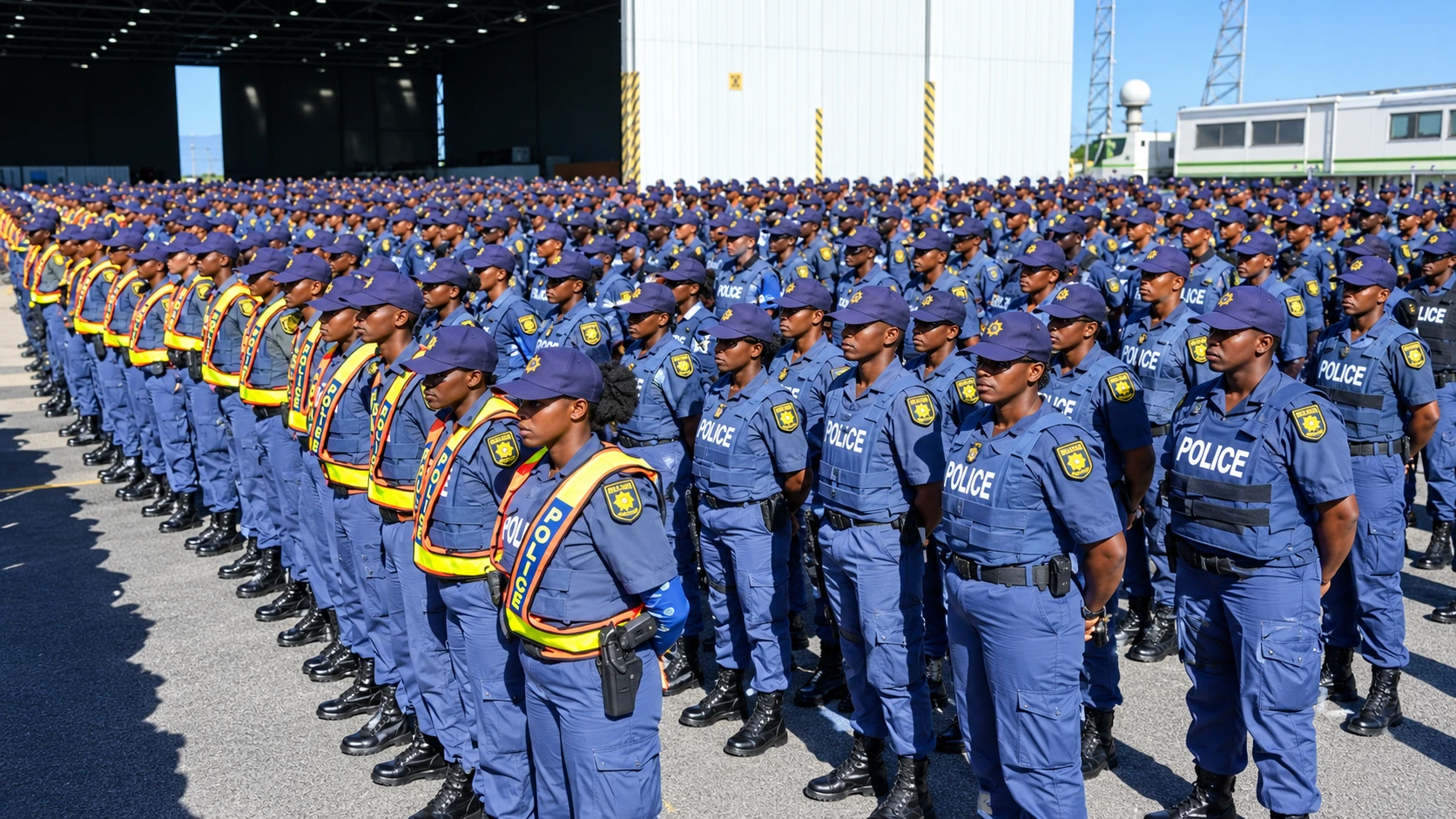
Thousands of young South Africans are racing to join the police service. In less than a day, the South African Police Service (SAPS) recorded 156,131 registrations for only 5,500 SAPS trainee posts. The national recruitment drive opened on October 21 and closes on November 13. The response shows how many people want stable work, and how tough the competition will be. This guide explains what happened and what you need to know before you apply. We have kept it simple and easy to follow.
A huge response in just one day
The numbers are striking. SAPS said it received 156,131 registrations nationwide within 24 hours of opening the 2026/27 online recruitment drive. That works out to about 28 registrations for every available post.
Registering is not the same as applying, though. SAPS explained that far fewer people have finished the process. The table below shows where things stood.
| Stage | Number of people |
|---|---|
| Registrations recorded | 156,131 |
| Completed profile verification | 78,473 |
| Started an application | 53,716 |
| Completed and submitted an application | 29,013 |
Only 29,013 people had fully submitted their applications through the online portal. The gap between registrations and submissions may simply mean many people are still working through the steps. The November 13 deadline leaves time for them to finish. It is a simple reminder that a started application does not count until it is submitted.
Who can apply? The SAPS eligibility criteria
Before you spend time on the form, check the SAPS eligibility criteria. The rules are clear, and they are easy to check against your own situation.
You must be a South African citizen. You must be at least 18 years old and not older than 35. You also need a matric certificate or another relevant qualification.
SAPS has also listed several things that can rule you out:
- Visible tattoos that would show while wearing a police uniform.
- Being declared unfit to possess a firearm.
- A criminal conviction or a pending criminal case.
- A past dismissal for misconduct from a government department.
- A chronic disease, physical impairment or other severe health condition.
SAPS also gave a warning about health. If an applicant does not disclose a health condition, they may be withdrawn from the programme once it is discovered. The easiest approach is to be honest from the start.
Who gets preference?
Some applicants will be given preference. These include people with a valid driver’s licence. They also include people with a relevant three year tertiary qualification at NQF level 6 or higher. SAPS named criminal law, policing and forensic investigation as examples.
Preference does not mean you will be accepted, and not having these qualifications does not automatically shut you out. They simply count in your favour.
How applicants will be chosen: the SAPS selection criteria
The SAPS selection criteria go well beyond a form. Every applicant will go through several checks during the recruitment, selection and enlistment process. These are:
- Fitness testing
- Psychometric testing
- Integrity testing
- A medical evaluation
- An interview
The testing is not the only hurdle. SAPS will also verify the details you provide. It will check your qualifications, driver’s licence, citizenship and residential address. If any of these do not match what you wrote, your application could be in trouble.
After that comes additional vetting. This includes security screening, reference checking, a look at your social media presence and fingerprint verification. In simple terms, SAPS wants to know who it is putting into uniform.
This is worth thinking about now. Take a quick look at what is publicly visible on your own social media accounts. Make sure the details you give are accurate. Honest, consistent information is the easiest way to get through the checks.
What the SAPS trainee stipend means for you
Money is one reason these South African police jobs attract so much interest. Successful candidates will receive a monthly stipend of R5,000 while they are in training.
The SAPS trainee stipend is paid during the training period, so it matters most to people who need an income while they prepare for a career in policing. SAPS has not said more about what follows after training in this announcement. If you want to know more, the official channels are the best place to ask.
The SAPS application process, step by step
The SAPS application process is done online. SAPS has asked applicants to use its official eRecruitment portal. You can access it at the SAPS eRecruitment portal. Using the official site is the safest and simplest way to apply.
The process has several stages, as the figures above show. You first register. You then complete profile verification. After that, you start your application and finally submit it. Each stage needs to be finished.
SAPS has also asked for patience. Because of the high volume of traffic, the portal may be slow at times. If a page does not load, do not panic. Try again a little later.
Here are some easy ways to prepare:
- Read the requirements first. Make sure you meet every point before you start.
- Gather your documents. Have your ID, matric certificate and any other qualifications close by. If you have a driver’s licence, keep it handy too.
- Take your time. A simple mistake in your details could cause problems when SAPS verifies them.
- Be honest. This applies to your health, your history and your qualifications.
- Submit early. SAPS has encouraged applicants to send their forms in well before November 13. Do not wait for the last day, when traffic may be heaviest.
Be careful where you apply. Stick to the official portal and official SAPS announcements. For general information about the service, you can also visit the South African Police Service website.
Why this story matters
The scale of interest in these SAPS trainee posts says a lot. Many South Africans are looking for work, and a police career offers a clear path with training and a monthly stipend. At the same time, the numbers show how competitive it will be. With 5,500 places, many strong applicants will not make it. That is why getting every detail right matters so much.
The strict SAPS eligibility criteria and the long list of checks show that this is a serious process. Applicants must be fit, honest and ready for thorough screening. That is also the point. The police service needs people the public can trust.
If you are thinking about applying, start soon. Check the rules, collect your documents and complete each stage. The process looks long, but it becomes easy when you take it one step at a time. A little preparation now can save you stress later.
Key points to remember
- SAPS recorded 156,131 registrations for 5,500 trainee posts in under 24 hours.
- Applications opened on October 21 and close on November 13.
- Only 29,013 people had submitted complete applications at the time of the update.
- Applicants must be South African citizens, aged 18 to 35, with a matric certificate or relevant qualification.
- Successful candidates receive a R5,000 monthly stipend during training.
- Applications are made through the official SAPS eRecruitment portal.
Make sure you meet the requirements, be patient with the portal, and apply before the deadline.
About the Author