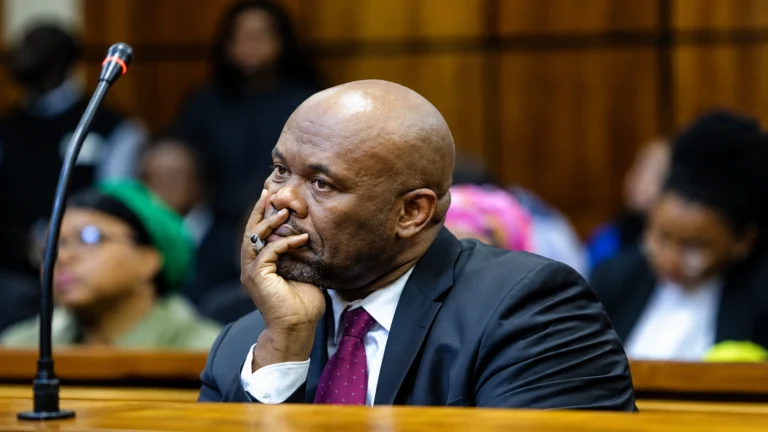

A former CCMA commissioner has lost his bid for more than R176,000 in salary arrears. The Labour Appeal Court found that the lower court granted him relief without a proper legal basis. The ruling is a useful reminder that workers must prove exactly where a right to pay comes from.
In simple terms, the court said a collective agreement does not automatically become part of a person’s employment contract. Here is an easy breakdown of what happened and why it matters.
What the case was about
The matter involved a man identified only as SN. He moved from being a part time commissioner at the Commission for Conciliation, Mediation and Arbitration (CCMA) to a full time commissioner. He believed his new pay was too low.
SN went to the Labour Court and argued he should be paid at the P6 salary level. He put forward two arguments.
First, he said his contract had a tacit, implied or express term. According to him, his pay as a full time commissioner could not be lower than what he earned as a part time commissioner.
Second, he relied on the CCMA’s Wage and Substantive Agreement, known as the WSA. The CCMA concluded it with the Commission Staff Association in January 2018.
The Labour Court turned down the first argument. It accepted the second. It found the WSA applied to SN once he became a full time commissioner. It ordered the CCMA to pay him R176,174.32, which was the gap between what he received and what the court believed he should have received.
The CCMA did not accept this and took the matter on appeal.
How the salary dispute began
SN was appointed as a part time Level B commissioner in July 2017. His fixed term was due to run until June 2023.
In October 2020, he applied to become a full time commissioner. He succeeded. He was moved from the CCMA’s Cape Town regional office to Tshwane. Both changes took effect on 1 December 2020.
He was placed on an annual package of over R615,000. That works out to more than R51,000 a month at the P7 level.
SN disputed this from the start. He said he earned about R61,500 a month when fully booked as a part time commissioner. That figure was based on a daily rate of a little over R2,900 for 21 days. He also argued that he should at least have been placed at P6.
He refused to sign his new contract at first. After talks with the CCMA’s human resources manager, he signed on 28 January 2021. However, he added a handwritten note. It said there was a dispute over his pay and that his signature was not an acceptance of the offer.
The CCMA refused to adjust his salary. It said he was correctly placed under its salary progression framework. SN kept working and was paid R51,281 a month. He was dismissed for misconduct on 22 February 2022.
Key figures at a glance
| Detail | Information |
|---|---|
| Amount awarded by the Labour Court | R176,174.32 |
| Monthly pay received by SN | R51,281 |
| Level he was placed on | P7 |
| Level he wanted | P6 |
| Move to full time role | 1 December 2020 |
| Date of dismissal | 22 February 2022 |
The problem with the Labour Court ruling
The labour appeal court of south Africa said the main flaw was simple. The Labour Court never said where SN’s right to P6 pay actually came from.
Pay is an essential part of any employment contract. The appeal court noted that SN had openly rejected the pay offered by the CCMA. So the first question should have been whether both sides had agreed on the pay at all.
Without a clear answer, the court said, the foundation for enforcing the claimed deal becomes shaky. The Labour Court had already rejected the tacit term argument. It had also found no express agreement to pay SN at the P6 level.
That left a gap. In effect, the Labour Court imposed a pay term that was never shown to come from an agreement between the parties.
Two different legal routes were mixed up
The labour appeal court of south Africa also found that the Labour Court had blurred two different legal paths.
SN brought his case as a contractual claim under section 77(3) of the Basic Conditions of Employment Act (BCEA). That section deals with disputes about contracts.
But after rejecting his contract claim, the Labour Court went on to read and apply the WSA. It then used that reading to decide that SN was owed P6 pay.
According to the appeal court, a dispute about how to read and apply a collective agreement is a different matter. It falls under section 24 of the Labour Relations Act (LRA). The court stressed that the real nature of a dispute decides which route applies. The label a party puts on it does not.
An easy way to see it is this. One route asks whether the contract itself gives you the right. The other asks what a collective agreement means. The Labour Court slid from the second question into an answer for the first.
Why a collective agreement is not automatically part of a contract
The appeal court explained that the WSA is a collective bargaining instrument. It is not, without more, a term of an individual employment contract.
So the real question was not just whether the WSA supported SN’s reading of the salary scales. The real question was whether he had proved a contractual right, enforceable under section 77(3) of the BCEA, to pay at the level he wanted.
The Labour Court did not explain how the WSA became part of SN’s contract. It also did not explain how the WSA created the specific right he claimed.
Instead, it created the right by interpreting the WSA and then enforced it as if it were a contract term. The appeal court held that this approach was wrong.
The final order
The labour appeal court of south Africa found that the Labour Court had materially misdirected itself. It had granted relief on a legal basis that did not match the case SN pleaded.
Once the tacit term was rejected, the Labour Court needed to find another contractual basis for P6 pay. It failed to do so. It entered the area of collective agreement disputes instead.
The appeal court therefore upheld the CCMA’s appeal and set aside the Labour Court’s order. It dismissed SN’s claim. It also ordered him to pay the CCMA’s costs, including the costs of the appeal.
What this means for workers and employers
This judgment offers a few easy lessons.
For workers, it shows that a claim must rest on the correct legal foundation. If you say your contract entitles you to a certain salary, you must show how. Pointing to a workplace agreement may not be enough on its own.
For employers, it shows why clear contracts matter. Pay terms should be written down and agreed. That helps avoid disputes like this one.
For everyone, it is a simple reminder that jurisdiction and cause of action matter. The court will look at the true nature of a dispute, not the title attached to it.
If you want to understand how employment law protects you, you can read more on the Department of Employment and Labour website. For information on how disputes are handled, you can also visit the CCMA website.
About the Author