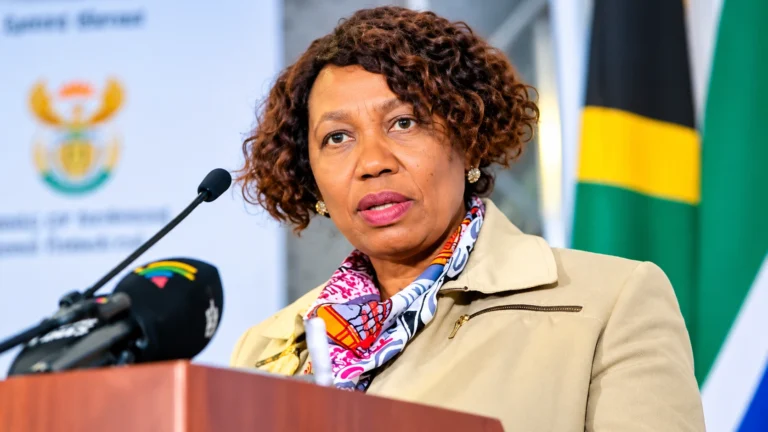
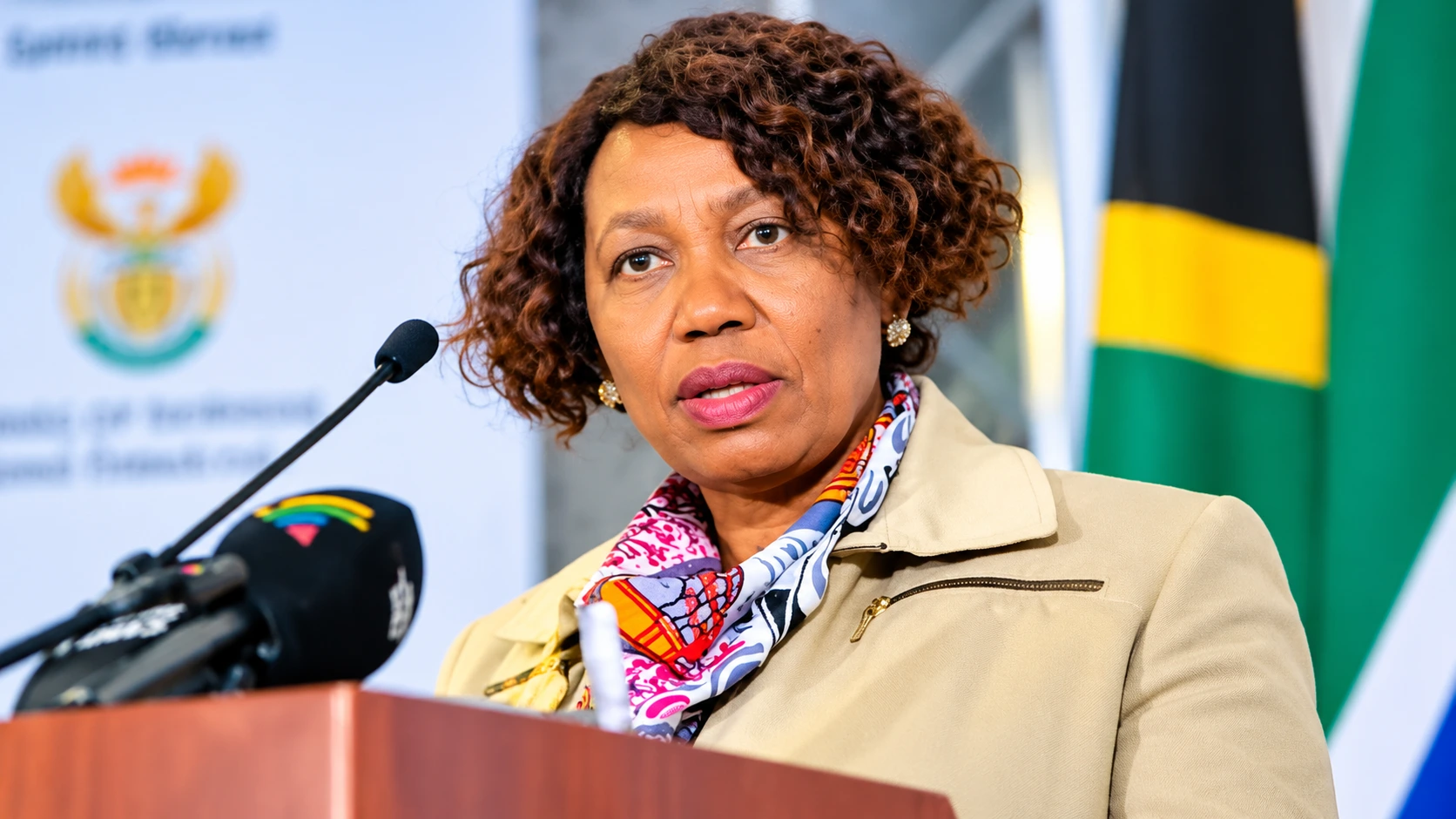
The Minister of Defence and Military Veterans, Angie Motshekga, has told Parliament that the SANDF spent about R2.4 billion on chartered flights over five financial years. The DA says the replies do not show how the money was used. The party now wants a full breakdown, and it has flagged a small but odd gap in the numbers.
What the department reported
According to the department, total spending on chartered flights from the 2021/22 to the 2025/26 financial years came to R2,395,521,275. The yearly amounts are easy to follow in the table below.
| Financial year | Charter flight spending |
|---|---|
| 2021/22 | R15,492,850 |
| 2022/23 | R753,797,591 |
| 2023/24 | R622,790,063 |
| 2024/25 | R629,043,694 |
| 2025/26 | R374,937,076 |
The pattern is simple to spot. Spending was very low in 2021/22. It then jumped sharply in 2022/23, to nearly 49 times the earlier figure. It stayed above R600 million for the next two years. In 2025/26 it fell to about R375 million, which is roughly 40% lower than the year before.
The five year total works out to an average of nearly R480 million a year. That is a big expenditure for one line item, and it explains why the DA is asking questions.
Why the SANDF says it hires aircraft
Motshekga said chartered flights serve many operational needs. The department listed the following uses:
- Reaching remote areas
- Medical evacuations
- Peacekeeping and regional missions
- Disaster relief
- VIP transport
- Military training
- Urgent operational deployments
She also pointed to times when commercial flights are simply not available. In addition, some troop and equipment movements are sensitive and need tight security. In those cases, a commercial ticket is not a workable option.
These reasons sound sensible on paper. Any defence force with a large footprint will sometimes need aircraft at short notice. The real question is not whether charters are ever needed. The question is how much was spent on each type of mission, and whether the right rules were followed each time.
How the flights were bought
The department said chartered flights were arranged in several ways:
- Through normal travel management arrangements
- Through supply chain management deviations
- Through emergency or operational procurement
A deviation is a simple idea. It means the normal buying process was set aside for a particular purchase. That can be allowed in urgent cases, but it is also the part of public spending that watchdogs tend to look at closely. The more spending that goes through deviations, the more reason there is to check that each one was justified.
This is where the DA has focused its questions.
What the DA asked for
The DA wanted a clear picture for each financial year. It asked for the number of flights and the amount spent under each buying method. It also asked for a split by operational category. On top of that, it asked how many deviations went above R1 million, R5 million and R10 million.
According to the party, the two replies it received from Parliament did not give that detail. They offered general explanations about procurement and operational needs. The department did confirm that it holds the underlying records, which makes the missing breakdown harder to accept for the party.
Reconciliation and the missing deadline
The department said it is reconciling its records. It wants to make sure each flight is correctly assigned and that nothing is counted twice. This matters because one flight can serve more than one purpose. A single trip might carry both troops and medical supplies, for example, so it could fit two categories.
That explanation is fair. Clean data does take time. But the DA points out that the reconciliation has no completion date. Without a deadline, it is easy for a process like this to drag on with no end in sight.
The R540,000 gap
The DA also spotted a problem with the maths. The yearly figures do not match the total the department gave.
Add up the five annual amounts and you get R2,396,061,274. The stated total is R2,395,521,275. The difference is about R540,000.
It is not a huge amount when set against R2.4 billion. Still, a mismatch in official figures raises fair questions. It could be a typing error, a rounding issue or a timing difference. The department has not explained it so far in the information reported.
What Chris Hattingh says
Chris Hattingh, the DA spokesperson on Defence and Military Veterans, said the missing details are needed for proper oversight. He argued that the replies so far describe processes but do not show how the money was spent. In his view, the minister should stop leaning on administrative excuses and give Parliament straight answers.
He also took aim at the R540,000 difference. He said the minister must explain it and supply verified numbers. He went further, suggesting the department is either careless with public money or is hiding something. Those are his words and his party’s position. The department has not accepted that description, and the figures themselves do not prove either claim.
Hattingh said the DA will send more written questions. It plans to ask for:
- Verified figures
- A firm deadline for finishing the reconciliation
- The name of the official in charge of the process
Why this matters to South Africans
Public money comes from taxpayers, so people have a right to know how it is used. That is true for every department, including the military. Some defence activity is sensitive, and not every detail can be made public. But that does not remove the need for proper accounting, especially when the sums run into billions.
There is also a wider budget picture. The SANDF has been under financial pressure, and spending choices matter more when money is tight. Clear records help Parliament judge whether funds are being used wisely. They also help the public trust that rules are being followed.
For readers who want to follow the story, the easiest place to start is the official Parliament of South Africa website. It publishes questions and replies, along with committee work. The Department of Defence site also shares official statements and reports.
What to watch next
Three things will be worth following in the coming weeks.
First, will the department supply the full breakdown by procurement method and operational category? That would show how much went through deviations and how much through normal channels.
Second, will it set a date for finishing the reconciliation? A clear deadline would answer one of the DA‘s main complaints.
Third, will it explain the R540,000 gap? A simple and honest explanation could settle that point quickly.
For now, the key facts are clear. The SANDF spent roughly R2.4 billion on chartered flights across five years. The department says the flights supported genuine operational needs. The DA says the detail behind the spending is still missing. Until the records are shared, the debate in South Africa is likely to continue.
About the Author