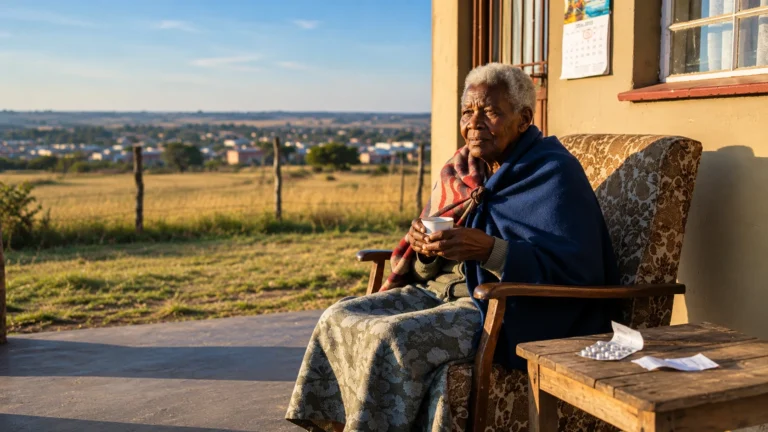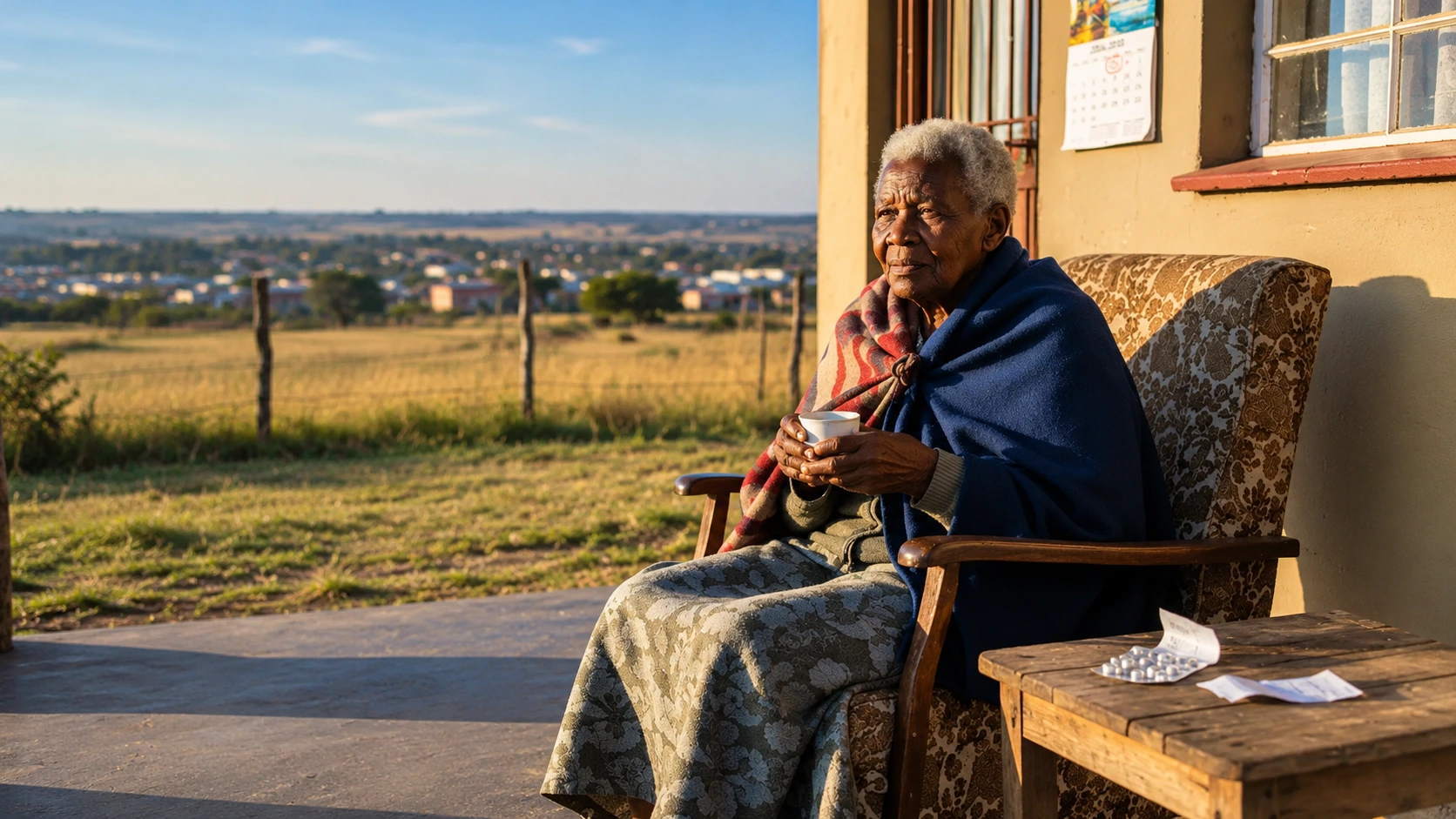
Every month, millions of South African pensioners do the same quiet maths at the till. The Older Person’s Grant comes in, and a whole family leans on it. Mothers and grandmothers who should be resting are instead deciding which bills can wait and which meals can be smaller.
A grant that carries more than one person
The South African Social Security Agency pays up to R2,400 a month to people aged 60 and older. Those above 75 receive R2,420. For one person living alone, that might stretch a little. For a home with grandchildren and jobless adults, it doesn’t.
Roughly four million people collect this grant. Census estimates show more than five million South Africans are 60 or older, and about half of them live with nobody who earns a salary. So the pension isn’t extra income in those homes. It is the income.
Unemployment above 32% only adds to the strain. When work is hard to find, an older relative’s payment becomes the anchor for everyone under the same roof.
Real stories from across the country
A retiree in Gauteng, Loraine Karam, paid off her house years ago and shares it with only one other person. Even so, she says her grant is never enough to last the month. Nobody in her home went hungry recently, but she is clear that careful rationing made that happen, not comfort.
In Pietermaritzburg, another pensioner supports her jobless daughter and her grandchild. By her account, the money barely reaches the middle of the month. She also qualifies for free basic electricity, yet says the 70kWh she gets runs out far too soon.
Cape Town offers a closer look at a single payday. A woman collecting her R2,320 grant lost R120 to a life insurance policy and walked away with R2,200. After a day of shopping she had spent R1,495.52 on food and cleaning supplies. About R705 remained for the weeks ahead. Her household also splits an electricity bill of around R1,000. Her view was easy to understand: you simply make do with what you have.
Why the money disappears so fast
The pattern is the same in nearly every story. Payday brings the big shop, and then comes a long stretch of small, careful spending.
Food costs lead the list, and they keep rising. Electricity follows, often shared across several adults. Taxi fares to collect the money and reach a clinic take another slice. Medicine and care tend to be the heaviest of all.
One woman in Pietermaritzburg looks after her father after a stroke. She says the grant is nowhere near enough for his health needs. Another pensioner shared her budget in August 2026. Her rent was R3,700, which left her R1,300 short before she bought food or paid for water and lights.
What experts and officials say
Mervyn Abrahams of the Pietermaritzburg Economic Justice and Dignity Group says the grant is built too thin for the role it now plays. In his view, it simply can’t support whole families. He adds that even when the R580 Child Support Grant and the R370 Social Relief of Distress grant are stacked on top, families still can’t afford enough nutritious food.
Government has acknowledged part of this. In November 2025, a Social Development official told Parliament’s committee that the grant sits above the official poverty lines, but admitted it still falls short. She suggested older people also need cheaper water, power and other services.
Some welfare groups and financial advisers take a different angle. They say the grant was always meant to be a safety net, not a full pension. That sounds simple in theory. It is much harder when a pensioner has no savings to lean on.
Pensioners push for R5,000
Anger and frustration have turned into action. A petition started in January has gathered over 30 000 signatures.
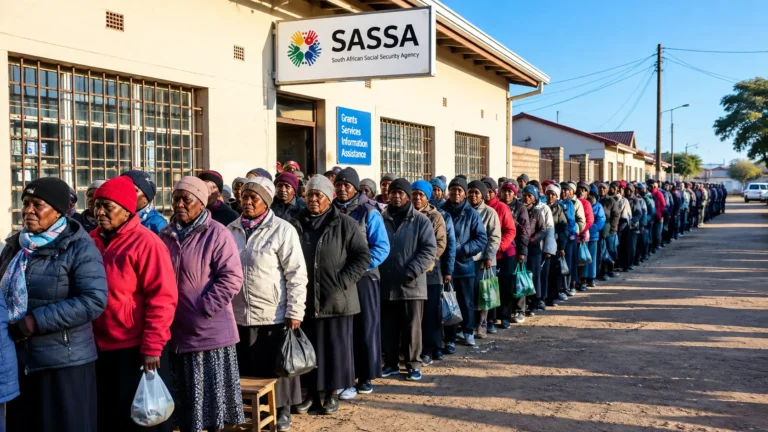
On 7 September 2026, the Pensioners of South Africa movement held peaceful pickets outside SASSA offices around the country. Their demand is to lift the grant from R2,400 to R5,000. They say the present amount is eaten up by food, water, power and transport. Marchers also pointed to everyday prices, noting that a loaf of bread and some milk cost about R40.
The movement has raised other worries too. It says pensioners often carry extended family on one grant. It also claims that some people face frozen or suspended accounts after relatives send them money, and that treatment at SASSA offices needs to improve. In Parliament, pensioners have complained that grant reviews can stall for months without a word of explanation.
Back in 2025, Western Cape pensioners told MPs they weren’t asking for a favour. They wanted justice and dignity.
Who decides the amount?
Many people direct their anger at SASSA, but the agency only pays the grant. It doesn’t set the figure. A department official made that clear in Parliament, and added that the department had asked the finance minister to take a careful look at the grant when the budget was finalised. Any change has to come through the national budget.
Simple ways households try to cope
Pensioners have built their own tricks over the years. They won’t fix the bigger problem, but they help.
Many shop early in the month, when the cash is fresh, and stick to basics. Families often split electricity costs so one person isn’t stuck with the whole bill. A simple notebook budget, even a rough one, shows where the money is leaking. And it pays to check your grant status now and then, so a surprise review doesn’t leave you without pay.
If an SMS about a review arrives on your phone, don’t ignore it. It’s easy to overlook, and a missed review can delay your payment.
Where to get official help
For accurate details on who qualifies, when payments are made and how reviews work, visit the official SASSA website at sassa.gov.za. General government services are listed at gov.za. Stay with official channels, because scammers often prey on older people.
What this means going forward
For many families, the Older Person’s Grant is the thing standing between a full pot and an empty one. That is why the push for a higher amount feels so personal to so many.
For now, most pensioners still receive R2,400. They will keep budgeting tightly, sharing costs and hoping the month passes quickly. Whether the R5,000 demand gets heard will come down to the national budget and how long pensioners keep up the pressure. Their message is simple, and it isn’t fading.
About the Author