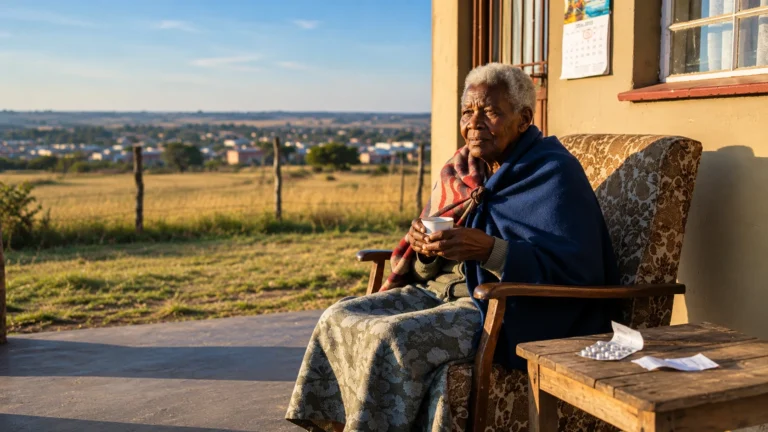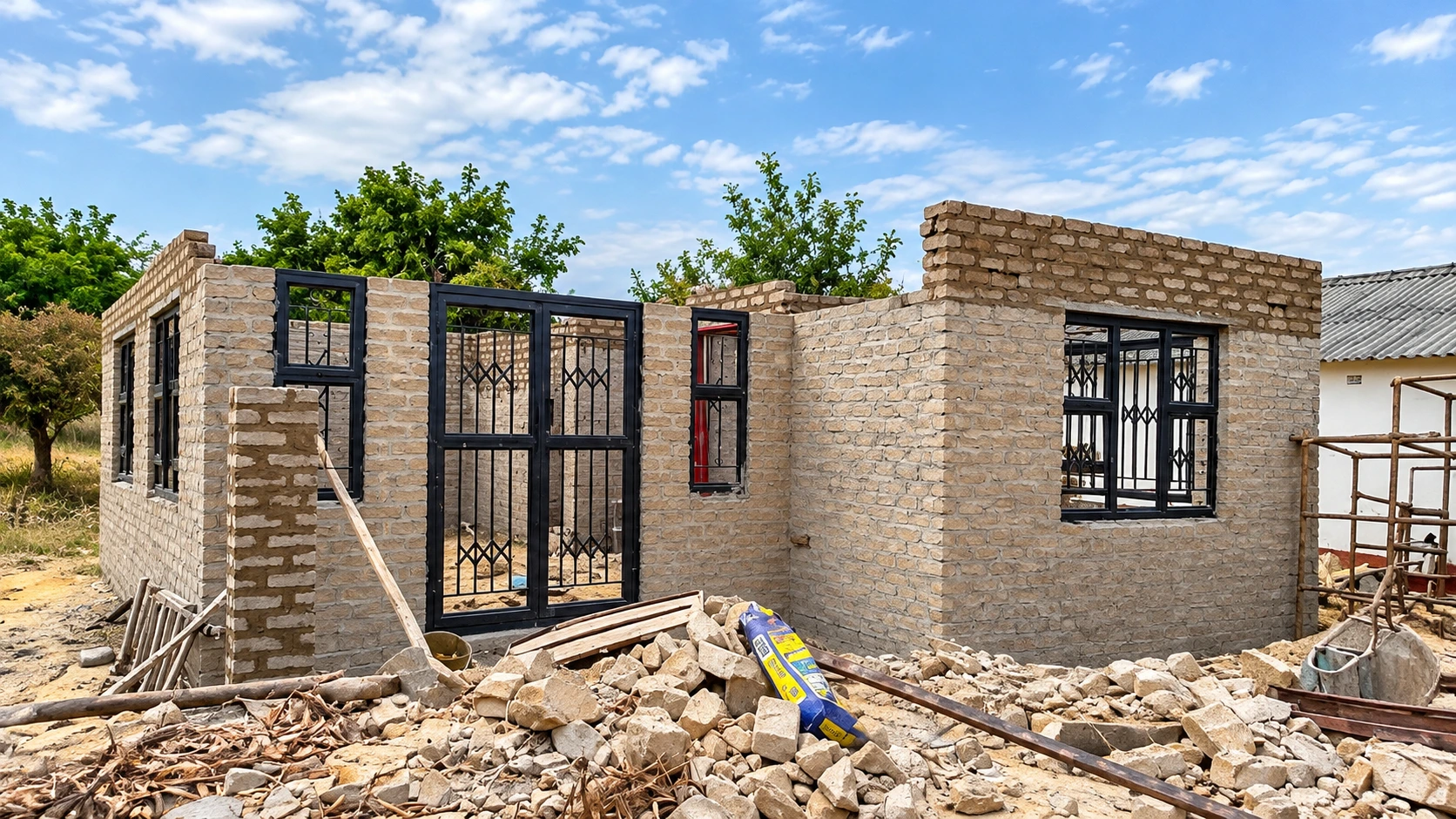
A SASSA pensioner in the rural Eastern Cape is nearly ready to move into a new home, and she built it herself. The government house promised to her three years ago is still only a foundation and a few half built walls. For Nomonde Mboyi, 67, the choice was a simple one: wait for officials, or start building.
A storm that destroyed her homes
In 2019, heavy wind and rain tore through the Mbizana region of the Eastern Cape. Hundreds of households lost their homes. Mboyi lost two mud houses. Her third house, built from sticks and mud, survived, but it had a leaking roof and holes in the walls.
Government promised help. Families like hers were told that new houses would be built for them. Years passed, and the wait became part of daily life in the village of Ndakeni.
Building with a grant, one step at a time
Three years ago, Mboyi stopped waiting. She made her own mud bricks and began raising the walls of a two room house. She paid for materials and labour with her old age grant, which the South African Social Security Agency (SASSA) pays out every month. You can read more about these grants on the official SASSA website.
The work was not quick. A grant only stretches so far, so she had to save for months before she could buy the next batch of materials. Then she would build a little more.
Her approach was easy to explain, but hard to live out. She bought what she could, paid the builders when she had the money and stopped when it ran out.
By the time the government contractor arrived to start her foundation last year, her walls were already going up. Today her home only needs plastering on the outside and a few final touches. She plans to move in during December.
There is one problem left. Mboyi says Eskom cannot connect electricity yet because the house is not fully waterproof.
The government project that stalled
In 2023, the Eastern Cape Department of Human Settlements appointed a company called ZIBSIPRO (Pty) Ltd to replace the storm damaged houses. The plan was to build 200 houses across the region. The cost was about R34 million, which works out to roughly R170,000 per house.
Not one of those houses has been finished.
The house meant for Mboyi has a foundation and partly built walls. The same is true for most of the other houses under construction in Ndakeni. Residents say the contractor left in November last year and promised to return. It has not come back. Some construction machinery is still in the village, guarded by a security guard.
Residents offered to help, but were told to wait
Mboyi says residents met the Winnie Madikela Mandela Local Municipality in February this year. At that meeting, community members offered to finish building the houses themselves. For people who had already waited years, it seemed like a simple and practical idea.
They were told to wait.
“Since then, there has been no further explanation. We are just waiting,” Mboyi said.
Community leader Nontokozo Nyombo says many of the beneficiaries depend on social grants and badly need proper housing. She says people are frustrated and do not know where to turn. In her words, the municipality no longer gives them answers.
Two sides, two very different stories
The department and the contractor tell very different versions of what went wrong. The table below sets out the main points.
| Issue | Department of Human Settlements | Contractor (ZIBSIPRO) |
|---|---|---|
| Contract status | Contract ended in the 2025/26 financial year because of poor performance | Says it was not aware the contract had been terminated |
| Payment | Did not respond to the claims | Says it has not been paid for a year |
| Future plans | Plans to bring the project back, starting with houses already begun | Says working conditions became impossible |
What the department says
Department spokesperson Yanga Funani said the contractor’s contract was ended because of poor performance. He said the department plans to reinstate the project. Houses where building has already started would come first. Houses not yet started would depend on whether funds are available.
Funani did not respond to the contractor’s claims. The municipality also did not answer questions and referred the reporters to the department.
What the contractor says
ZIBSIPRO director Palesa Phara told a very different story. She said the department has owed the company money for a year, and that this is why work stopped. She did say the department sent the company a letter of default. She also said the company tried to hand the work over to a subcontractor, but the department rejected this verbally.
Phara listed several reasons for the delays:
- The company was appointed in September 2023, but only got a formal contract near the end of November, shortly before the yearly construction shutdown.
- Soil tests, geotechnical studies and approval processes took time.
- She described the approved foundation design as “heavily over-engineered”, so the company hired another engineer to redesign it.
- Conditional approvals were needed from the National Home Builders Registration Council. You can learn about its role on the NHBRC website.
- Real construction only began around October 2024, more than a year after the appointment.
- Working across 34 villages created logistics problems, and heavy rain slowed the work.
She also claimed the company was told verbally to “slow down” because the department did not have enough money. According to Phara, payment also changed from stage by stage payments to payment only when a whole house was finished. That meant the company had to keep buying materials and paying workers without being paid in return.
Eventually, she said, the sites became unsafe. She claimed that some workers, security staff and community members blocked access until labour disputes and unpaid amounts were sorted out. Some company equipment is still on site, she said, and it costs money to store and guard.
Why this story matters
The details of the dispute are complicated. The result for families is simple. More than seven years after the storm, none of the 200 promised houses are complete. People in Mbizana are still waiting, and many of them live on social grants.
Mboyi’s story shows how determined older South Africans can be. It also raises hard questions about why a pensioner with a monthly grant and her own handmade bricks could move faster than a multi million rand government project.
For now, Mboyi will move into her mud brick home in December. Her government house still has only a foundation and part of its walls. The department says it plans to restart the project, but residents have not been given a clear date.
Until that happens, families in Ndakeni will keep waiting, and some, like Mboyi, will keep building.
About the Author