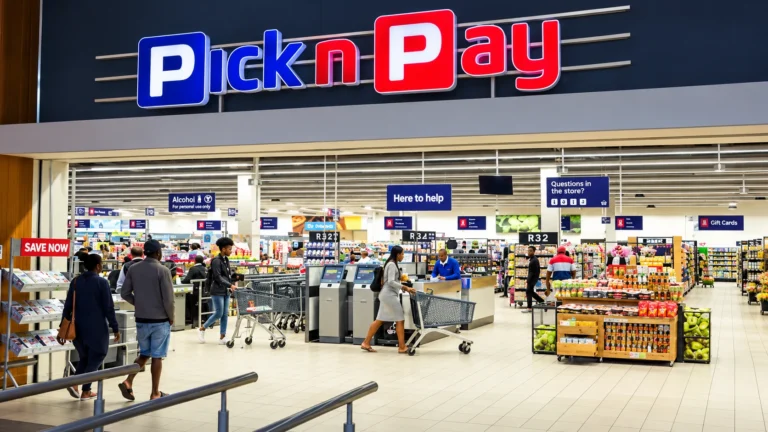
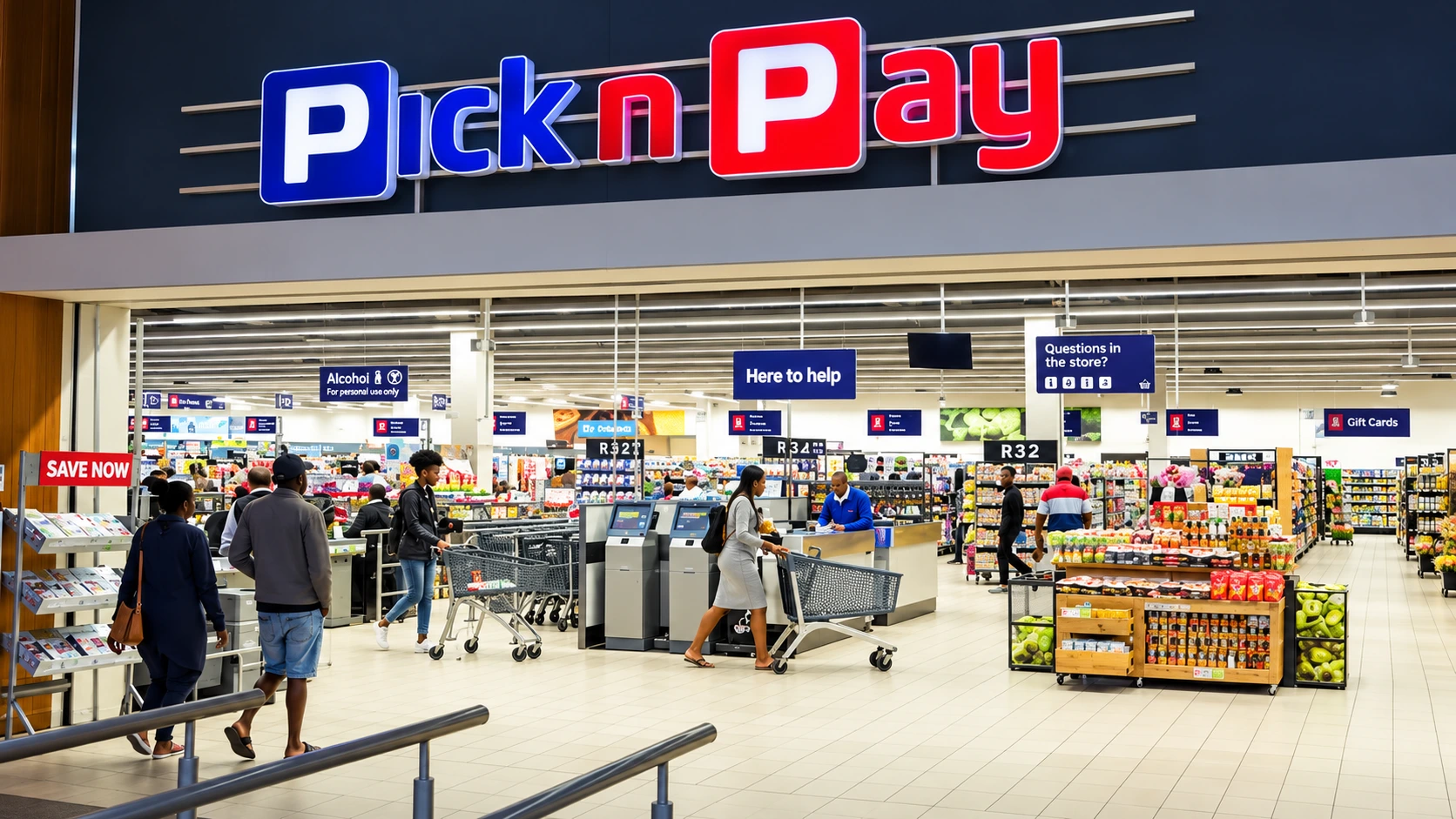
Walk past a Pick n Pay that has shut its doors and it’s hard not to feel something is wrong. But the company says this is exactly the plan. Since Sean Summers returned as Group CEO in September 2023, 284 stores have closed across South Africa and the group’s other markets. The sean summers pick n pay turnaround is a simple bet: fewer shops, each one earning its keep. And the newest results suggest the bet might be working.
Why Pick n Pay is closing stores
Closing shops sounds like a company in trouble. Fair enough, Pick n Pay was in trouble. It had too many stores bleeding cash, and the losses kept stacking up. That part is easy to understand.
Summers came back with a six pillar plan, and sorting out the store network sat right near the top. The old thinking was that bigger is better. The new thinking is that a smaller company making money beats a huge one losing it. Simple as that.
He has said the aim for now is to be smaller but more profitable, with fewer but better stores. Growth can come later, once the base is solid.
How many stores have closed
The closures didn’t land all at once. They came in waves over several reporting periods, and a table is the easy way to see it.
| Period | Outright closures | Company owned | Franchise | Converted |
|---|---|---|---|---|
| 2024 | 53 | 20 | 33 | 5 |
| Following financial year | 103 | 55 | 48 | 34 |
| 2026 | 108 | 39 | 69 | 42 |
| Latest interim period | 20 | 15 | 5 | Not stated |
That last row covers the 26 weeks to 30 August 2026. Add the outright closures up and you get 284.
Here’s a detail worth knowing. Some stores never really went away. A converted store keeps trading, just as a Boxer or a Pick n Pay franchise. An outright closure is the real thing, lights off and gates locked.
The 2026 numbers carry one big chunk. Pick n Pay ended its Namibian franchise agreement, and that took 36 stores with it. Of all the outright closures, 118 were Pick n Pay supermarkets and hypermarkets.
How the company chose which stores to close
Nobody threw darts at a map. Management looked at the loss making stores one at a time. Why is this one struggling? Can it turn around? Those were the questions.
Some stores simply couldn’t be rescued. The company said a few weren’t right for conversion to Boxer or a franchise, so they had to go. For others, the lease and related liabilities made closing cheaper than carrying on. Sometimes the maths is just the maths.
There was a brand problem too. Pick n Pay now chases middle income and wealthier shoppers, while Boxer speaks to people with tighter budgets. Having both brands fight over the same customers made little sense. So some weaker Pick n Pay stores moved to Boxer. The losses stopped, and Boxer got a bigger footprint. A simple swap with a clear reason behind it.
The numbers are starting to improve
This is where it gets interesting. In the interim results, Pick n Pay reported:
- The trading loss narrowed by 16.9% to R516 million, from R621 million before.
- The gross profit margin climbed from 16.8% to 17.5%.
- Company owned supermarkets grew sales by 2.4% in comparable stores, ahead of internal selling price inflation of 1.5%.
- Group trading profit jumped 58.1% to R490 million.
- The headline loss shrank by 31.9% to R299 million.
- The group had R10 billion in net cash, with R7.7 billion of it inside Pick n Pay.
Let’s not oversell it. The group is still losing money, and nobody is popping champagne yet. But the direction has changed, and that counts for something. The sean summers pick n pay turnaround has a long road left, though these figures give the closures some backing.
What it means for shoppers and workers
Is your local branch on the way out? The easiest move is to ask the store directly. The official Pick n Pay website can also help you find the nearest branch. And remember, a closed sign doesn’t always mean the end, because a converted store may reopen under a new name.
If you work at one of these stores and you’re worried, know where to turn. The Department of Employment and Labour is the official source for labour guidance in South Africa. It’s a simple place to start.
What to watch next
Pick n Pay says it will stay focused on being smaller and more profitable for the time being. Expect more change. Some branches may close, some may convert, and plenty will carry on as normal.
The big question is whether this lasts. One good set of results doesn’t make a recovery. What matters is steady profit over several periods. For now, the store reset looks like it’s doing its job.
For shoppers, the story is simple. Pick n Pay wants fewer stores that work instead of many that don’t. You can call it painful or you can call it smart. Either way, it’s one of the biggest retail stories in the country right now, and the next results will tell us whether it sticks.
About the Author