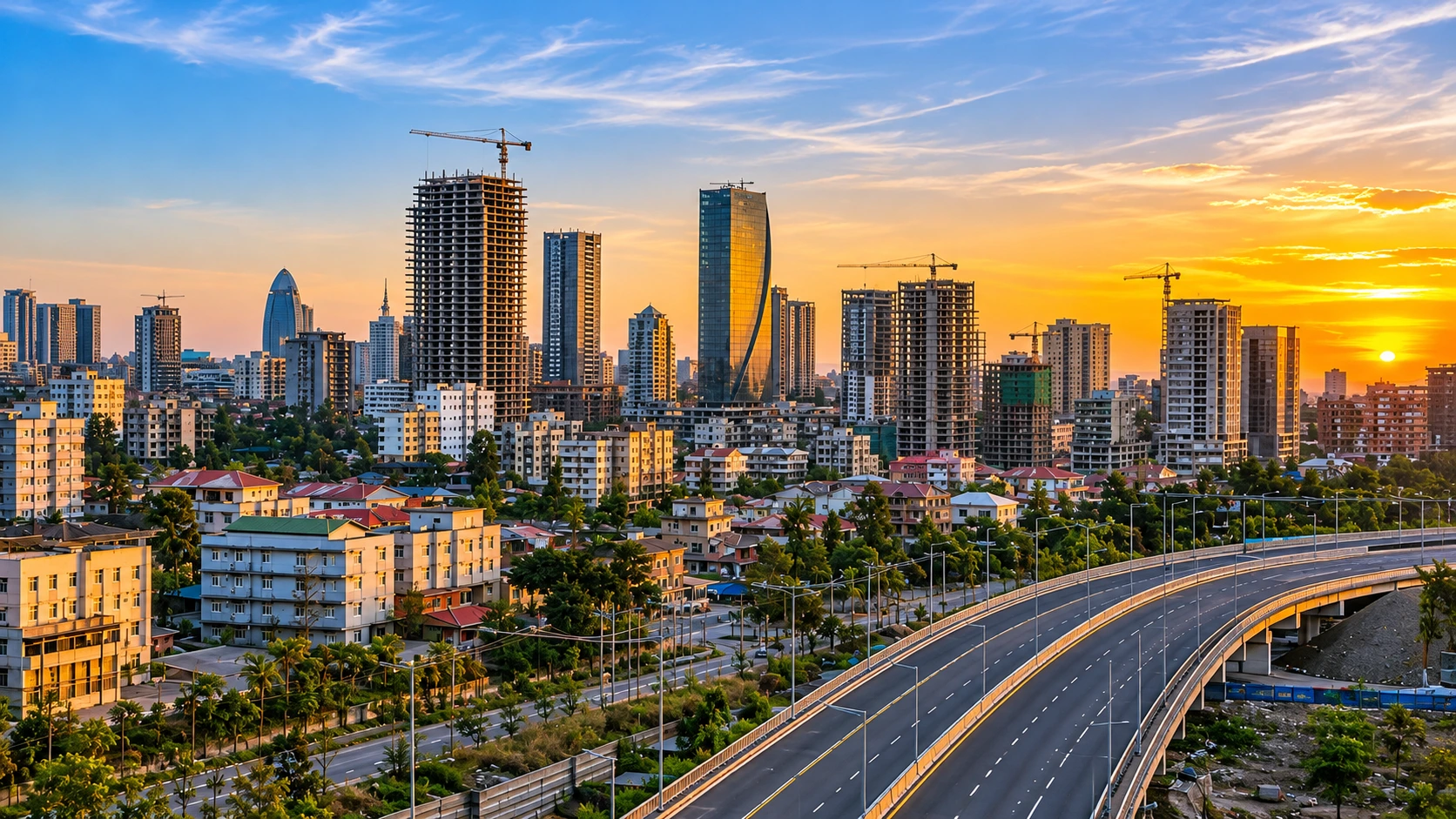
Ethiopia just climbed a few rungs in Africa’s rankings. After a big update to its national accounts, it now has the fifth biggest economy on the continent. The reason is a simple one. Officials changed the way they measure output, and the new method shows a much bigger picture.
It’s easy to see that headline and assume Ethiopia got richer overnight. It didn’t. Here’s what actually happened, and why South Africans might care.
What Ethiopia actually changed
Finance Minister Fitsum Assefa shared the new figures this week. According to a government presentation reported by Reuters, Ethiopia moved the base year it uses to calculate GDP to 2024/25. For years it had used 2015/16.
So what’s a base year? Think of it as the yardstick. It sets the prices and weights for every part of the economy. When that yardstick is ten years old, it starts missing things.
And a lot had changed. New industries had grown, and the old weights no longer fit. So statisticians went back out to collect fresh data. Reports say they used a new agriculture census and new household surveys. They also tried to count digital services, informal activity and other newer sectors that the old method barely touched.
The jump was big. The economy for 2024/25 was revised up by 59.2%, to roughly $201.42 billion. South African media converted that to about R3.30 trillion.
The new numbers at a glance
A small table makes the figures easy to compare.
| Item | Detail |
|---|---|
| Old base year | 2015/16 |
| New base year | 2024/25 |
| Revised GDP for 2024/25 | About $201.42 billion (Birr 24.03 trillion) |
| Size of upward revision | 59.2% |
| GDP for 2025/26 | About $210.7 billion (Birr 31.86 trillion) |
| New rank in Africa | Fifth |
This wasn’t a quick tweak either. The whole exercise took a year and sits inside the Ethiopian Statistics Development Program.
How Ethiopia climbed the ladder
At about $210.7 billion for 2025/26, Ethiopia now trails just four countries: Nigeria, South Africa, Egypt and Algeria. It has edged past Morocco, Angola and Kenya.
There’s a small twist, though. Some earlier International Monetary Fund tables already had Ethiopia hovering near fifth place. Back in 2024, local reports quoting IMF data put it at around $205 billion. So the rebasing didn’t invent the climb. It just made the lead harder to argue with.
If you want to check global estimates yourself, the IMF’s Ethiopia page is a good place to start. The simple takeaway is that a ranking is only as good as the data under it.
What rebasing really means
Plenty of countries do this now and then. Nigeria and Ghana have both done it. The idea is easy enough once you picture a real example.
Say you run a tuck shop. For years you work out your income using prices from a decade ago. Then one day you update your books with today’s prices and all the new stuff you now sell. The shop didn’t change overnight. Your records just caught up with it.
Ethiopia’s case works the same way. A bigger number doesn’t mean more money sitting in the bank. It means the old method was undercounting what was already going on.
Does the debt picture improve?
Here’s where you need to be careful. A larger GDP makes the debt to GDP ratio look smaller. One report put the new figure at 27.4%. Tax collected as a share of GDP also shrinks on paper.
But the debt itself hasn’t moved. Ethiopia still owes what it owed last week, and the repayments are the same. It’s a bit like getting a pay rise on paper while the credit card bill stays exactly where it was. The ratio looks nicer. The bill is still there.
The timing is interesting, though. Ethiopia is close to finishing a long external debt restructuring. Holders of its $1 billion Eurobond backed a preliminary deal in August. Analysts say the revised numbers could improve how creditors see the country. That’s encouraging, but it’s no guarantee.
For a wider look at public finances and development, the World Bank’s Ethiopia overview is worth a read.
A big economy, but not a rich one
Big and rich aren’t the same thing. Ethiopia has well over 120 million people, so even a large economy gets stretched across a lot of households. IMF estimates still put its GDP per person among the lowest in the world, even after years of growth.
So no, the average Ethiopian isn’t better off today than last week. What’s changed is that the country’s total output looks bigger on the books. The real test is whether growth reaches jobs, wages and public services.
Why South African readers should care
South Africa still sits ahead of Ethiopia on the new list. But there are good reasons to keep an eye on this.
Trade and investment come first. A larger, more visible market tends to catch investors’ attention. South African companies in retail, banking, telecoms and logistics already look north for growth, and Ethiopia may now get a longer look.
Competition for capital is next. When global investors compare African markets, they put them side by side. Cleaner, newer data makes a country easier to rank and easier to price. That’s not an easy race, and South Africa has to keep making its own case.
Then there’s the lesson about data. Governments, lenders and businesses all lean on statistics. If the numbers are stale, the decisions built on them can go wrong. South Africa updates its own national accounts from time to time, so the simple point applies here too.
What to watch next
A few questions are still hanging. Will the IMF and other lenders accept the new figures in their own tables? How soon will the debt restructuring wrap up? Will the fuller data show which sectors grew fastest, perhaps services and digital work? And will faster growth lift incomes, or stay mostly on paper?
None of these will be answered quickly. For now, a balanced reading is the safest one. The rebasing is a real, well documented step, and it gives a more current view of the Ethiopian economy. It doesn’t wipe out debt or poverty, and it doesn’t finish the work ahead.
The bottom line
Ethiopia’s move to fifth place is really a story about better measuring. Its economy didn’t double in a day. Officials updated the yardstick, and the new one shows a bigger, more varied picture.
For South Africans, the point is easy to remember. Watch the numbers, but ask how they were built. A ranking shows where a country stands on paper. Jobs, trade and everyday living standards show what it means in real life.
About the Author