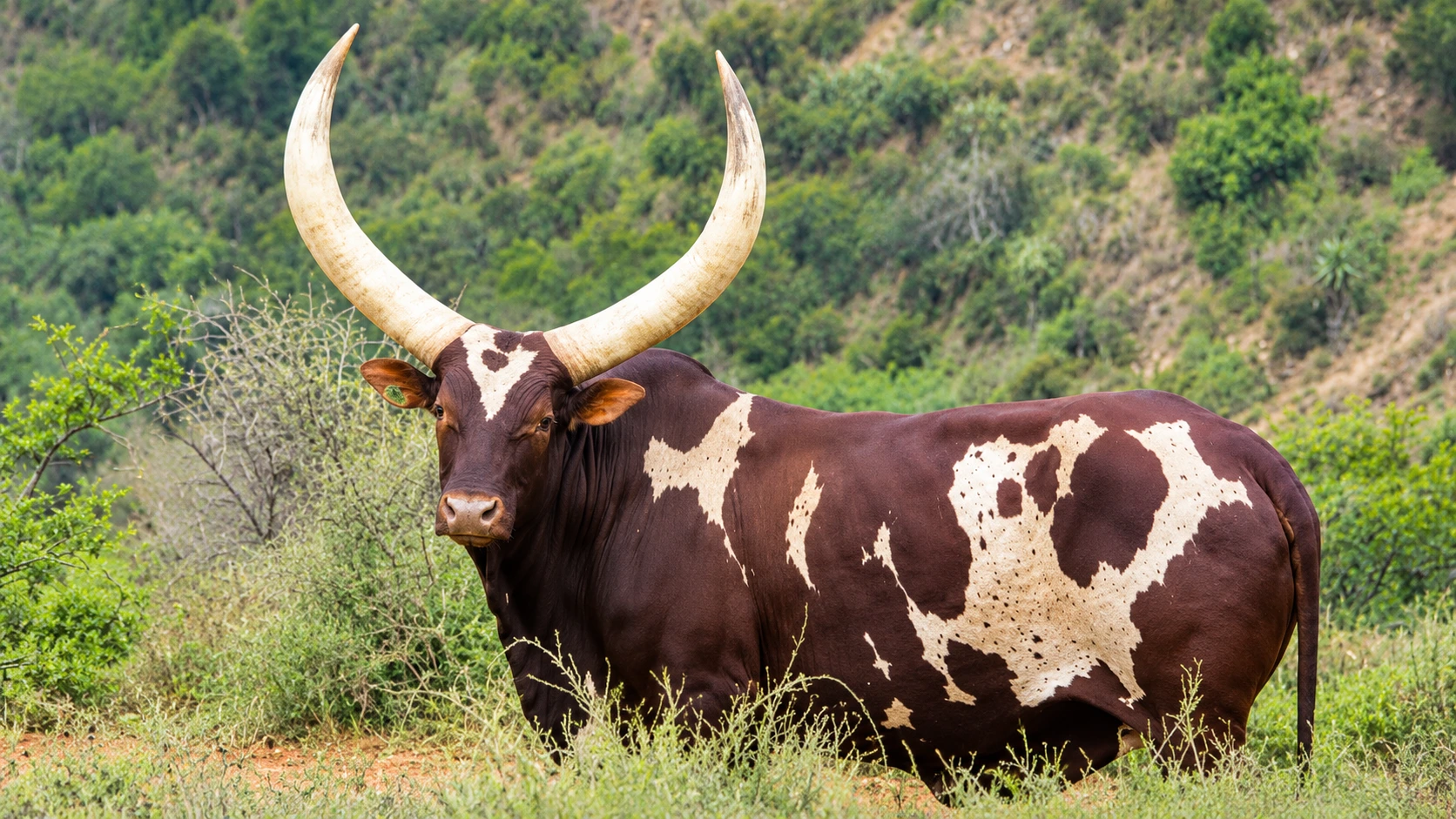
South Africa’s cattle world has a fresh talking point. An Ankole heifer named Queen Arusha has sold for R6,4 million at an auction in Limpopo. Reports say it is a new record for a female animal across all cattle breeds.
The headline is simple, but the details are worth a slow read. This guide keeps things easy to follow. We look at the sale, the animals, the numbers and what they may mean, all in simple terms.
What happened at the auction
The Ntaba Nyoni & Friends auction took place on Saturday at Phala Phala, near Bela Bela in Limpopo. Breeders and buyers came to bid on Ankole cattle, as well as semen and embryos from the breed.
The star of the day was Queen Arusha, registered as NANK23 001. She was offered as Lot 20. A lot is simply one item in a sale, which makes it an easy way to keep track of what is being sold.
Queen Arusha is an in calf heifer. That is a simple way of saying she is a young female that has not calved before and is now pregnant.
Her final price was R6,4 million. According to a Farmer’s Weekly report, the buyer is undisclosed. It is an easy question to ask, but the public does not know who now owns her.
Organisers and media reports describe the sale as a record for a female animal across cattle breeds. That is how it was reported, so it is best treated as a reported record.
Where Queen Arusha comes from
Pedigree plays a big role in cattle breeding. The family names can look confusing, so here is a simple way to read them. Queen Arusha’s genetics include Tshinakaho and Akira. Kovu appears further back in her family line.
Her full brother is Optimus Prime, an Ankole bull whose horns measure 68 inches. That is roughly 173 centimetres, although the report does not say how the measurement was taken. Horns like that get attention in any sale ring.
Breeders often look closely at family lines. A clear pedigree is an easy way to see what an animal’s relatives are like. It is not a simple promise of what her calves will be, but it gives buyers something solid to work with.
Optimus Prime’s semen straws drew big money too
The record cow was not the only high price of the day. Two sexed semen straws from Optimus Prime sold for R250,000 each. Reports say they were the highest priced semen lots at the sale.
A semen straw is a thin tube that holds semen for breeding. Sexed semen has been sorted so a farmer has a better chance of getting a calf of the sex they want. It is a simple tool for breeders with clear goals. It also makes it easy to share a bull’s genetics without moving the animal.
In total, 37 semen straws changed hands for R1,235 million. Another 19 embryos brought in R1,445 million. An embryo is an early stage animal that can be placed in a recipient cow, so a calf is born from chosen parents.
Here is some simple maths. The two Optimus Prime straws made R500,000 together. That leaves 35 straws and R735,000, which works out to about R21,000 each. The 19 embryos average roughly R76,000 each. These are our own calculations from the reported totals, so see them as a rough guide.
The numbers at a glance
The auction reportedly recorded total turnover of R22,5 million. About 120 people registered and roughly 100 attended in person. A table makes the main figures easy to scan.
| Item | Reported result |
|---|---|
| Total turnover | R22,5 million |
| Queen Arusha (Lot 20) | R6,4 million |
| Bulls | 10 sold for R2,75 million, average R275,000 |
| Top bull | R650,000, bought by Gabriel Ngomane of Ngomane Stud Breeders |
| Heifers | 8 sold, average R482,500, highest R900,000 |
| Pregnant cows | 4 sold, average R432,500 |
| Semen straws | 37 sold for R1,235 million |
| Embryos | 19 sold for R1,445 million |
Queen Arusha’s R6,4 million is about 28% of the reported turnover. In simple terms, one animal brought in well over a quarter of the money.
Bull sales were also strong. The top bull made R650,000 and was bought by Gabriel Ngomane of Ngomane Stud Breeders. That is more than double the average of R275,000 for the ten bulls sold. Averages are easy to misread, because a few high prices can pull the figure up.
The heifers and pregnant cows were solid too. Eight heifers averaged R482,500, and four pregnant cows averaged R432,500. These results show that interest was not limited to one famous animal.
What this means for farmers and breeders
The report does not explain why bidding climbed so high, so it would be unfair to guess the buyer’s plans. What the numbers do show is strong demand for Ankole genetics at this sale. That includes live animals, semen and embryos.
One auction does not set prices for the whole market. Another sale on another day could look very different. The best way to see this record is as a snapshot of one Saturday in Limpopo.
If you are thinking of buying breeding stock, a few simple habits can help:
- Check registration and pedigree papers.
- Ask for health records.
- Learn the rules on animal health and livestock movement from the Department of Agriculture.
- Compare more than one seller before you bid.
A simple rule is never to pay for a famous name alone. An easy mistake is to bid with your heart instead of your budget. Set a limit and stick to it, which is easy to say and hard to do when the bidding gets exciting. This is general information, not financial advice.
Final thoughts
The sale of Queen Arusha is a big moment for Ankole breeders in South Africa. A R6,4 million price for one heifer is hard to ignore, and the rest of the results point to strong interest in the breed.
The facts are simple: a reported record price, a well known pedigree, and an auction that turned over R22,5 million. If you follow livestock news, this is an easy story to remember.
About the Author