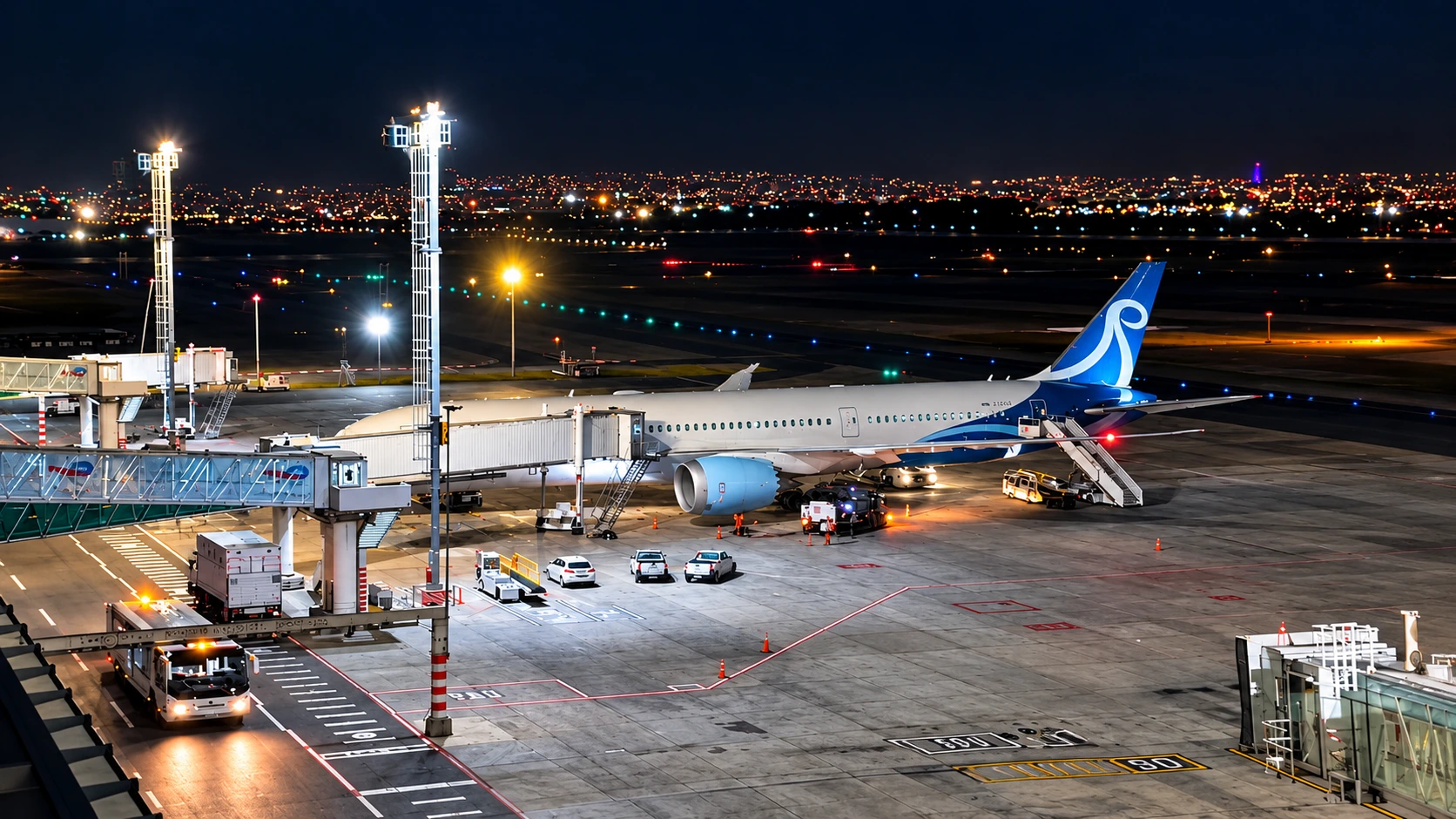
If you’re flying out of Cape Town International Airport today, Friday 30 October 2026, give yourself more time than usual. The airport has warned of longer queues, and the cause is ongoing taxi violence that has kept many of its workers from getting to their jobs.
What the airport has said
In a statement on Friday, the airport confirmed that passengers were waiting longer at security screening points. It put the delays down to staffing constraints linked to the unrest in the city.
Malcolm Koopman, the acting regional manager, gave the clearest picture of how bad things are. He said at least 50 percent of staff couldn’t get to work on Friday. Half the team is a lot to lose. Screening lines only move quickly when enough people are on duty, so it’s no surprise the queues are growing.
The airport says its teams are doing what they can to keep passengers moving and limit the disruption. The advice is simple: expect a slower day and plan for it.
Why this is happening
This didn’t come out of nowhere. The city has had a violent month, with at least a dozen people killed in clashes between rival taxi factions.
Western Cape Police Commissioner General Sizakhele Dyantyi has also warned that police could shut down taxi ranks if the fighting doesn’t stop. That matters because so many people in Cape Town rely on minibus taxis to get to work. When people can’t travel safely, workplaces run short. The airport is just one example, and Friday’s queues show how fast the trouble can spread.
How early should you arrive?
The airport has given clear guidance on arrival times, and the table below makes it easy to check yours.
| Type of trip | Recommended arrival time before departure |
|---|---|
| International flight | At least four hours |
| Domestic flight | At least three hours |
Yes, that’s earlier than most of us are used to. But it’s there to give you enough breathing room to get through screening without panicking about your flight.
Simple steps to protect your trip
You can’t fix the queues. What you can do is arrive ready. Here are a few easy things that make a real difference.
Check your flight status first
Before you leave, check your flight with your airline or on the ACSA app. Those are the two options the airport itself recommends. It takes a minute, and it’s the simplest way to avoid a nasty surprise at the terminal.
Watch the traffic
The airport also asked passengers to keep an eye on traffic updates. Conditions can change quickly when there’s unrest, so a route that looked fine an hour ago might not be fine now. Leave early and know your backup route.
Pack with care
Long queues feel shorter when your bags are sorted. Keep your ID or passport and your boarding pass somewhere you can grab them easily. Follow the airline’s rules on liquids so you don’t hold up the line. And if you still need travel basics like medicine or toiletries, pick them up a day or two before. A last minute stop at dis-chem or dischem on the way to the airport could cost you time you may not have today.
Stay calm and patient
The people working at the airport didn’t cause this. Many of their colleagues couldn’t even get in. Those who made it are under pressure, so a bit of patience and a friendly word goes a long way. It makes the day easier for you too.
A closer look at the staffing problem
An airport only works when lots of different people show up at the same time. Security officers, check in teams, baggage handlers and ground crews all depend on each other. Take away half of them and the whole system slows down.
Picture a busy road where half the lanes are suddenly shut. The same number of cars still need to get through, so everything backs up. At the airport, the cars are passengers, and the shut lanes are screening points that can’t be fully staffed.
That’s also why the airport’s message is practical rather than alarming. It hasn’t said flights are cancelled. It has said that getting through the terminal will take longer. If you want to know whether your own flight is affected, ask your airline directly.
What this means for everyday life in Cape Town
The airport is one of the most visible places where the unrest is being felt, but it’s not the only one. Commuters, workers and families all depend on transport that runs safely and on time. When violence hits the taxi network, the effects ripple outwards fast. Longer queues at the airport are one sign of that.
Police have also said they’re ready to act, with that warning about closing taxi ranks. Whether any ranks actually shut will depend on what happens in the coming days.
Digital tools help on days like this
Days like this show why digital tools are so useful. The ACSA app lets you check updates from your phone instead of standing in a queue to ask someone. Airlines also share flight status online. Building and running tools like these isn’t free, and plenty of South African businesses weigh up the cost. Readers who follow dis-chem digital investment costs will know it’s a topic for many large companies. It’s a separate story from today’s airport news, but the lesson for travellers is the same. Use the tools you have, and use them early.
Who to contact for official information
For airport updates, the best official place to start is the Airports Company South Africa (ACSA) website: airports.co.za. For police and safety information, the South African Police Service shares public updates at saps.gov.za.
Stick to official channels and your airline for the latest. Rumours spread quickly when people are on edge, and they can easily send you the wrong way.
Quick checklist before you leave home
- Check your flight with your airline or the ACSA app.
- Leave early: four hours for international flights, three for domestic.
- Check traffic before you set off.
- Keep your documents handy so you’re not digging through your bag in the queue.
- Be patient with staff and other passengers.
It’s a short list and an easy one to follow. It might save you a lot of stress.
The bottom line
Friday’s delays at Cape Town International Airport come down to one thing: taxi violence has kept a big part of the workforce at home. At least a dozen people have died this month, and police have warned of tougher action if the clashes continue.
For travellers, the message is simple. Arrive early, check your flight, watch the traffic and stay patient. A bit of preparation can still get you where you need to go, even on a tough day.
About the Author