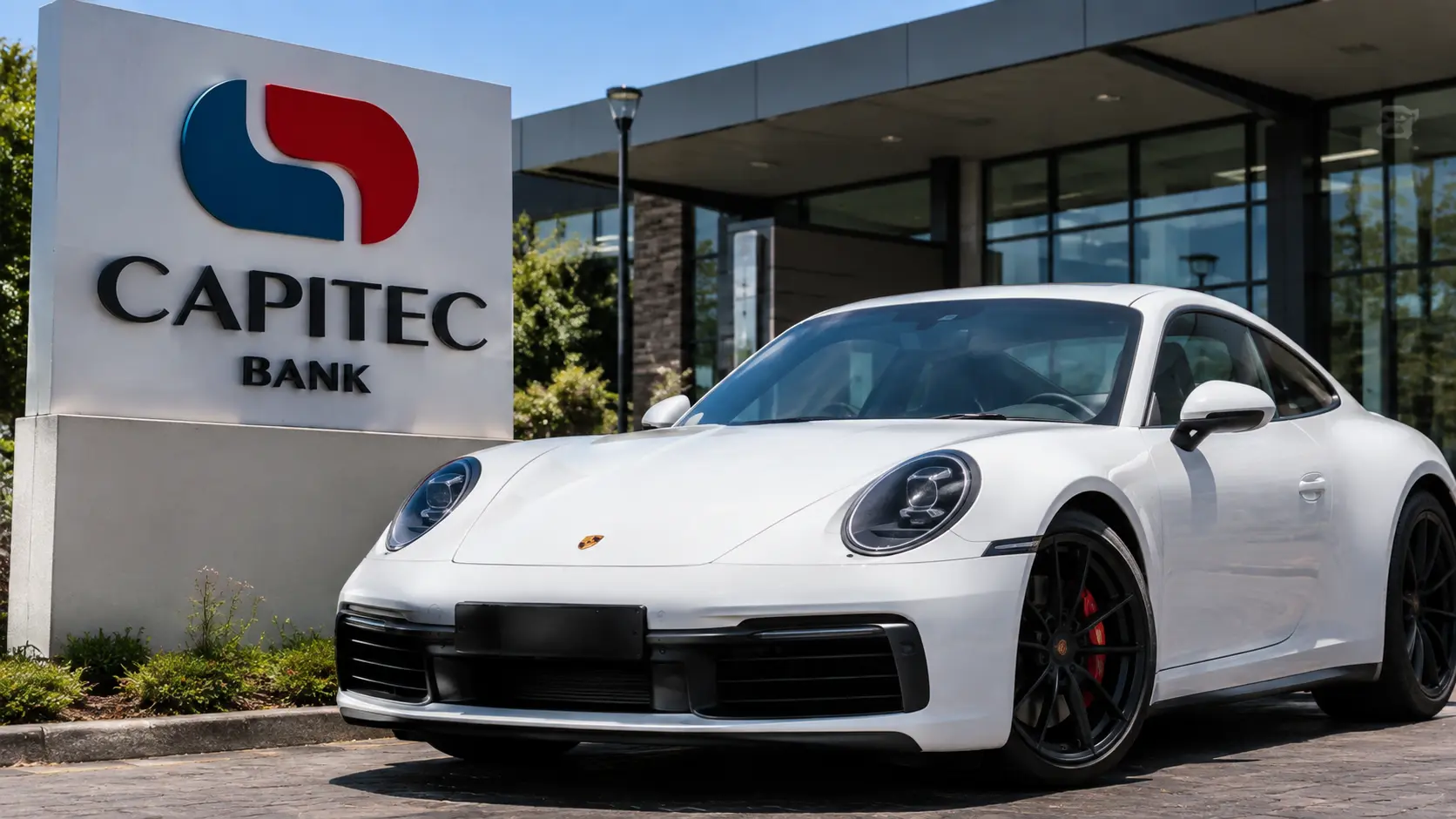
A luxury Porsche 911 Carrera S has finally gone back to its rightful owner after a court battle that lasted almost two years. Capitec Bank has won a case at the Supreme Court of Appeal (SCA) against Ubuntu Family Health Centre Grayston, a company that stopped paying for the car and later collapsed into liquidation.
The ruling brings an end to a long and complicated dispute that started with a simple missed payment and ended up testing an important part of South African company law.
How The Trouble Started
Ubuntu Family Health Centre Grayston bought the 2020 Porsche 911 Carrera S for R2.35 million through an instalment sale agreement with Capitec. Under this kind of deal, the bank pays for the vehicle upfront and the buyer pays it back over time. Ownership only moves to the buyer once the full amount is settled.
Capitec advanced R2.115 million for the car. Ubuntu agreed to pay this back through 59 monthly instalments of R31,638.68, followed by a large final payment of R634,500. It sounds like a simple and workable plan, but things did not go as agreed.
Here is a quick summary of the deal:
| Detail | Amount |
|---|---|
| Purchase price | R2.35 million |
| Amount financed by Capitec | R2.115 million |
| Monthly instalments | 59 payments of R31,638.68 |
| Final balloon payment | R634,500 |
Missed Payments And A Standoff
Ubuntu fell behind on its payments, and Capitec sent a formal letter of demand in late October 2023. Ubuntu promised to catch up on the arrears by mid November but did not follow through. This gave Capitec the right to cancel the agreement, which it did.
On the very same day the agreement was cancelled, Capitec‘s attorney and bank staff went to Ubuntu’s offices to collect the car. This should have been a straightforward and easy process, but Ubuntu’s director refused to hand over the vehicle. He had already paid R100,000 towards the arrears and would not say where the Porsche was being kept.
Even after this refusal, Capitec tried to keep things simple by giving Ubuntu another chance. At a follow up meeting, the director offered to pay R500,000 and proposed a plan to clear the rest of the debt over six months. He also agreed that the bank could come and view the car. Neither promise was kept.
Capitec then sent auctioneers to repossess the vehicle. Once again, they were turned away, with Ubuntu insisting that a court order was needed first. That left Capitec with no choice but to head to court.
Business Rescue Complicates The Case
Just before Capitec filed its urgent court application, Ubuntu placed itself into business rescue. This is a legal process meant to give financially struggling companies breathing room to recover, and it usually pauses most legal action against the company.
Because of this, the Gauteng High Court initially ruled in Ubuntu’s favour. The court found that the moratorium, or pause on legal proceedings, protected under the Companies Act applied to the Porsche while Ubuntu was under business rescue.
Business rescue did not save the company for long. Ubuntu was placed into liquidation in May 2024, meaning its assets would be sold off to pay creditors.
The Supreme Court of Appeal Steps In
Capitec did not give up. The bank took the matter to the Supreme Court of Appeal, and this is where the case took a decisive turn.
Judge of Appeal Fayeeza Kathree Setiloane explained that the pause on legal proceedings under business rescue was never meant to stop an owner from recovering property that a company did not actually own or lawfully possess. Since Capitec had validly cancelled the instalment agreement back in November 2023, Ubuntu had no legal right to keep holding onto the Porsche from that point onward.
The court was clear on this point, stating that the general moratorium found in section 133 of the Companies Act does not apply to what lawyers call vindicatory proceedings, which is simply a legal term for an owner claiming back property that belongs to them.
The SCA found that the High Court had made an error by not following existing legal precedent. As a result, Capitec‘s appeal was upheld, and the court ordered costs against Ubuntu. Ubuntu was instructed to hand the Porsche back to the bank immediately.
Why This Case Matters
This judgment gives useful and simple clarity for banks, businesses, and everyday South Africans who use instalment sale agreements to buy vehicles or equipment. It confirms that entering business rescue does not automatically shield a company from returning property it no longer has the legal right to hold, especially once a finance agreement has been properly cancelled.
For companies exploring business rescue as an option, this case is a reminder that the process protects genuine assets and operations, not property that legally belongs to someone else. Readers who want to understand more about how business rescue works and what protections it does and does not offer can find official information through the Companies and Intellectual Property Commission.
For Capitec, the outcome means the bank can finally recover the value of the vehicle after a long and costly legal road. For anyone involved in similar finance agreements, the case is an easy example of how important it is to understand the terms of an instalment sale contract, and what happens when payments stop.
After close to two years of legal back and forth, the dispute over this high performing German sports car has reached its final stop, with the Porsche set to return to Capitec Bank.
About the Author