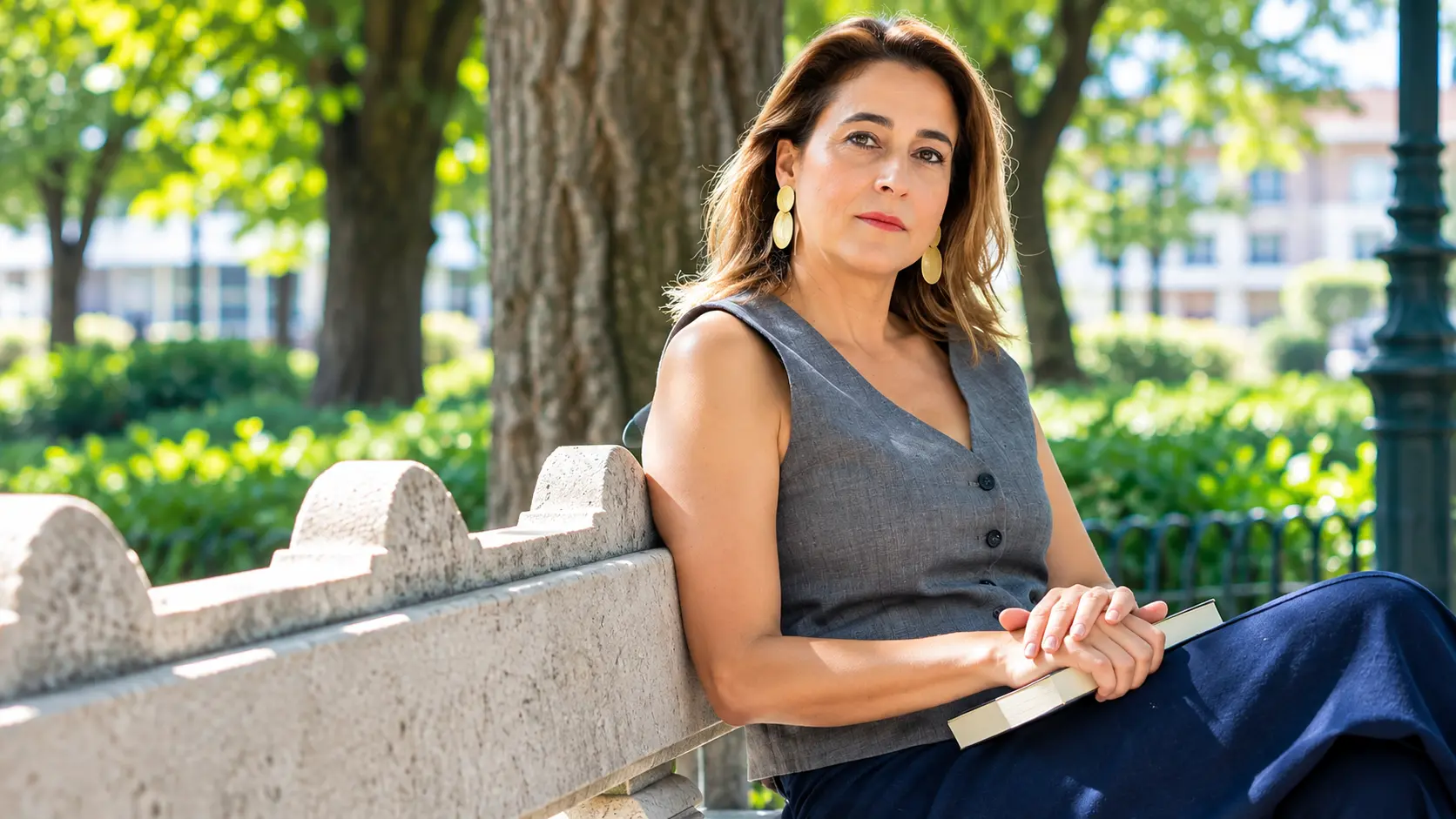
Here’s the thing about museums in Portugal, according to historian Filipa Lowndes Vicente: they still haven’t caught up when it comes to women artists. She’s making this point again right now because her book on women and art history just got reissued after fourteen years sitting in print.
If you’re in South Africa and you follow arts or gender debates, none of this will feel foreign. Museums everywhere are getting asked the same awkward question. Who actually gets remembered, and who slips through the cracks?
Who Is Filipa Lowndes Vicente
Vicente was born in Lisbon back in 1972. These days she’s a historian and researcher at the Institute of Social Sciences at the University of Lisbon, or ICS ULisboa for short. But before that, she lived outside the country for fifteen years. She only moved back to Portugal in 2009.
Her book “Arte sem História: Mulheres e Cultura Artística” (loosely, “Art without History: Women and Artistic Culture”) first came out in 2012. It covers women artists from the sixteenth century all the way to the twentieth. Now that it’s been reissued, she’s got a good excuse to ask the obvious question again. How much has really shifted in Portugal since then?
Museums Still Leaving Women Out
Vicente’s take is blunt. Museums in Portugal, she says, just aren’t thinking hard enough about gender. And she’s quick to add that this isn’t only about a handful of missed exhibitions here and there.
It’s smaller than that too, if you look closely. Those little information cards next to a painting? The way they’re worded, the story they tell around the work, often just leaves women out entirely. Doesn’t sound like much on its own. But do that across every gallery wall in the country for decades, and you end up with a whole public that never learned certain names.
Then there’s the deeper issue. It’s not just which shows get put together for a season. It’s whether museums ever go back and actually look at what’s already sitting in their own collections. A lot of institutions in Portugal never have, Vicente points out, even though that would be a pretty easy place to start.
Some Museums Are Making Changes
Now, Vicente isn’t saying it’s all bad news. A few places, she reckons, are actually doing something about it.
Take Madrid. Both the Prado and the Reina Sofía have been going back through their own collections and pulling women artists out of storage, so to speak. The Reina Sofía started this a while ago. The Prado came to it later than most, but Vicente says it’s now running a programme with several parts, all built around the women artists it already owns.
That’s worth pausing on, because the Prado’s collection leans heavily on sixteenth, seventeenth and eighteenth century painting, exactly the era when women had almost no shot at recognition. So if a museum with that much old, traditional weight behind it can shift course, maybe Portugal can too. Nobody’s saying it’ll be quick or easy.
Curious what that actually looks like in practice? The Museo del Prado has its women artists programme laid out on its own site.
Comparing Portugal With Other Countries
She also brought up the United States and Brazil, saying both are further along than Portugal when it comes to recognising women in the art world.
That’s a comparison South Africans might find familiar too, honestly. Our own museums and galleries deal with the exact same tension, big national institutions and small provincial ones alike. Which artists actually get collected? Whose work gets restored and hung up? Whose name makes it onto the wall text? None of this is a Portugal only problem. It just keeps coming up wherever you look.
If you want to see how this plays out locally, the Department of Sport, Arts and Culture handles heritage and museum policy here in South Africa.
Why Fourteen Years Matter
One thing that stands out is the gap between 2012 and now. Vicente thinks Portugal has genuinely changed in that time. There’s simply more public conversation today about discrimination against women than there used to be.
That doesn’t mean the work is finished, not by a long shot. It just means it’s gotten a bit easier to talk about openly in Portugal. Coming back after fifteen years away probably gave Vicente a sharper before and after view than most people get.
A Simple Idea With Big Implications
Underneath everything, her point is a fairly simple one. Museums aren’t neutral, whatever they might claim. Every choice, right down to what’s printed on a small card next to a painting, tells visitors whose work is worth knowing about.
She’s not asking for some dramatic overnight fix either. What she wants is for museums in Portugal to actually go back and look, check the storerooms, reread the old catalogues, and admit where the gaps are.
What This Means Going Forward
The reissue gives Portugal another shot at looking at its own museums honestly. Whether that actually happens is anyone’s guess. But Vicente’s comments are part of a much bigger conversation happening right now about gender and representation in the arts, one South African museums and universities are having too, in their own way.
Her message, when you boil it down, isn’t complicated. Recognising women artists isn’t about one big exhibition every few years. It’s the slower, unglamorous work, going through collections, rewriting labels, rethinking context, one museum at a time. In Portugal, or really, anywhere else.
About the Author