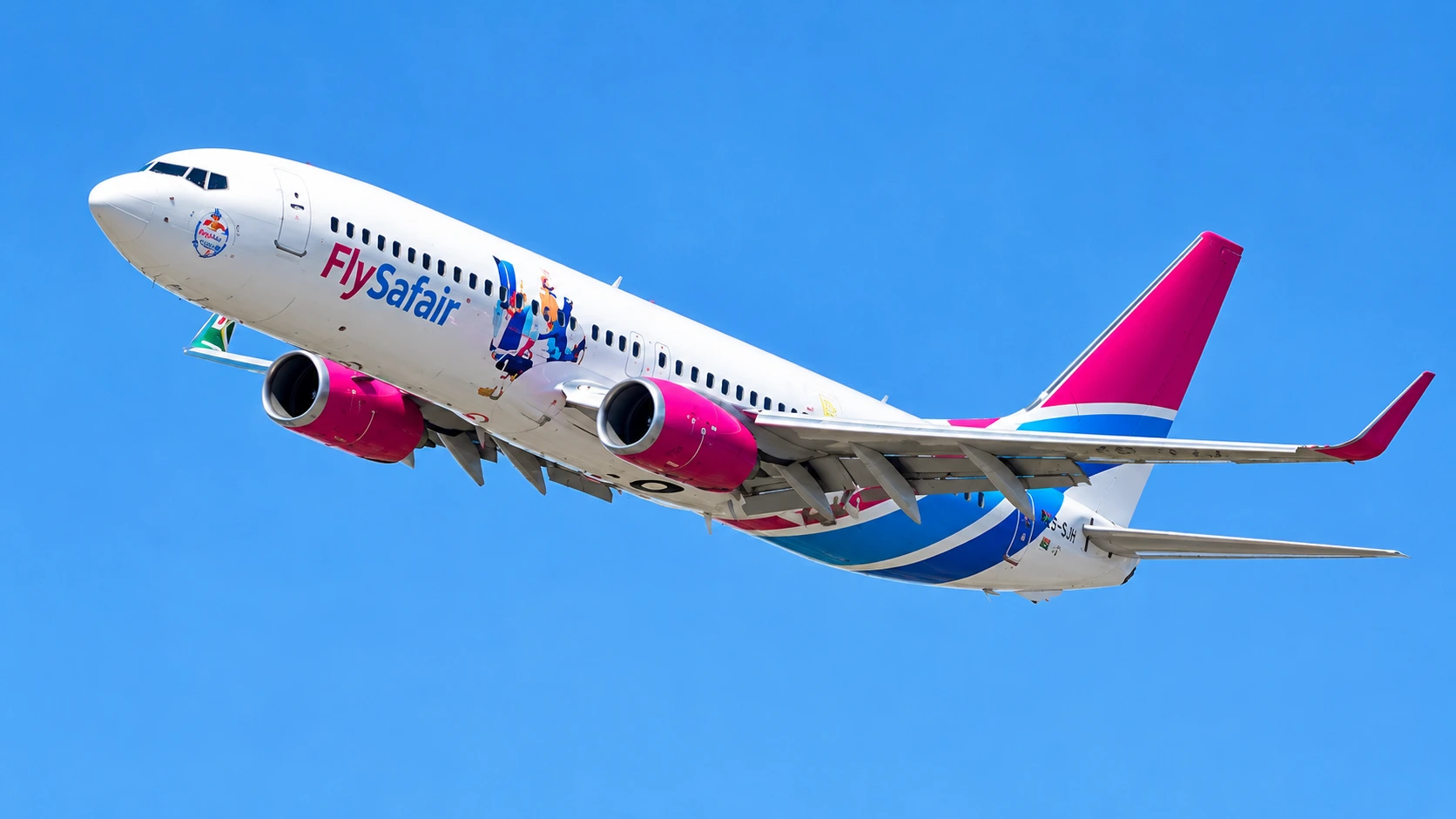
South Africa’s biggest airline has a new owner on the way. The Competition Tribunal has approved the sale of FlySafair to private equity firm Harith General Partners, and the news came out on Wednesday.
Aviation deals of this size don’t come along often. This one also settles a problem that has been hanging over the airline for a couple of years.
What Was Approved
Harith wants to buy the airline, and the Tribunal has now said yes. The buyer is Harith Aviation. On the other side sits Safair Holdings, the parent company of FlySafair. The Competition Commission says Safair Holdings is ultimately owned by ASL Aviation Holdings.
We’re not quite at the finish line, though. The company said on Thursday that a few approvals are still outstanding and some conditions must be met first. If all goes well, the sale should close later this year.
So what does this mean if you have a flight booked? Nothing, for now. The change happens at ownership level. Your ticket is still good and the planes still fly.
Who Is Harith?
Harith is an infrastructure investor that looks after roughly $3 billion in assets. According to the Competition Commission, it puts money into projects in energy, transport, telecommunications, water and healthcare.
The firm first announced its plan back in February 2026. It never shared the price. What it did share, through chairman Tshepo Mahloele, was that the purchase would make up about 15% of its portfolio and would be paid for with debt and equity together.
It’s a natural step for an investor already focused on transport. FlySafair brings a strong brand, a big operation and a route network that covers most of the busiest corridors in the country.
Why the Ownership Question Mattered
This sale has a backstory. For a while now, people have been asking who really owns the airline.
In 2024, the Domestic Air Services Council ruled that the company was breaking the rules. South African law expects local people to be in control of a domestic carrier. But at FlySafair, trusts and companies held 75% of the voting rights, not individuals.
The ruling came after a complaint from rival Lift.
The Harith deal is meant to put that right. Reports say the airline would move into fully local ownership, which helps it meet the ownership rules it was accused of breaking.
A Look at the Size of the Business
It’s hard to overstate how big FlySafair has become. It holds more than 60% of the seating capacity in the local airline market. In Africa’s biggest economy, that makes it the leader by a long way.
The numbers tell a nice story. The budget carrier took off in 2014 with only two aircraft. Today it flies more than 30, and it serves most of the country’s busiest routes.
That size is exactly why regulators paid such close attention. When one airline carries this much of the market, a change at the top can affect choice and prices for everyday travellers.
The Lanseria Concern
The biggest worry wasn’t really about FlySafair itself. It was about Lanseria International Airport, northwest of Johannesburg.
Harith owns a stake in the group that owns Lanseria. That raised an awkward question. Could the investor treat its own airline better than rival airlines that use the same airport?
The Competition Commission looked into it in July 2026 and recommended approval, but with two conditions. The first deals with information exchange, so that sensitive business details don’t leak in ways that hurt competition. The second says that airline and airport services at Lanseria must be offered to other airlines on fair and reasonable terms, with no favouritism.
The regulator will enforce these conditions. Put plainly, a rival at Lanseria shouldn’t lose out just because the airport’s part owner also owns FlySafair.
If you want to know how these reviews work, the Competition Commission of South Africa explains its process on its website. The Competition Tribunal also shares details about its role.
What It Could Mean for Passengers
Let’s be honest. It’s too soon to say what will change for travellers. No new fares, routes or services have been announced, so anyone claiming to know is guessing.
A few things are fairly easy to say, though. Existing bookings stay valid, and nothing in the reports points to a new name or look. A cleaner ownership structure may also cut down the legal uncertainty around the airline. And because of the Lanseria conditions, rival carriers get some protection, which in the end helps passengers keep their options open.
Harith has also said it wants to back the airline’s regional expansion. That sounds promising, but there are no details yet.
What Happens Next
Approval from the Tribunal is a big step, but it isn’t the last one. The parties still have to complete the outstanding approvals and meet the remaining conditions. Only then can the sale close, and the company expects that later this year.
After that, all eyes will be on how Harith runs the business. Passengers, rivals and regulators will be watching closely. The new owner will need to keep the airline running reliably while sticking to the fair play rules at Lanseria.
The Bottom Line
The sale of Safair Holdings’ main business to Harith is a big moment for South African aviation. A budget carrier that started with two planes is now changing hands, and the new owner is local, well funded and bound by clear rules.
For now, nothing changes in the sky. What happens after the deal closes is the part to watch, once Harith shows what it plans to do with the airline.
About the Author