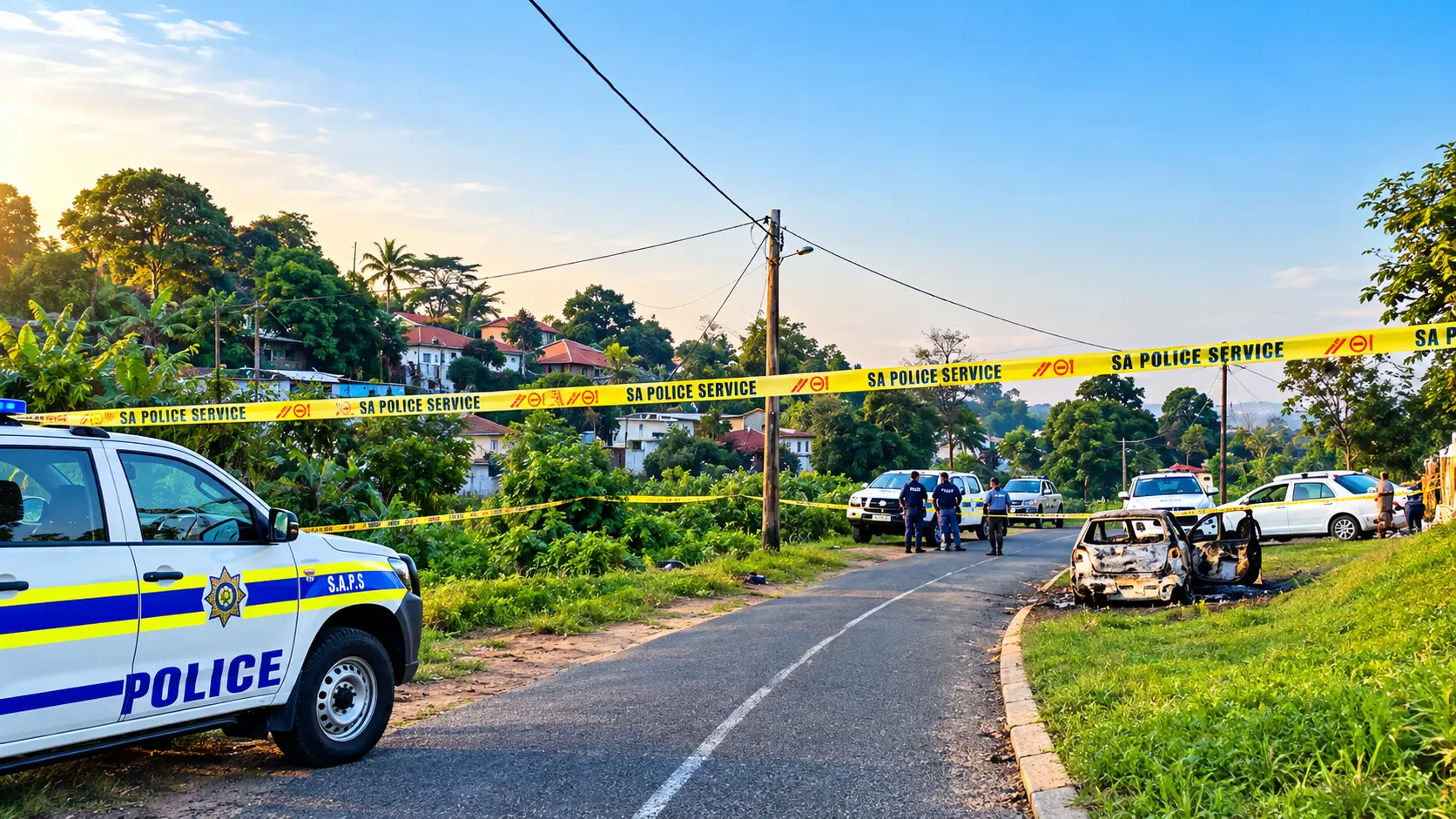
A party in KwaMakhutha turned into a bloodbath on Tuesday night. Eleven people are dead and three more are wounded after three gunmen walked into a house south of Durban and opened fire on the guests inside.
It happened in a township about 30 kilometres from the city, on South Africa’s east coast. By Wednesday morning, police were still searching for the shooters. No one has been arrested yet.
What Happened in KwaMakhutha
Police say around fourteen people were at the house when the attack happened, most of them men, along with one woman who was believed to be pregnant. They had gathered for what was, by every account, an ordinary party.
Then three armed men walked in and started shooting.
Ten people died right there in the house. An eleventh victim died later in hospital, pushing the death toll to eleven. The pregnant woman was among those killed. Three others survived with injuries and are being treated.
Nobody has explained, at least not publicly, how the gunmen got in or how long the shooting lasted. What we do know comes from a brief statement issued by the South African Police Service (SAPS), which is now leading the investigation.
Motive Still Unclear
That is the question everyone is asking, and right now, nobody has a firm answer.
Police have not ruled out the possibility that this was linked to a feud between rival groups. Apparently, some of the people at the house were already known to investigators through other criminal cases. Whether that had anything to do with why the shooters targeted this particular gathering is still unclear.
KwaZulu Natal Premier Thami Ntuli visited the scene himself. He did not mince words, calling the killings “really disturbing.” He also pointed to something residents in the area have raised before, the presence of drug dealing and illegal firearms in the community. It is not a new problem, he suggested, but this attack shows just how badly it can spiral.
Figuring out a motive in a case like this is never a simple exercise. Investigators will need to piece together CCTV footage, if any exists, witness accounts, and forensic evidence from the scene before they can say anything with confidence.
Part of a Wider Pattern
KwaMakhutha is not a one off case. It is the latest entry in a grim, growing list.
Back in June, gunmen killed 12 people in a Johannesburg neighbourhood. In December, two separate mass shootings just weeks apart left 21 people dead between them. One of those attacks happened at a hostel bar near Pretoria, where three of the victims were children.
There is a pattern here, and most people who study crime in South Africa will point to the same root cause, illegal guns. The country technically has fairly strict laws around firearm ownership, but that has not stopped unlicensed weapons from flooding certain communities. Getting hold of one is not as hard as the law would suggest, and that gap between policy and reality keeps costing lives.
The numbers back this up. SAPS recorded 5,427 murders between April and June this year alone. That works out to almost 60 people killed every single day, and shootings remain the most common method by far. Readers can check the South African Police Service’s crime statistics for the full quarterly breakdown, province by province.
A Nation Already on Edge
This shooting did not happen in isolation. It landed at a moment when South Africans, particularly in Gauteng, were already reeling from the discovery of nine women’s bodies near Johannesburg over the past two months, a string of killings that has sparked fears of a serial killer and triggered protests demanding the government actually do something.
So when news of KwaMakhutha broke, it hit a nerve that was already raw. For a lot of people, the sense that you cannot safely go to a party, a tavern, or even sit outside your own home anymore is not paranoia. It is lived experience.
What Police Are Doing Now
Provincial police say they have stepped up patrols around KwaMakhutha since the shooting. Detectives are working the scene for forensic evidence, and they will want to speak to anyone nearby who might have seen the suspects come or go.
Authorities are appealing to the public for tips. Even something that feels minor could matter. Anyone with information is being asked to contact their nearest police station, or report anonymously through Crime Stop.
A Community in Mourning
For the families involved, the hardest part is just beginning, waiting. Bodies typically cannot be released for burial until forensic pathology services complete their identification process, which can take several days when there are this many victims. It is an agonising wait, and not one that gets any easier with practice, however many times a community in South Africa has had to go through it before.
For now, KwaMakhutha is left to mourn, and to hope that this time, the people responsible actually get caught.
About the Author