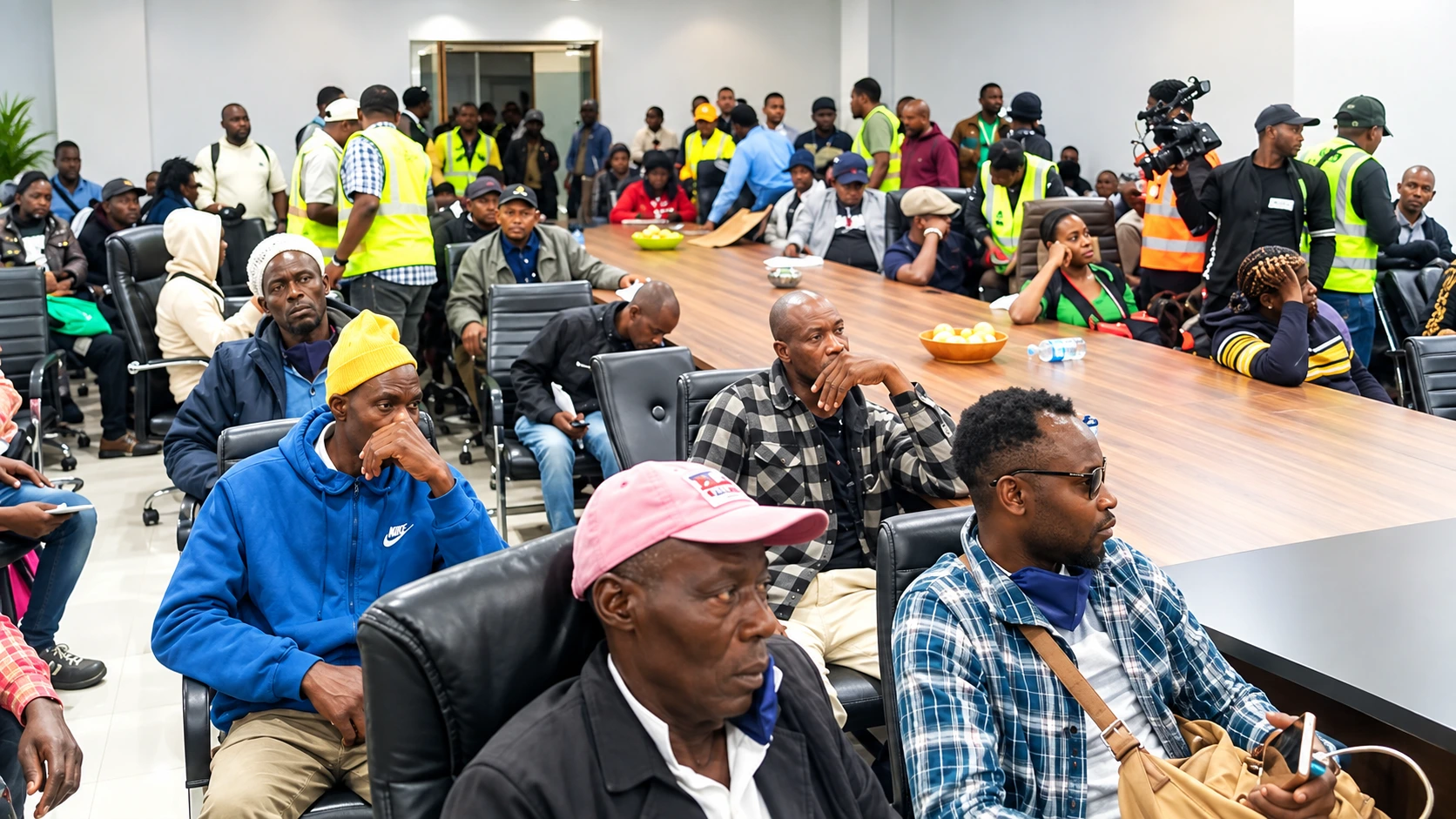
Another group of Nigerian returnees has landed back home, and once again the stories coming out of South Africa aren’t easy to hear. Some spent close to a decade building a life there. Now they’re back, carrying very little besides the memory of what they went through.
This isn’t the first time such accounts have surfaced, and honestly, that’s part of what makes them worth paying attention to. For readers in South Africa, these testimonies say something about how migrants experience daily life here, whether that picture matches what most citizens see or not.
What The Returnees Are Saying
The details vary from person to person, but a few threads keep showing up. Fear. Sudden loss. A sense that no one was really listening when things went wrong.
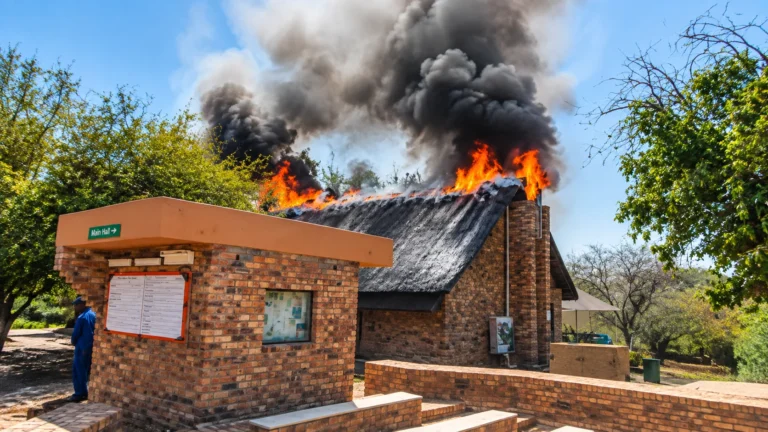
One man described watching his own workshop go up in flames, along with the cars he’d spent years fixing. He didn’t dress it up. He just said it plainly, the way you’d expect someone still processing a shock like that to talk. Another recalled being confronted by armed men years earlier, an experience he says he never fully shook off, even after moving on with his life in South Africa.
Then there were the quieter, almost mundane complaints, the kind that pile up slowly rather than hit all at once. Officials showing up not to help but to extort. Being singled out the moment someone heard a Nigerian accent. None of it sounds dramatic on its own, but strung together over months or years, it wears a person down.
Several of the returnees didn’t hide their relief at being home. A few thanked the Nigerian government directly, and more than one mentioned how the flight home, arranged with outside help, felt like a genuinely simple gesture of kindness at a time when almost nothing else did.
A Pattern That Keeps Repeating
Here’s the thing that stands out once you line these stories up next to each other: they’re not isolated. People who never met each other, living in different cities, doing completely different jobs, kept describing the same kind of treatment.
Being targeted for where they were born. Paying bribes just to avoid trouble. Getting nowhere when they tried to report it.
Coming home hasn’t been a clean break for most of them either. Nigeria isn’t the country they left, not really, and rebuilding from scratch is rarely easy, especially for someone who’s spent the better part of ten years somewhere else. A handful said they walked away from businesses, homes, even relationships, with next to nothing to show for the years they’d put in.
To put some scale on it, here’s a rough breakdown of recent returnee groups based on figures reported around each evacuation flight.
| Reported Batch | Approximate Number | Notes |
|---|---|---|
| Early evacuation flight | 187 returnees | Delayed departure due to documentation issues |
| Later evacuation flight | 268 returnees | Received by Nigerian officials on arrival |
| Later evacuation flight | 271 returnees | Third confirmed batch reported |
| Final evacuation flight | 315 returnees | Described as the last flight in the current round |
That’s hundreds of people, not a handful, choosing to leave behind everything they built rather than stay.
Why This Matters For South Africans
It would be easy for South African readers to see this as someone else’s story. It isn’t, not entirely. How the country is seen abroad, how it’s talked about in diplomatic circles and boardrooms, gets shaped by accounts like these, fair or not.
There’s another side worth naming too. Plenty of South Africans have real, valid frustrations of their own, about jobs that feel scarce, housing that feels stretched thinner every year, services that already struggle to keep up. None of that disappears just because someone else is also struggling. That’s what makes this whole issue so tangled, and why there’s rarely a simple answer that satisfies everyone involved.
What does exist, at least on paper, is a legal framework meant to protect anyone living in South Africa, citizen or not, from unlawful treatment. Complaints about discrimination can be brought to the South African Human Rights Commission, which is set up specifically to look into cases like these.
On the Nigerian side, returning citizens have had some support waiting for them on arrival. Anyone wanting more detail on how that consular assistance works can check with the Nigerian Ministry of Foreign Affairs.
The Road Ahead
Most of what returnees are asking for now isn’t complicated. Help finding work. Some kind of support to get a small business off the ground again. Better communication between the two governments, so the next person doesn’t have to learn these lessons the hard way.
There’s nothing easy about packing up a decade of your life and starting over with almost nothing. That’s the part that tends to get lost in the numbers and the headlines.
Whether anything actually changes will come down to how seriously these stories are taken, not just in Nigeria, but here too. That’s not a simple fix, and nobody’s pretending it is. But ignoring it hasn’t worked so far either.
For South African readers following along, maybe the point isn’t to assign blame. It’s just to listen to what people who lived through it are actually saying, and let that sit alongside everything else already known about life here.
About the Author