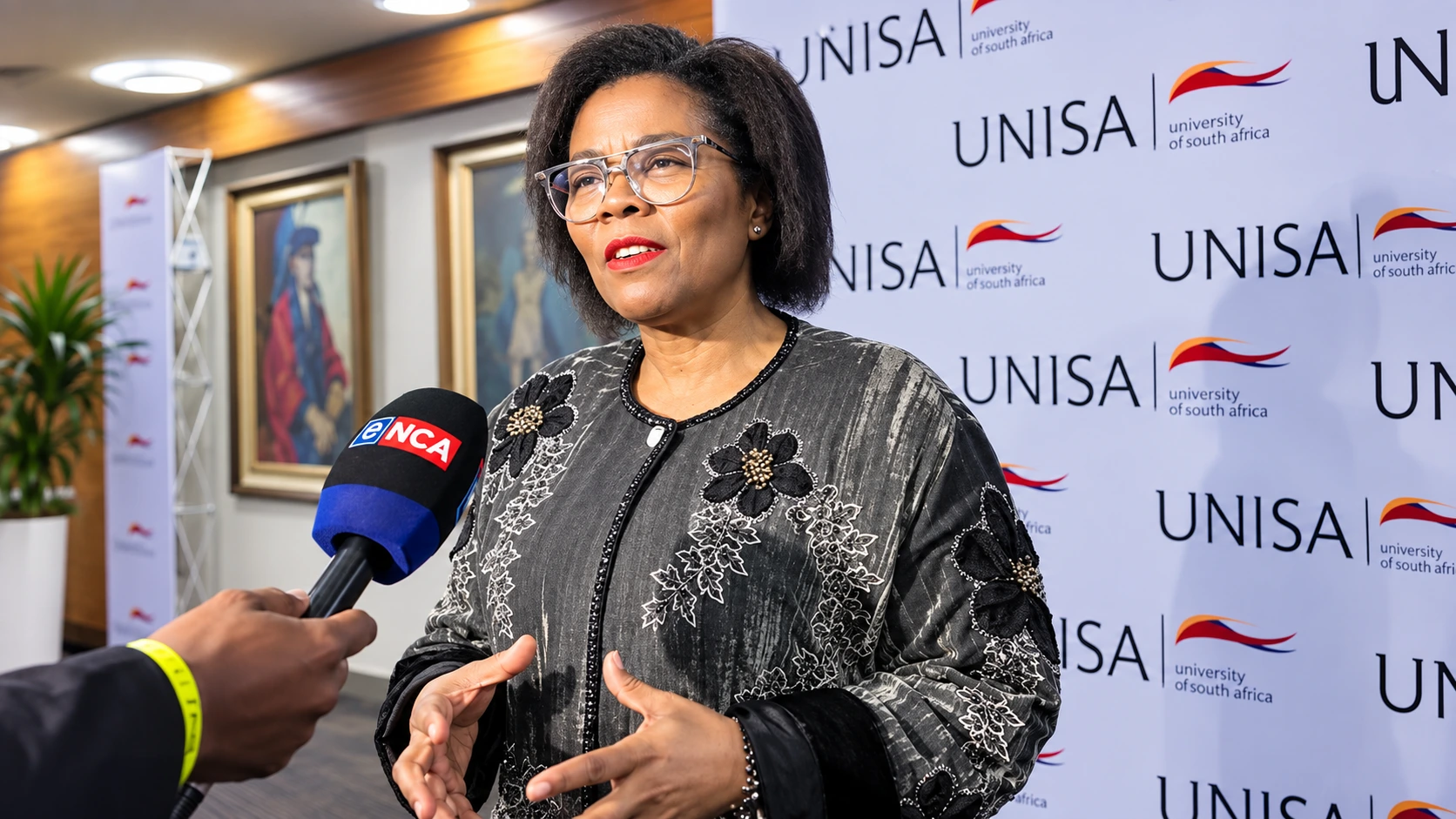
The University of South Africa (Unisa) has raised R8 million at its second Convocation Fundraising Gala Dinner, money that will go directly towards helping students settle outstanding fees and graduate. The event builds on a campaign that began just last year and shows how much support can grow when a community pulls together for a common cause.
For thousands of Unisa students, unpaid fees are the only thing standing between them and a qualification they have already earned through years of hard work. This latest fundraising milestone offers real hope that more of them will finally get to hold their certificates.
A campaign that keeps growing
Unisa’s Convocation, the official body representing the university’s graduates, hosted its first ever Gala Dinner in September 2025. That inaugural event raised over R5 million in donations and pledges, a result the Convocation described as historic at the time. Building on that success, the Convocation set its sights higher for 2026, aiming to raise even more to support students affected by historical debt.
This year’s gala more than delivered on that goal. Guests including members of Council, the Unisa Foundation Board of Trustees, business leaders, alumni and academics gathered once again to hear from students whose futures depend on this kind of support. The result was a simple but powerful outcome, R8 million raised in a single evening.
Here is a quick look at how the two galas compare:
| Gala Dinner | Amount Raised | Focus |
|---|---|---|
| First Gala (2025) | Over R5 million | Inaugural fundraiser for student debt relief |
| Second Gala (2026) | R8 million | Continued support for students affected by debt |
Why student debt is such a big problem
Student debt is not just a Unisa issue. It is a national concern that affects graduates across South Africa. According to the university, the country’s post school education sector is dealing with an estimated R59 billion in historical student debt. This has left roughly 165,000 graduates unable to access their qualifications simply because they still owe money.
At Unisa specifically, many students come from working class and poor households. Nearly half of the university’s 387,000 students fall into this category, and for a large number of them, Unisa represents their only real chance at higher education. When fees pile up, even students who are one or two modules away from finishing their degrees can find themselves stuck, unable to graduate and unable to move forward with their lives.
This is exactly the gap the Convocation’s fundraising campaign hopes to close.
Where the money will go
Funds raised through the gala dinner are aimed squarely at students affected by historical debt, particularly those who are close to completing their studies but cannot proceed because of unpaid balances. The university has also been running other support measures alongside the gala campaign, including debt write offs for eligible students, institutional bursaries, and financial assistance for students who fall short due to gaps in funding from the National Student Financial Aid Scheme (NSFAS). Readers who want to understand how NSFAS funding works can find more information on the official NSFAS website.
The Convocation has made it clear that this is not meant to be a once off effort. Instead, it wants to build a lasting culture of giving among alumni, corporate partners and the wider Unisa community, so that support for students becomes an ongoing tradition rather than an occasional gesture.
Voices behind the campaign
Convocation President Justice Dabampe has been a leading voice in the fundraising drive, repeatedly calling on Unisa’s enormous alumni network, which includes over one million graduates, to give back to the institution that shaped their own careers. Many of these alumni now hold influential positions in government, business and civil society, and the Convocation believes that even a small contribution from a fraction of them could make a huge difference.
The university’s National Student Representative Council (NSRC), led by Nkosinathi Mabilane, has also played an important role in the campaign. Student leaders have spoken openly about classmates who attend lectures on empty stomachs or struggle to find safe accommodation, reminding donors that contributions are not simply charity but an investment in real lives and real futures.
A simple idea with a big impact
What makes this campaign work is how simple the concept really is. Instead of relying only on government funding or institutional budgets, Unisa is asking its own community, graduates, staff, business partners and friends of the university, to step in and help students cross the finish line. It is an easy way for people who have already benefited from a Unisa education to give something back, whether through attending the gala dinner or contributing in other ways.
The approach also makes it easy for corporate partners to get involved beyond just writing a cheque. The Convocation has encouraged businesses to support students through internships, mentorship and training opportunities, not only financial donations. This wider view of support means students get help that goes beyond just clearing debt, it also opens doors to work experience and future employment.
Looking ahead
With R8 million now raised, attention turns to how these funds will be distributed and how many students will benefit directly. Based on how the first gala’s proceeds were used, the money is likely to help students who are within a few modules of completing their qualifications but have been blocked by unpaid fees.
The Convocation has already signalled that this will not be the last gala dinner. Each year appears to bring a bigger target and a bigger result, suggesting that Unisa’s approach to tackling student debt through community fundraising is gaining real momentum. For students sitting on the edge of graduation, unable to move forward because of money they simply do not have, this growing support could be the difference between staying stuck and finally graduating.
As South Africa continues to grapple with the wider issue of student debt across its universities, Unisa’s gala dinner campaign offers a working example of what collective giving can achieve. It will not solve the R59 billion national debt problem on its own, but for the students who benefit directly, R8 million represents something deeply personal, a real chance to finish what they started.
For more information on higher education funding and support in South Africa, readers can also visit the Department of Higher Education and Training website.
About the Author