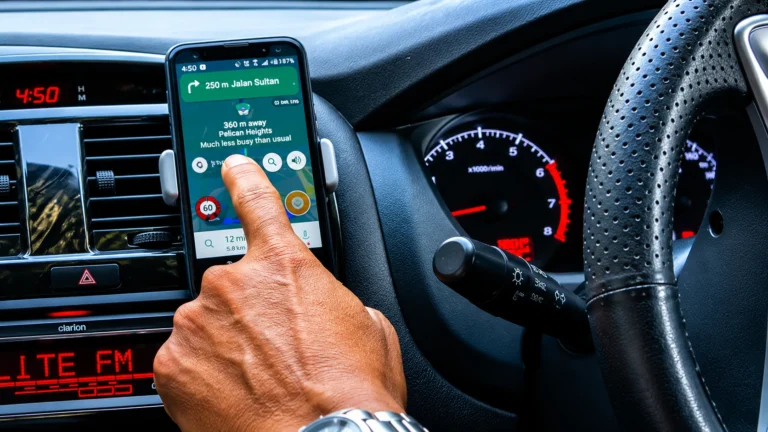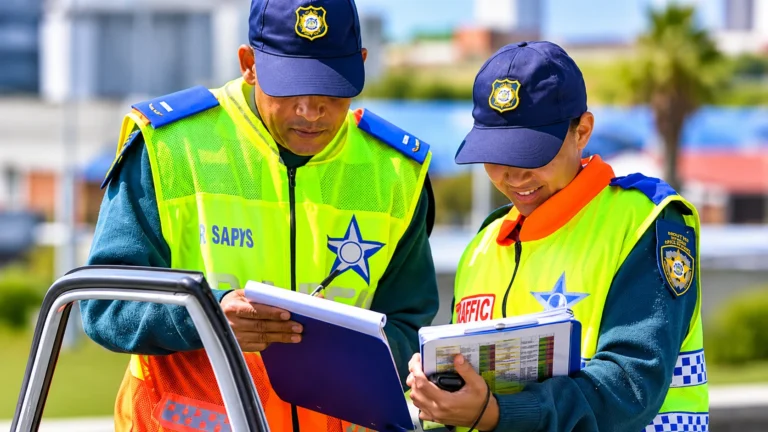
Checking your demerit points could soon cost you money. Under the new AARTO system, every driving licence holder in South Africa will pay R60 each time they ask for their points balance. Critics say this is a simple database lookup that should be free.
What is changing for drivers
The Administrative Adjudication of Road Traffic Offences, known as AARTO, is the system that handles traffic infringements in a new way. It also tracks demerit points for drivers who break the rules.
The published fee schedule says a demerit point enquiry will cost R60. You pay this every time you ask, not once a year. For many motorists, that is a surprise.
The fee has drawn sharp criticism. The managing director of Driving.co.za, Rob Handfield-Jones, says the information sits on a government database. In his view, motorists should be able to see their own record at no cost.
It is easy to see why this matters. Your points balance affects whether you keep your licence. Knowing where you stand should be simple and open to everyone.
Why critics say the fee makes no sense
Handfield-Jones argues that the real cost to the Road Traffic Infringement Agency is close to nothing. He described the request as a single line of database code, which returns only a tiny amount of data. businesstech
In his words, charging anything for this is hard to defend. Charging R60 is worse. He believes the service should be free so that South African drivers stay informed about their points. A driver who checks often is a driver who is more careful on the road.
That argument is easy to follow. If the state wants better driving habits, it should make it simple for people to see their record.
The hidden burden for working drivers
The fee may hit some people harder than others. Many people use driving as part of their job. Think of delivery drivers, sales reps, taxi operators and company fleet staff.
Handfield-Jones warns that employers will almost certainly ask these workers to declare their demerit points on a regular basis. Companies do this for governance and insurance reasons. The only way to prove your balance is to make an official enquiry.
Here is the simple maths, based on four checks a year.
| Item | Amount |
|---|---|
| Fee per enquiry | R60 |
| Four enquiries in a year | R240 |
| Minimum wage per hour (approx.) | R30.20 |
| Monthly pay, 8 hours a day over 22 days | R5,315.20 |
| Yearly fee as a share of monthly pay | About 4.5% |
So a worker on the national minimum wage could lose close to 4.5% of a full month’s pay just to prove a clean record. That is a real cost for someone who already earns very little. It is also easy to forget that these checks may be needed more than four times a year.
Questions about transparency
Cost is not the only worry. Handfield-Jones also raised concerns about how the final regulations were produced.
He says the final version differs greatly from the draft that was open for public comment. In his view, the wording and content changed so much that the final text barely resembles the draft. He also says the public had no chance to comment on these changes, and that some new ideas appeared that were never in earlier drafts.
This matters because public comment exists to give ordinary people a voice. If big changes arrive after that stage, trust in the process drops.
Where the AARTO rollout stands
President Cyril Ramaphosa approved the rollout of AARTO to dozens of municipalities from 1 July 2026. So the system is no longer just an idea. It is already part of the driving landscape in many parts of the country.
The Organisation Undoing Tax Abuse, or OUTA, has also raised red flags. The group first went to court to try to stop the expansion of AARTO. Its main argument was that the Road Traffic Infringement Agency had not shared proper information about the Appeals Tribunal.
That tribunal is the independent body where motorists can ask for a review of an infringement they dispute. It is a key safety net. Without it, a driver who feels a fine is unfair has nowhere to turn.
After OUTA acted, the agency released details about the tribunal. This removed one of the reasons OUTA planned to use for urgent legal action. Still, OUTA said the delay showed a bigger problem. Motorists should never have been left wondering whether the tribunal existed, who sat on it, or how to appeal.
Advocate Stefanie Fick, OUTA’s executive director for accountability, said the heart of the matter is transparency.
What this means for you
For now, the best step is to stay informed. Here are a few simple ideas for every driving licence holder.
- Keep track of your infringements. Do not wait for a problem before you look at your record.
- Know your rights. If you receive a notice you believe is wrong, you can challenge it through the official process, including the Appeals Tribunal.
- Budget for the fee. If your employer asks for proof of your points, ask who will pay for the enquiry.
- Use official channels only. The Road Traffic Infringement Authority has warned about fake AARTO websites that try to steal personal and payment details. The only official site is online.aarto.gov.za.
You can also read more about the system and its work on the Road Traffic Infringement Authority website.
The bottom line
The R60 fee may look small at first glance. But it is charged per check, and it can add up fast for people who need to prove their record often. Critics say the cost has no real basis, since the service takes almost no effort to run.
Add the concerns about public participation and the Appeals Tribunal, and many motorists are left asking fair questions. Will the fee stay? Will it be changed? Will a free option be added to promote safer driving?
For now, the answers are not clear. What is clear is that millions of South Africans who rely on driving every day will be watching closely. Understanding how AARTO works is the easy first step. Staying alert as the rules develop is the smart next one.
About the Author