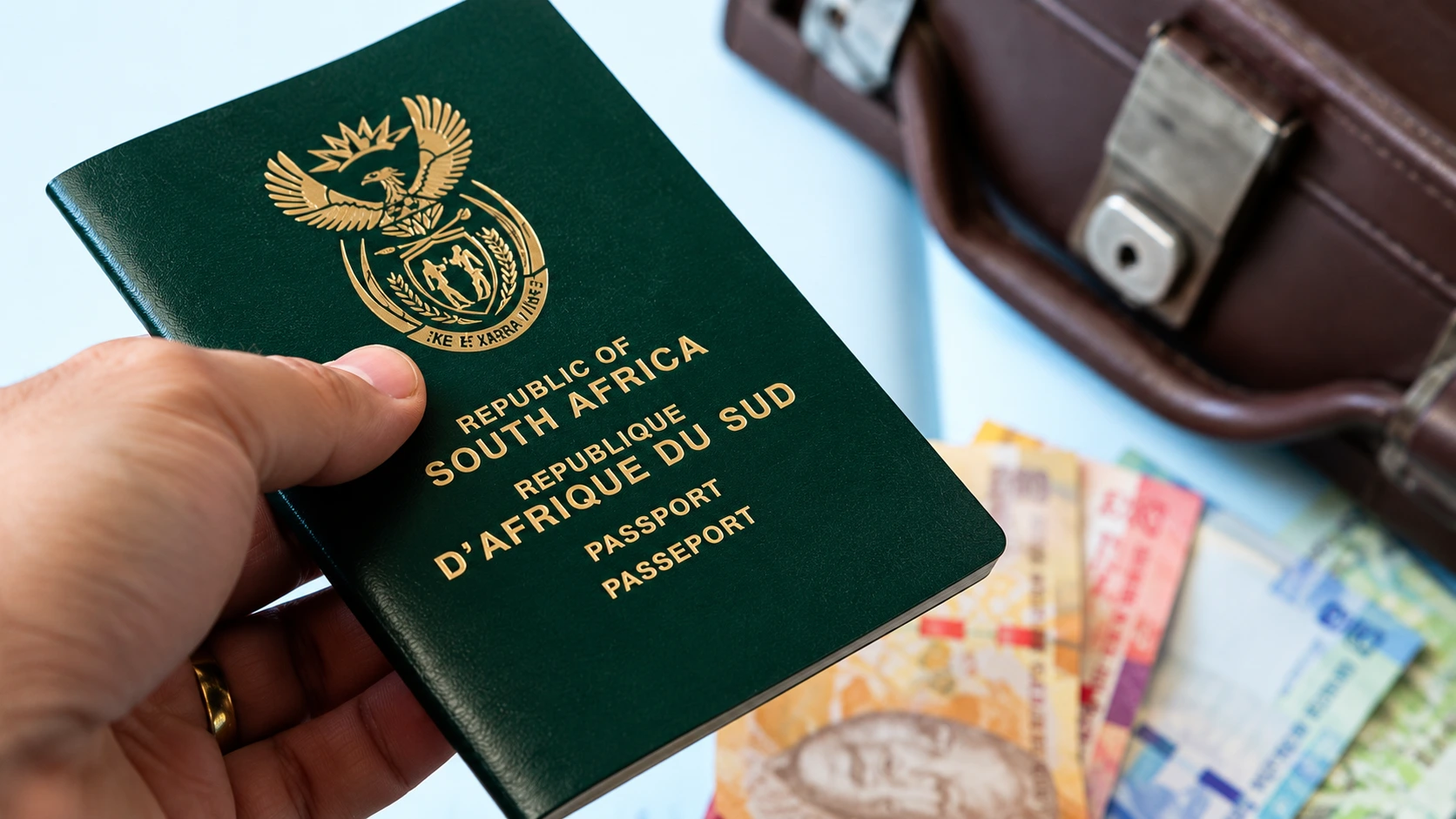
Three people have been arrested over a passport fraud case that goes back to 2023. Two of them are former Home Affairs officials. The third is a member of the public. They’re accused of helping push through ten fraudulent passport applications at an office in the Free State. The message is simple: if you abuse a government job, the case can still find you years later.
What happened at the Bothaville office
It all allegedly took place at the Bothaville Home Affairs office in 2023. The department says the suspects used a trick called photo swapping to get passports issued when they shouldn’t have been. Ten applications sit at the centre of the case.
Two teams worked on it: the department’s Counter Corruption Unit and the Hawks. They traced the applications back and, in the end, to the three people now facing charges.
The suspects appeared in the Bothaville Magistrate’s Court on 27 October 2026. The case was postponed to 20 January 2027. Nobody has been convicted yet. For now they’re only accused, and the court still has to hear the matter.
How photo swapping works
The idea is easy to explain, even if it was hard to catch. According to the department, the scheme let suspects take the identity details of real South African citizens and attach the photograph of a foreign national.
Put simply, the passport said one thing about who you are and showed someone else’s face.
Think about what a passport is for. It’s supposed to prove you are who you say you are. If the face and the details don’t match the same person, that proof is worthless. That’s why passport fraud like this gets taken so seriously. Someone ends up carrying an identity that isn’t theirs.
Outdated systems and closed loopholes
Home Affairs Minister Dr Leon Schreiber said the case exploited weaknesses in outdated systems. Those gaps made photo swapping possible. He also said the people involved now face the full force of the law.
The department has since shut certain loopholes linked to biometric verification. In plain terms, biometric checks match things like your face or fingerprints against official records. When those checks are weak, cheating gets easier. When they’re strong, it gets a lot harder.
Schreiber says this is part of the department’s wider digital transformation reform programme. His words were that the aim is to design corruption out of Home Affairs.
He described a two part plan. One part is going after corrupt people without fear or favour. The other is using technology to take away the openings they’d use. In his view, that’s what turns Home Affairs from a department that reacts to corruption into one that stops it before it starts. It’s a simple idea, though pulling it off across a big department is another matter.
The numbers behind the crackdown
These arrests aren’t a one off. Here’s a quick look at the facts from this case and the wider drive.
| Detail | What we know |
|---|---|
| Location | Bothaville Home Affairs office, Free State |
| Year of alleged offence | 2023 |
| Applications involved | Ten passport applications |
| Suspects | Two former Home Affairs officials and one civilian |
| Investigators | Counter Corruption Unit and the Hawks |
| First court appearance | 27 October 2026 |
| Next court date | 20 January 2027 |
| Arrests since July 2024 | 44 people |
| Officials dismissed since July 2024 | 98 |
It’s easy to skim past figures like these. But each one stands for a case where someone allegedly misused a position of trust. Forty four arrests and 98 dismissals in about two years shows the department is busy on this front.
Another passport fraud case earlier this month
Earlier in October 2026, a different passport fraud case hit the news. A syndicate accused of selling South African passports to foreign nationals for up to R100 000 each took a knock when two former Home Affairs officials were arrested.
That scheme also leaned on loopholes in the department’s old systems. It came out of a joint investigation by the same two bodies, the Counter Corruption Unit and the Hawks, into a syndicate uncovered back in 2022. The suspects allegedly used the same photo swapping trick, pairing real citizens’ details with foreign nationals’ photos.
Are the Bothaville case and the syndicate case connected? The details released don’t say. What they do show is that the same weak spot turned up twice.
Why this matters to ordinary South Africans
Most of us just want a passport the honest way. We queue, fill in the forms, pay what we owe and wait.
Fraud like this cuts into that. It shakes trust in a document people rely on. It puts real citizens’ identity details at risk. And it eats up state money and time, since some of these cases only reached court three years after the alleged crimes.
That’s also why better technology matters. A modern system with strong checks should be simple for honest applicants and much tougher on insiders who want to cheat.
What you can do
You don’t need to be an expert to protect yourself. A few habits help.
Stick to official channels. The Department of Home Affairs explains how to apply for a passport on its official website. The honest route is also the safest one.
Be wary of shortcuts. If someone promises you a fast passport for cash, that’s a red flag. Walk away.
If you see or suspect corruption in a government office, you can report it through the national hotline run by the Public Service Commission.
Look after your personal details as well. It’s easy to hand over copies of your ID without thinking twice, and that can come back to bite you.
What happens next
The case returns to the Bothaville Magistrate’s Court in January 2027. The accused will get their chance to answer the allegations, and the court will decide.
The bigger story isn’t finished. The department says it will keep combining investigations with technology to root out corruption. If the numbers since July 2024 are any guide, more arrests could follow.
Passport fraud is a serious crime because it undermines the whole system. Tighter checks, faster investigations and fewer places for corrupt officials to hide are meant to make it harder to pull off. For honest South Africans, the goal is a process that’s simple, secure and fair.
About the Author