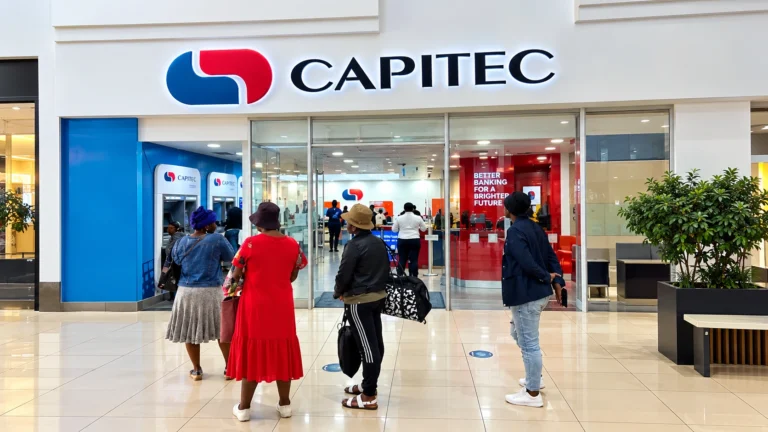
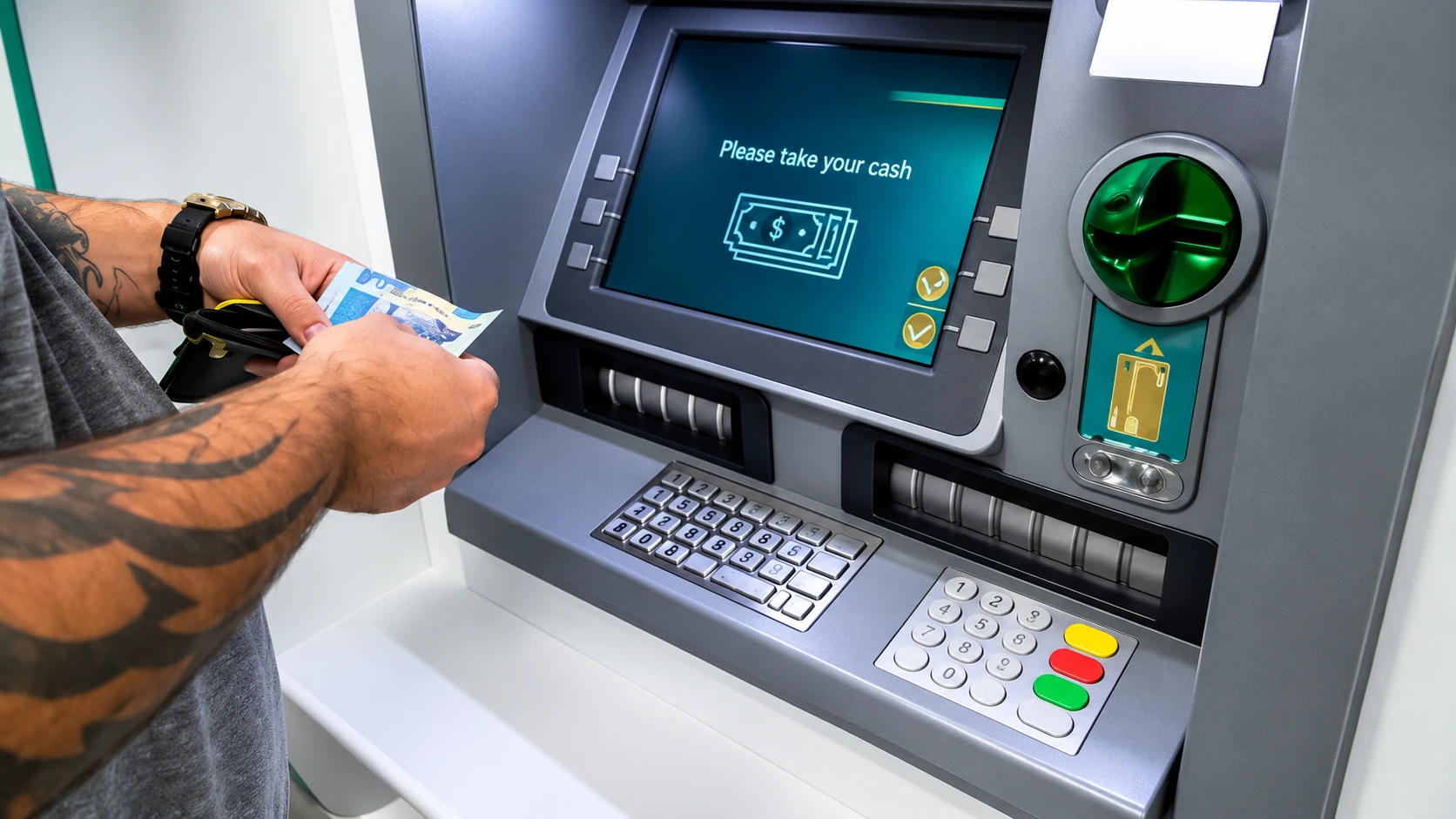
Cash feels simple. You hand it over, you get your goods, and the deal is done. But the South African Reserve Bank (SARB) says that simple feeling hides a very large bill.
Its Cost of Cash Industry Report 2026 shows that crime linked to cash costs South Africans about R12 billion a year. That works out to roughly R1 billion every month. Many people now call it a “robbery tax“.
Let’s break down what the report found, who feels it most, and what could make cash cheaper and safer.
What is the “robbery tax”?
It is not a real tax. You will not find it on a payslip or an SARS statement. It is the money South Africans lose each year to theft, muggings and other cash related crime.
The SARB puts this loss at R12 billion, which is about 14% of the total cost of cash for consumers. It is one of the biggest hidden costs in the system.
The central bank also pointed to travel time, which adds another R8.3 billion or 9%. Together, these two figures show that safety risks and time spent getting to cash are major costs, even though no one sends you a bill for them.
It is an easy thing to miss. You may never think of a stolen wallet or a long walk to an ATM as a cost of using cash. The report does.
The bigger picture: R88.5 billion a year
The robbery tax is only one piece of a much larger puzzle. The SARB estimates that cash costs consumers R88.5 billion every year.
This total splits almost evenly:
- R43.5 billion (49%) comes from direct costs
- R44.9 billion (51%) comes from indirect costs
Direct costs are the ones you can see, like bank charges. Indirect costs are the ones you feel, like lost hours and lost money. Here is an easy summary of the main items:
| Cost item | Yearly amount |
|---|---|
| Bank fees for cash transactions | R31 billion |
| Withdrawal fees | R17.7 billion |
| Deposit fees | R13.3 billion |
| Travel to ATMs and branches (taxi fares, fuel and similar costs) | R12.5 billion |
| Time lost to queues and travel | R27.8 billion |
| Time spent in queues | R19.5 billion |
| Time spent travelling | R8.3 billion |
| Cash handling costs passed on by retailers and informal traders | R3.9 billion |
| Interest lost by holding physical cash | R1.3 billion |
| Cash crime (the robbery tax) | R12 billion |
Some of these lines sit inside others. Withdrawal and deposit fees, for example, make up the R31 billion in bank charges. So please do not add every row together. The table simply shows where the money goes.
Bank fees take the biggest bite
Of all the direct costs, bank fees are the heaviest. South Africans pay R31 billion a year in charges to move physical cash in and out of their accounts.
Withdrawals alone cost R17.7 billion. Deposits cost another R13.3 billion.
Then comes the cost of simply getting to the cash. People spend R12.5 billion a year on taxi fares, fuel and other travel to reach ATMs and bank branches. For someone in a rural area or a township with few cash points, that trip can be a real expense.
Time is money too
The report also puts a price on your time. Lost time adds up to R27.8 billion a year.
Most of that, R19.5 billion, comes from waiting in queues. The other R8.3 billion comes from travelling to cash points.
Anyone who has stood in a long month end queue will know this feels true. An hour at the bank is an hour you could have spent working, studying or resting.
Shops and informal traders face costs too. They handle cash all day, and they pass about R3.9 billion of those costs on to shoppers through higher prices. So even if you rarely visit a bank, you may still pay a small part of the cost of cash at the till.
Finally, there is R1.3 billion in lost interest. Money sitting in your pocket does not earn anything. The same money in an interest bearing account would.
Poorer households carry the heaviest load
This is where the report becomes most worrying. The cost of cash does not fall evenly.
People earning between R0 and R1,250 a month spend about 5% of their income on cash related costs. People earning more than R20,000 a month spend only about 1%.
In other words, those with the least pay the most, as a share of what they earn. A simple fee or taxi fare means far more when your income is small.
When crime forces a shop to stop taking cash
The security problem reaches beyond individuals. The SARB report shares a case study of a national retailer in a low income area.
The store faced repeated armed robberies over a long period. To protect its staff and customers, it decided to stop accepting cash.
That sounds like a safe and simple fix. But many local shoppers had no bank cards. After the change, the retailer saw its sales fall by more than a third.
The story shows how hard the problem is. Cash is risky to carry and risky to hold. Yet many people have no easy alternative.
The cash supply chain costs billions more
Getting cash to shops, banks and ATMs is a huge operation. The SARB estimates that running this cash supply chain costs another R27.1 billion every year.
The costs are shared like this:
- Banks: R21.6 billion
- Retailers and informal businesses: R4.3 billion
- Essential industry services: R1.2 billion
Cash in transit services alone cost around R6.95 billion a year. They move about R2.8 trillion in physical currency around the economy. That is a lot of money on the road, which helps explain why security is such a big expense.
Some ways to get cash cost much less
Not every way of getting cash costs the same. The report compared three options, and the gap is easy to see. For every R100 handled:
| Where you get cash | Cost per R100 |
|---|---|
| Bank branch | R1.53 |
| ATM | R0.68 |
| Supermarket till cash back | R0.12 |
Till cash back is by far the cheapest. It is also very simple to use. You pay for your groceries by card and ask the cashier for some cash at the same time. No extra trip, no queue at the bank, and less risk of carrying cash through unsafe areas.
If you have a card and shop at a supermarket anyway, cash back is an easy habit to build.
Why cash is not going away
Given all these costs, you might expect people to drop cash completely. But that is not what is happening.
About 40% of South Africans still prefer cash for future payments. The number is even higher for everyday spending:
- 65% prefer cash for taxi fares
- 66% prefer cash at spaza shops
- 68% prefer cash with informal traders
These are the places where millions of people spend their money every day. Many of these businesses do not have card machines, and many customers do not have cards. So cash still does an important job.
That is why the SARB is not asking South Africans to simply give up cash. It wants to make cash cheaper, safer and easier to reach.
What the Reserve Bank recommends
The SARB suggests three main steps:
- Expand till cash back services so more people can get cash at the checkout.
- Add more shared ATMs in underserved areas where cash points are scarce.
- Encourage shared cash transport and storage so that businesses split the cost of moving and holding cash.
None of these ideas is complicated. They aim to reduce queues, cut travel and lower the risk of crime. If they work, the R1 billion monthly robbery tax could shrink.
What you can do today
You do not need to wait for new policy to save money. A few simple choices can help:
- Use till cash back when you shop, instead of making a special trip to the ATM.
- Withdraw what you need in fewer, planned visits to save on fees.
- Be careful when carrying cash, especially after withdrawals.
- Where it is safe and possible, use card or digital payments for larger purchases.
For more on keeping your money and yourself safe, the South African Police Service offers crime prevention advice. To read more about how the national payment system works, visit the South African Reserve Bank.
The takeaway
Cash is familiar, quick and trusted by millions. But the SARB’s report shows it is not free. Between fees, travel, queues and crime, South Africans pay R88.5 billion a year to use it.
The R12 billion robbery tax is the most painful part. It reminds us that cash carries real risks, and those risks cost people money every month.
The good news is that the fixes are clear. Cheaper access through till cash back, more shared ATMs and smarter cash transport could make cash both safer and easier to use. Until then, small habits can protect your wallet.
About the Author