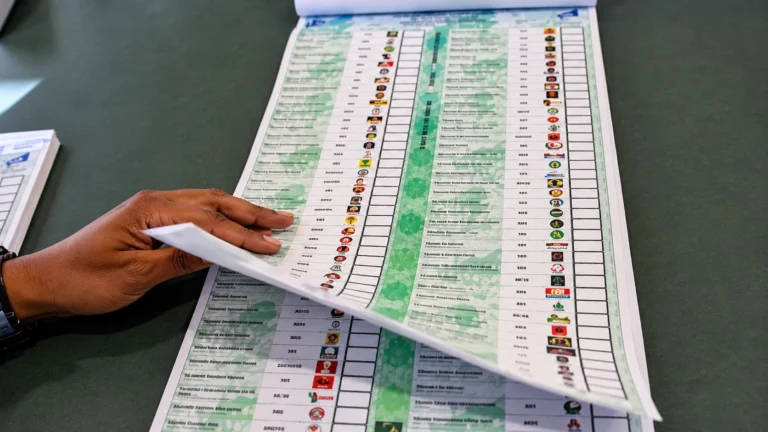
Ask a South African why they bother voting, and the answers vary. Some say it’s their duty. Others just want the potholes fixed. This time, the IEC asked thousands of voters directly.
The answers come from the Election Satisfaction Survey, run after the 2026 Local Government Elections on 4 November. The biggest finding is that most people who voted still believe one vote can make a difference. The survey also shows what voters want from their councils, and how much trust in the IEC has slipped.
How the survey was done
The Human Sciences Research Council, better known as the HSRC, ran the survey on behalf of the Electoral Commission. It isn’t a new exercise. It started back in 1999.
The set up is simple. Fieldworkers visited 300 voting stations across all nine provinces. They chose voters at random through the day and spoke to no more than 50 at each station. The Citizen reports that more than 13 000 people took part in total.
Random selection matters because researchers don’t get to pick who answers. It’s an easy way to capture the real mood on the day.
Why people said they voted
More than half said they voted because they believe it makes a difference. That figure was 59%. Not bad for a country where plenty of people feel let down by politics.
After that, the answers get very practical. The numbers add up to more than 100%, so voters could clearly give more than one reason.
| Reason given | Share of voters |
|---|---|
| Voting makes a difference | 59% |
| Good, reliable government services | 39% |
| A better economy | 38% |
| Fighting corruption | 36% |
Look at that second line again. 39% want dependable services, the things every household notices. Electricity. Water. Rubbish removal. When one of those fails, people don’t blame “the system”. They blame the municipality down the road.
The economy and corruption weren’t far behind. For many voters, a local election isn’t about big national drama. It’s about whether daily life gets a bit easier where they live.
Political tolerance has improved
The survey also asked how people saw the behaviour of parties and candidates during campaigns. Here the news is good, if slow.
In 2026, 86% of voters said politicians were very or somewhat tolerant. Back in 2011, that number was 81%. The share of people who felt political intolerance was in the air dropped from 13% to 7% over the same period.
The survey calls this a modest improvement and says views have stayed fairly steady since 2021. So don’t expect a miracle. But a calmer campaign makes it easier for ordinary people to go and vote without fear.
Voters were happy with the service at the stations
On the day, voters seem to have had a decent experience. The HSRC says 95% were satisfied with the service from IEC officials. People described staff as trustworthy, patient, friendly, professional and helpful.
Queues got shorter too. According to the HSRC, waiting times fell back to what voters saw in the 2021 local elections. In 2024, they had gone the wrong way.
Confidence in the process was strong:
- 90% said the election was free
- 91% said it was fair
- 83% believed their vote would be counted accurately
One number dipped a little. 89% felt IEC staff were impartial. That’s still high, but it hints that some people don’t quite see the staff as neutral, even when they were treated well.
A warning on trust in the IEC
Now for the less comfortable part. The Citizen reports that trust in the IEC among voters dropped from 93% in 2019 to 81% in 2026. That’s a big slide in seven years.
Why? According to the HSRC presentation, some people lump the IEC in with government corruption and general anger at public institutions. In plain terms, the Commission may be paying for frustrations that have little to do with how it runs an election. Nobody in these findings accuses it of wrongdoing.
The warning signs were there before the vote. In June, IEC leaders said they were planning in the most challenging climate in 30 years. They spoke of broken promises, corruption and poor services pushing people away from politics. A survey around that time found that only 64% of people would vote if an election were called soon. Ten years earlier, it was 76%.
Turnout told its own story. Reports on the HSRC briefing said only about half of the nearly 30 million registered voters took part.
So keep one detail in mind. This survey spoke to people who showed up. Millions of others stayed home, and these numbers can’t tell us exactly why.
What this means for ordinary South Africans
Strip it all down and the picture is fairly simple.
People who voted mostly liked how it was run. They found it fair, the lines moved quicker and the staff were helpful. That deserves credit.
At the same time, faith in institutions is wearing thin. Voters want better services, honest leaders and a stronger economy. When they don’t get them, some stop believing the ballot works.
For political parties and newly elected councils, the message is clear. These aren’t complicated demands. They are just hard to deliver.
Where to find more information
You don’t have to take anyone’s word for it. The Electoral Commission of South Africa shares results and voter information at elections.org.za. The government news agency has also posted a report on the HSRC survey and whether voters saw the elections as free and fair.
If you’re wondering what you can do between elections, the options are easy. Make sure your voter registration is up to date. Go to a ward meeting. Ask your councillor a direct question. Small steps, but they add up.
Final word
South Africans haven’t given up on voting. Most of those who turned out on 4 November still think it counts, and they said so loudly. But patience has limits, and trust in the IEC is showing the strain.
The ballot box is where people say what they want. Now it’s up to those they elected to listen.
About the Author