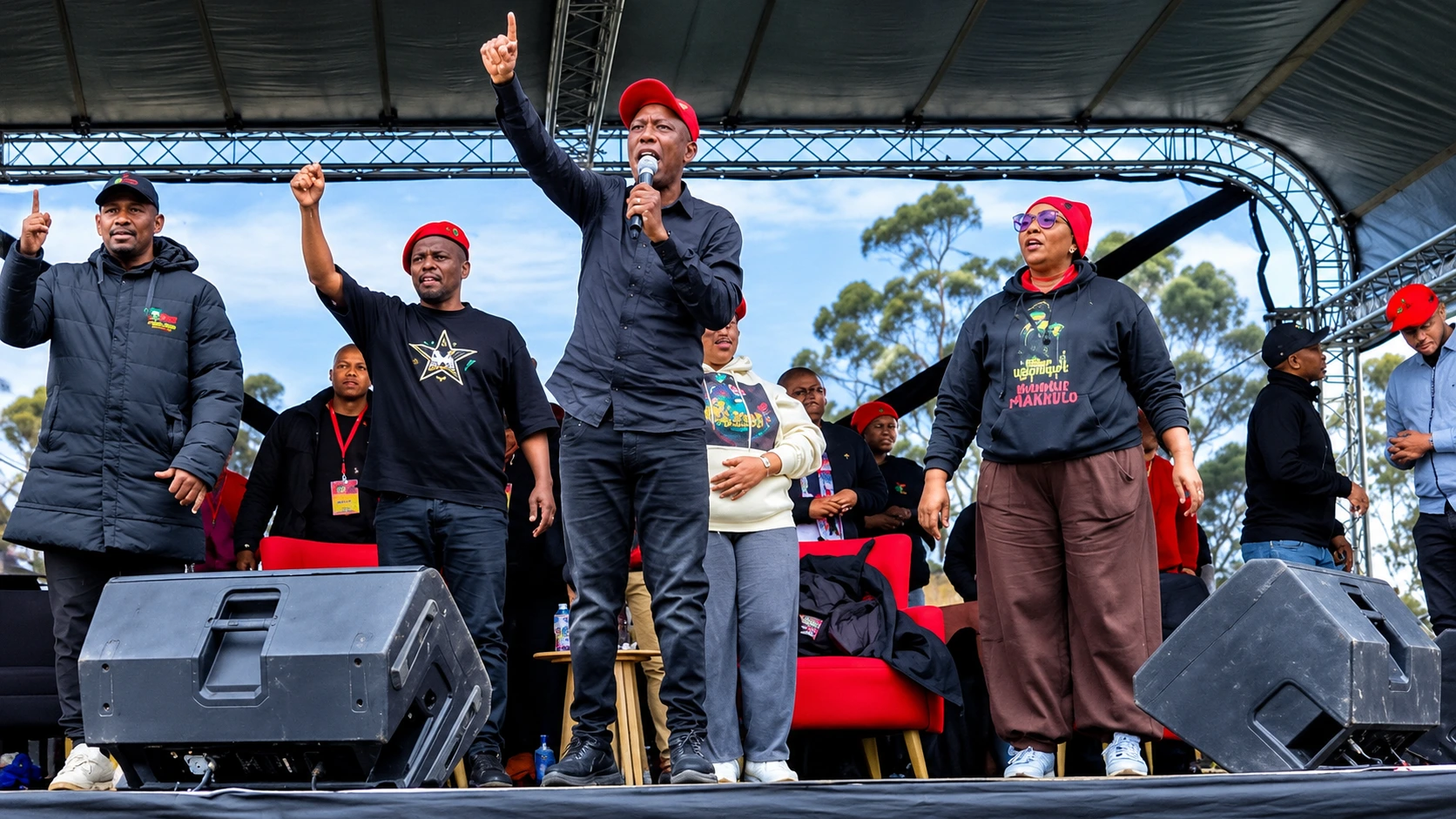
Julius Malema says people who get a SASSA grant should be free of water and electricity bills. He made the call at a political rally in Kokstad. Here is what he said, why it matters before the elections, and what the idea could mean for households.
What Malema actually said
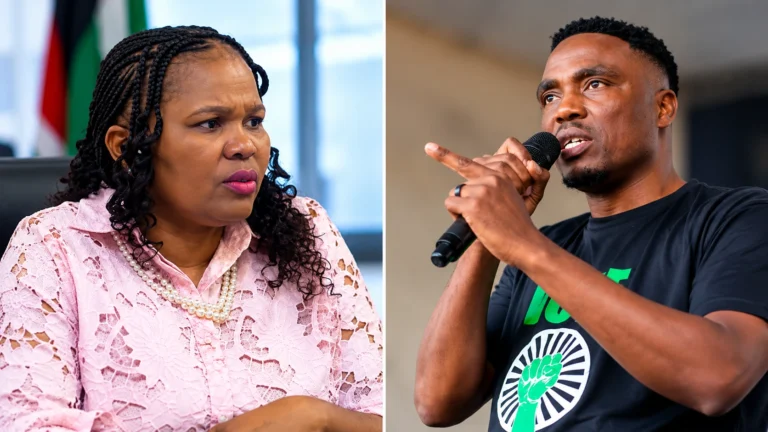
The EFF leader spoke at the party’s manifesto rally at the Riverview Sports Field in Kokstad on Saturday. His message was simple. Older people who receive a SASSA grant should not be charged for basic municipal services.
He argued that many elderly South Africans worked hard for decades and paid their bills all that time. In his view, it is unfair to keep charging them once they are old and living on a grant.
He also pointed to what he sees as a contradiction. The state treats a person as poor enough to qualify for a grant. Yet when the water and electricity bill arrives, that same person is treated as someone who can afford to pay. Malema called this situation nonsense and said it must end.
How would it work in practice?
The plan he described is easy to understand. It does not rely on people filling in forms again and again.
If the EFF were to lead government, it would ask SASSA for its list of beneficiaries. That data would then be linked to municipal records. People on the list would automatically be excluded from paying for free water and free electricity.
Malema said elderly residents should not have to keep proving that they are poor. The state already holds information showing they qualify for social assistance, so there is no need for extra paperwork at the municipal office.
This is the most practical part of the proposal. Anyone who has stood in a long queue at a municipal office knows how tiring that process can be.
Where would the money come from?
Malema also called for higher social grants. He said both older people and children should receive more support.
When the question of funding came up, his answer was simple. He said the money can be found if corruption is stopped and wasteful spending is cut. In his words, fixing those two problems would free up the funds.
This is a political claim, not a costed plan. The source report does not give figures or a budget. It also does not explain how much a municipality would lose in income if bills were waived. Readers should keep that in mind.
The timing matters
The rally was part of the EFF’s campaign push before the local government elections on November 4. The party’s manifesto focuses on municipal services, unemployment and the way municipalities are run.
Water and electricity are some of the most common complaints in local politics. Residents talk about rising tariffs, unpaid accounts and cut off supply. A promise to remove these bills for grant recipients is therefore likely to get attention, especially from older voters.
It is easy to see why parties make such promises close to an election. Voters should compare what each party offers and ask how it will be paid for.
What are free basic services today?
This idea builds on something that already exists. South Africa has a system of free basic services. Under it, households that cannot afford to pay can receive a small amount of water and electricity at no charge.
Municipalities usually run this through an indigent register. Households that qualify are listed, and the free allocation is applied to their account. In general, the monthly amounts are small and the rules differ from one municipality to the next.
Many people struggle with this system. Some do not know it exists. Others have trouble completing the application. Some are told they do not qualify even though they receive a grant.
Malema’s proposal tries to remove that gap. Instead of making each person apply, the state would use data it already has.
For now, this remains a proposal from an opposition party. It is not law, and it is not government policy. Whether it becomes reality depends on the election result and on what happens afterwards.
A quick look at the main points
| Issue | What was said or proposed |
|---|---|
| Who would benefit | Elderly people and other SASSA beneficiaries |
| What would be free | Basic municipal services, namely water and electricity |
| How it would work | SASSA data linked to municipal records |
| Who is behind it | Julius Malema and the EFF |
| How it would be funded | Stopping corruption and wasteful spending, according to Malema |
| Where it was announced | The EFF manifesto rally in Kokstad |
What this could mean for households
Think of a grandmother who lives on a monthly grant. She may also support grandchildren from that same payment. Water and electricity bills can take a big share of her money. If those bills disappeared, she would have more left for food, transport and medicine.
That is why this topic touches so many families. A SASSA grant is meant to cover basic needs. When part of it goes to municipal bills, there is less money for everything else.
It is also fair to ask some questions. How would municipalities cover the lost income? Would services get worse if money is reduced? Would the system work for every type of grant? These are fair points, and the report does not answer them.
A free service only works if the municipality can still afford to deliver it. Many municipalities already struggle with ageing pipes, power faults and unpaid debts. Any plan to waive bills would need a clear funding source. Otherwise service delivery could suffer.
What SASSA beneficiaries can do now
If you or a family member gets a grant, you do not have to wait for an election promise. Here are some simple steps.
- Check your municipal account. Look at what you are being charged for water and electricity.
- Ask about the indigent register. Visit your local municipal office and ask whether you qualify for free basic services.
- Bring your documents. Have your ID and proof of your grant ready. This makes the process easy and faster.
- Keep records. Save copies of anything you submit and any reference number you receive.
For information on grants, you can visit the official SASSA website. It explains the different grants and how to apply.
Make an informed choice on election day
Promises are cheap during campaign season. What matters is whether a plan can be delivered. When you read about any party’s offer, it helps to ask three simple questions:
- Who will benefit?
- How will it be paid for?
- When will it start?
Malema has answered the first question clearly. He has given a short answer to the second, which is to stop corruption and waste. He has not given a timeline for the third.
If you plan to vote on November 4, make sure you know where your voting station is and that your details are correct. The Electoral Commission of South Africa has easy tools for checking your registration.
The bottom line
Julius Malema wants SASSA beneficiaries to stop paying for water and electricity. His plan is to link grant data with municipal records so that qualifying people are exempted automatically. He also wants higher grants and says the money can come from fighting corruption and cutting waste.
It is a bold promise that speaks to real money pressure on poor households. It is also a promise from a party in the middle of an election campaign. Until it is tested in government, it remains an idea.
For now, the best step is to find out what free basic services you may already qualify for. That is the simple way to lower your bills today.
About the Author