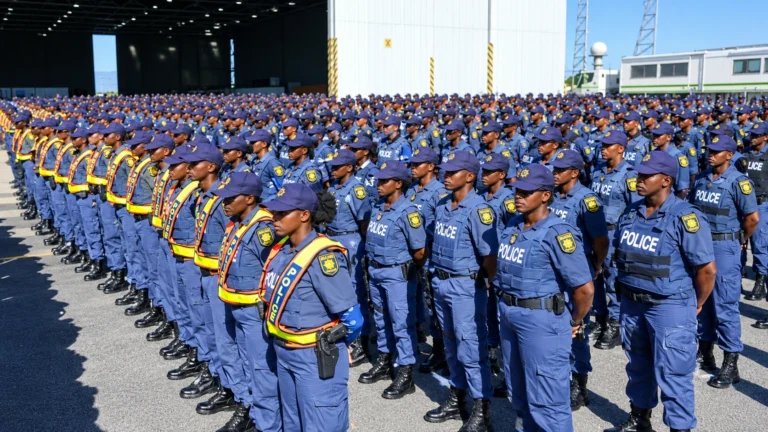
KwaZulu Natal police say they have no arrest warrants for March and March leader Jacinta Ngobese-Zuma or her husband, Xolani Zuma. The denial came on 15 October 2026, after the couple told the public that they had been warned about warrants.
It is a simple story on paper, but it matters. Rumours about arrests can spread fast, especially when emotions around illegal immigration protests are already high.
What the couple said
The couple put out a media statement in recent days. In it, they said they had been informed that arrest warrants were issued against them.
They linked the alleged warrants to their anti illegal immigration protests. In other words, they suggested that the action against them was tied to their activism and not to any ordinary crime.
The statement did not take long to spread. Supporters and critics of Jacinta Ngobese-Zuma both picked it up, and many people wanted to know whether it was true.
What the police said
KZN police responded quickly. Their spokesperson, Robert Netshiunda, said there are no warrants for either person.
He went further than a simple denial. According to him, police have no trace of any case registered against the couple. That is an important detail. A warrant normally follows a case or an investigation, so no case on record means no warrant to speak of.
Netshiunda also explained why police chose to speak up. He said police normally do not react to baseless allegations. This time, however, the situation on the ground and the risk of panic among residents made a public response necessary. Police wanted to set the record straight and dismiss the rumours.
So the police position comes down to three points:
- There is no arrest warrant for Jacinta Ngobese-Zuma.
- There is no warrant for her husband either.
- Police say no case is registered against them.
Why this story drew so much attention
Jacinta Ngobese-Zuma is the leader and founder of March and March, a movement that campaigns against illegal immigration in South Africa. Her name regularly appears in the headlines, and her activities attract strong opinions on both sides.
Because of that, any claim about her being arrested travels far. A rumour like this can unsettle residents, stir up tension in communities, and push people to act on information that may be wrong.
That is likely why police felt they had to respond. A short and clear statement is often the easiest way to calm things down.
A quick look at the background
This is not the first time police and the movement’s leader have been in the news together. Earlier in 2026, reports said that a protest took place on 21 January outside Addington Primary School in the Durban CBD. The movement had objected to what it claimed was the admission of undocumented foreign nationals at the school.
Later that month, on 27 January, Jacinta Ngobese-Zuma went to the Point police station after she said she had been told she would be arrested. Reports at the time said she was not arrested that day. She was expected to give a statement to police instead.
Her husband and legal representative, Xolani Zuma, said she was not charged as a private individual. According to him, the case was opened against the March and March movement, with her facing action in her capacity as its leader. He said the matter would go to the National Prosecuting Authority for a decision.
It is worth keeping that history separate from today’s story. The latest police denial is about arrest warrants only. Police say there are none, and they say they hold no case against the two.
What each side is saying
For readers who want the main points in one place, here is a simple summary.
| Issue | The couple’s position | Police position |
|---|---|---|
| Arrest warrants | They were told warrants had been issued | No warrants exist for either person |
| Registered cases | Not stated in the couple’s statement | No trace of any case against them |
| Link to protests | Warrants linked to anti illegal immigration protests | Police dismissed the claim as a rumour |
| Public impact | Statement was released to the media | Rumours could cause panic among residents |
How arrest warrants work, in simple terms
Many people hear the words “arrest warrant” and are not sure what they mean. The idea is easy to explain.
A warrant of arrest is a written order. It is issued by a court official, usually a magistrate or a judge, after police show that there is a reason to arrest someone. It is not something that can be handed out on a rumour or a phone call.
That is why the police point about no registered case carries weight. Without a case, there would normally be nothing to base a warrant on.
If you want to understand how police work in South Africa, the South African Police Service has information on its official website at saps.gov.za. For a clear picture of how courts and the criminal justice system operate, the Department of Justice and Constitutional Development explains it at justice.gov.za.
How to handle claims like this
Stories about arrests can be hard to judge, especially when they appear on social media first. A few simple habits help.
First, check who is speaking. A claim from one side is not proof. Police, courts, and the prosecuting authority are the bodies that can confirm a warrant or a case.
Second, wait for confirmation. It is easy to share a post in a hurry. It is harder to undo the damage if the post turns out to be wrong.
Third, think about your community. In places where tensions are already high, one false rumour can make things worse. Police themselves said this was a reason they spoke out.
What happens next
At this stage, the police denial is the latest word. It is not yet clear whether the couple will respond to it. It is also not clear who told them about the alleged warrants, since the police say nothing of the sort exists.
If the couple has proof of a warrant, they may choose to share it. If not, the matter may simply fade, as most rumours do. Either way, the public is likely to keep a close eye on Jacinta Ngobese-Zuma and the March and March movement, given how much attention both have drawn this year.
For now, the facts that can be confirmed are limited but clear. KZN police say there are no arrest warrants for the couple. They say they have no case on record against them. And they say they spoke out to stop panic from spreading.
South Africans who follow this story should rely on official updates and trusted news reports, and avoid sharing unverified claims. It is the simple way to keep communities informed and calm.
About the Author