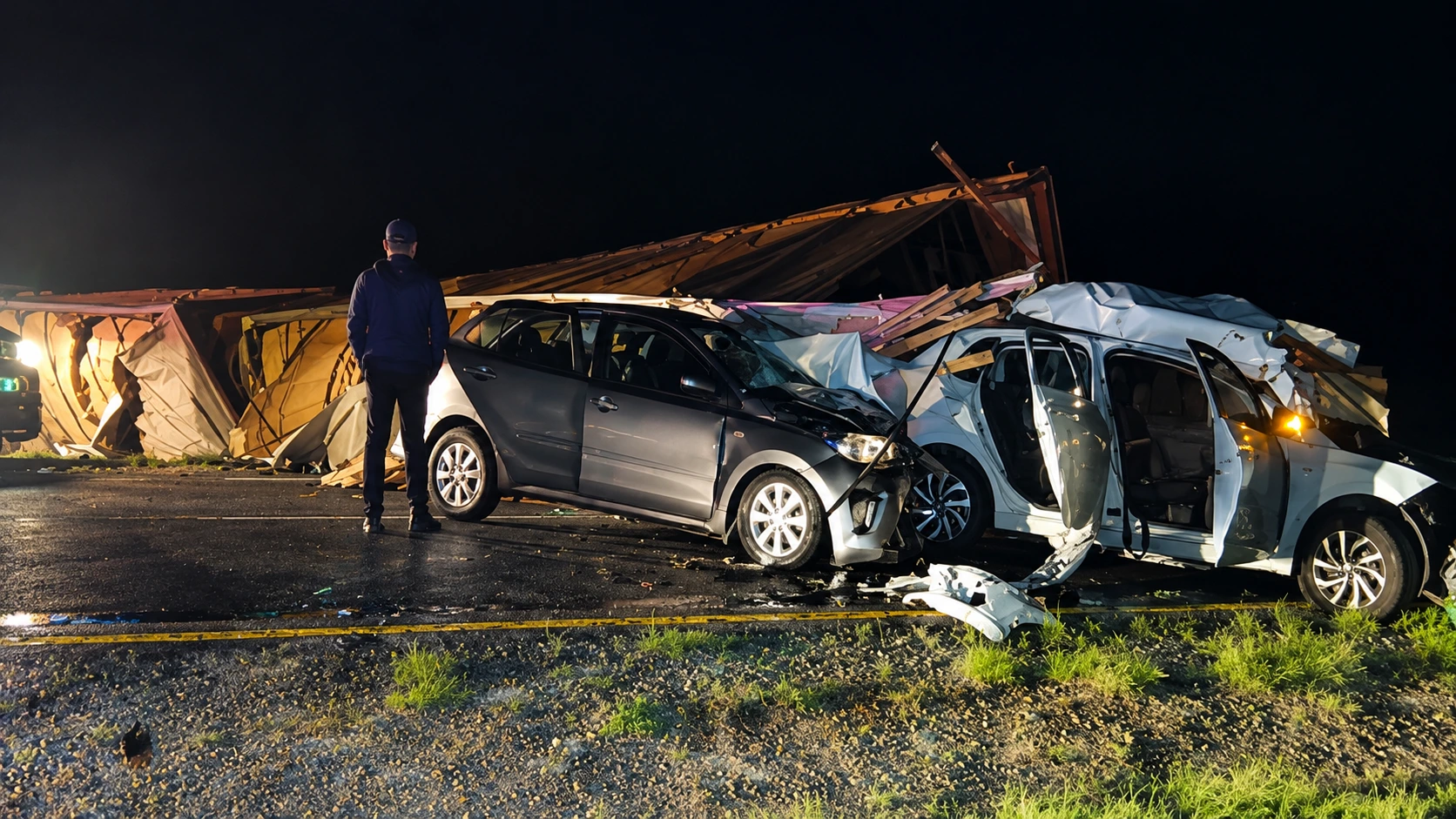
Six people are dead and six more are fighting for recovery after a head on collision between a minibus taxi and a truck on the R61 in the Eastern Cape. It happened on Saturday morning, 24 October 2026, just outside Aberdeen.
The basic facts are easy to state. The loss behind them isn’t. Here’s what we know so far, and why this road deserves our attention.
What happened on the R61
The crash took place roughly 30 kilometres outside Aberdeen, on the road towards Beaufort West. A minibus taxi and a truck hit each other from opposite directions.
Everyone who died was a female passenger in the taxi. They didn’t make it past the scene. Six other people were seriously injured and were rushed to the Graaff Reinet Provincial Hospital.
Numbers can feel distant when you read them on a screen. But each of these women had a family waiting somewhere. Those families have just had the worst phone call of their lives, and the people in hospital still have a long fight ahead.
Quick facts at a glance
| Detail | What we know |
|---|---|
| Date | Saturday, 24 October 2026 |
| Road | R61, about 30 kilometres outside Aberdeen towards Beaufort West |
| Vehicles | A minibus taxi and a truck |
| Type of crash | Head on collision |
| Dead | Six female passengers from the taxi |
| Injured | Six people, all seriously hurt |
| Hospital | Graaff Reinet Provincial Hospital |
| Police case | Culpable homicide |
Fatigue named as a possible cause
Early reports say fatigue may have played a part. That’s a suspicion for now, not a finding. Nobody should treat it as the final word until investigators have done their work.
Police have opened a case of culpable homicide. If that term is new to you, it simply means someone is believed to have caused a death through negligence, without meaning to. Opening a case is only the first step. Detectives still need to speak to witnesses, check the vehicles and piece together what happened in those last seconds.
So let’s be careful. We don’t yet know who was at fault, or whether one single thing caused this.
Why long road trips carry real risk
Anyone who has driven through the Karoo knows the feeling. The road stretches out, the landscape barely changes, and hours go by with nothing to look at. It’s easy to switch off without realising it.
That’s where fatigue gets dangerous. A tired driver reacts slower. Sometimes their eyes close for a second or two and they don’t even notice. At highway speed, that’s plenty of time to drift into oncoming traffic.
Head on collisions are among the deadliest crashes for a reason. The speed of both vehicles adds up on impact. A minibus taxi offers little protection to the people inside, and a loaded truck is enormously heavy. When those two meet, the passengers in the lighter vehicle carry most of the risk.
Simple steps that can help drivers stay safe
Nobody can say what would have changed the outcome here. But the signs of tiredness are well known, and dealing with them is simple.
Start with sleep. A proper night’s rest before a long trip is the easiest protection you have. Then stop often, about every two hours, to stretch your legs and drink some water. If you catch yourself yawning, blinking hard or drifting in your lane, don’t push on. Pull over somewhere safe. Coffee helps for a little while, but a short nap does far more.
The hours around your normal sleep time are the worst. Early morning and late at night are when drivers struggle most, so try to plan your trip around them. And build rest stops into the journey from the start, so you’re not racing the clock.
Employers have a part to play too. Taxi and truck drivers who work long shifts need fair schedules and real time to rest. A well rested driver protects everyone on board, and everyone else on the road.
What passengers can do
If you’re a passenger, you’re not powerless. When a driver looks tired, speaking up is simple and might save lives. Ask them to stop. If they’re nodding off or swerving, say so plainly. It can feel awkward, especially with a stranger behind the wheel, but awkward is a lot better than the alternative.
Wear a seatbelt whenever one is available. It’s an easy habit, and it can change what happens in a crash.
Official support and road safety information
If you want to learn more about road safety in South Africa, the Road Traffic Management Corporation shares information on traffic safety and road crash trends. For updates on police investigations, you can check the South African Police Service.
What happens next
The police investigation has only just started. Officers will want to work out exactly how these two vehicles ended up in a head on collision, and what role fatigue may have played.
The families of the six women will need time and support. The injured remain in hospital, and the next few days will be tense for the people who love them.
More details will come out as the case moves forward. For now, the facts are clear. Six people have died, six more are seriously hurt, and another stretch of the R61 near Aberdeen has become a place of grief.
A reminder for every road user
South Africans cover huge distances for work, family and holidays. Plenty of those trips happen on quiet roads like the R61, where the next town can be a long way off. Crashes like this one remind us that no journey is worth gambling with your life.
If you’re tired, stop. If you’re a passenger and something feels wrong, say it out loud. Those are simple choices, and they’re far easier to make before the road makes them for you.
Our thoughts are with the families of the six women who died, and with everyone recovering in hospital.
About the Author