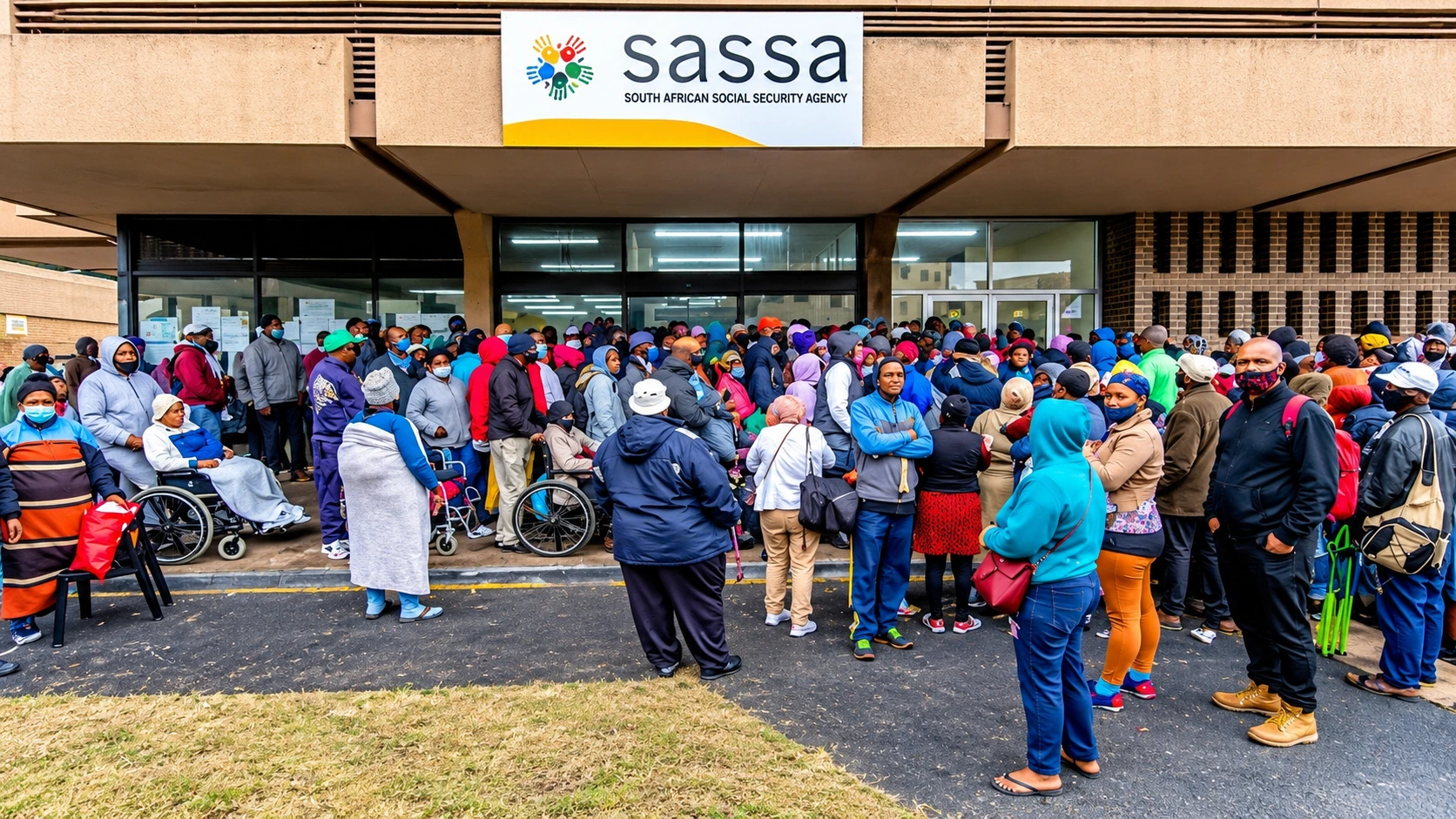
If you receive a disability grant, one SMS could decide whether your money keeps coming. SASSA has again urged beneficiaries to respond to review notices and keep their details up to date. The message is simple. Ignore the notice and your grant may be suspended.
The agency says reviews are a normal part of the social grant system. They are not meant to punish honest people. They are meant to confirm that every rand goes to someone who still qualifies. Here is what you need to know, and how to stay safe.
What Is a Grant Review?
A grant review is a check on whether you still meet the rules for your grant. You may have qualified when you first applied. But life changes, and SASSA needs to know when it does.
The agency says reviews help in three main ways:
- They confirm that beneficiaries are still eligible.
- They stop fraud and double claims.
- They protect public money, which the law requires.
Government says these checks are not meant to cancel grants without reason. Officials describe them as a control tool. A person who truly qualifies has nothing to fear.
Why SASSA Is Pushing Harder Now
The agency has stepped up its checks over the past year. Earlier this year, officials told Parliament that SASSA had set a target of 420 000 reviews for the financial year. Close to 400 000 beneficiaries had already been notified. Of roughly 240 000 grants reviewed at that stage, about 70 000 were suspended because beneficiaries did not comply.
That is a big number. It shows that many people either missed their notices or did not act on them.
SASSA also works with other bodies to verify information. These include SARS, credit bureaus and NSFAS. This helps the agency spot cases where income or circumstances do not match what a beneficiary declared.
How You Will Know You Are Under Review
Most people hear about a review by SMS. The message tells you to visit a SASSA office or service centre. Some beneficiaries may also get messages through other channels, including WhatsApp.
This is why your cellphone number matters so much. If SASSA has an old number, you may never see the notice. Then the grant can be suspended without you even knowing there was a problem.
A reply to a parliamentary question says that people selected for review are given up to 90 days to comply. Earlier public notices spoke of a 30 day window in some cases. The safest approach is to act quickly. Do not wait until the last day.
What You May Need to Bring
Every case is different. But the agency has said beneficiaries may be asked for documents such as:
- Your South African ID
- Proof of residence, such as a utility bill or a letter from a local authority
- A medical referral report, which confirms your disability status for disability and care dependency grants
- Any papers that show changes in your income, marital status or living situation
Keep these papers together in one folder. That makes your visit easy and saves time at the office. If you are unsure what to bring, call the agency first.
What Happens If You Ignore the Notice
This is the part that worries many families. The process works in steps.
| Stage | What it means |
|---|---|
| Notice sent | You get an SMS asking you to come in for a review. |
| Grant suspended | If you do not respond, payments can be stopped. |
| Grant lapses | If you keep ignoring the process, the grant may lapse for good. |
Officials stress that a grant does not lapse overnight. It lapses only after repeated failure to comply, despite notices and several chances to respond.
There is also good news. If you show during the suspension period that you still qualify, the grant may be restored from the date it was suspended. In simple terms, you may get back pay. That is why it is better to act early and clear things up.
Your Duty to Report Changes
Many people do not know this: receiving a grant comes with a legal duty. You must tell SASSA when something changes that could affect your eligibility. This applies even if no review has been announced.
Examples include:
- A change in income, such as a new job or a pension
- A change in marital status
- A move to a new address
- A new cellphone number
The agency says a person may have qualified on the day of application. But if circumstances change and are not reported, that can be treated as a breach of the social assistance rules. In some cases it may lead to corrective action, and money paid out wrongly may need to be paid back.
Life Certification Matters Too
Reviews are not the only check. SASSA also runs life certification, which confirms that a beneficiary is alive and still receiving their own payment. It helps stop money going to people who have died.
Together, reviews and life certification form the main shield against fraud. If you are asked to complete either one, treat it as urgent.
Easy Steps to Protect Your Grant
You do not need to be an expert. A few simple habits can protect your income.
- Update your number. Make sure SASSA has your current cellphone number.
- Read every SMS. Do not delete a message from the agency. Check it carefully.
- Go to the office early. Visit your local SASSA office as soon as you are notified.
- Bring your documents. Take your ID, proof of residence and medical papers.
- Report changes. Tell the agency when your income or situation changes.
- Keep proof. Ask for a reference or slip after your visit, and keep it safe.
If you cannot travel, ask a trusted family member or caregiver for help. Make sure they use official channels only.
Beware of Scams
Whenever grant news spreads, scammers follow. Some pretend to be SASSA officials. Others promise to “fix” your grant for a fee.
Remember that SASSA does not charge for reviews or for grant services. Never share your PIN or bank details with a stranger. If a message looks strange, check with the agency before you respond. Use only the official contact details given by government.
Online Reviews May Be Coming
Long queues are a real problem. Many beneficiaries travel far and pay for transport just to reach an office. Officials have said that reviews are currently done at SASSA offices and service centres. But the agency is working on online self service options. Once they launch, beneficiaries may be able to submit documents and finish reviews without visiting an office.
That would make the process far easier for older people and people with disabilities. For now, though, the rule stays the same. Respond when you are asked.
How to Contact SASSA
If you have questions about a review, you can reach the agency in several ways:
- Call the toll free line on 0800 60 10 11
- Email GrantEnquiries@sassa.gov.za
- Visit your nearest SASSA local office
You can also find official information on the SASSA website. For government updates on grant controls, read the statement on the SAnews website.
The Bottom Line
A disability grant is a lifeline for many South African families. Losing it, even for a short time, can cause real hardship. The good news is that the fix is simple. Keep your details current, answer your notices and go to the office when asked.
A review is not a trap. It is a check. If you still qualify, you have nothing to fear. If you ignore it, you may lose your payment for no good reason. So act early, keep your papers ready, and make sure SASSA can always reach you.
About the Author