
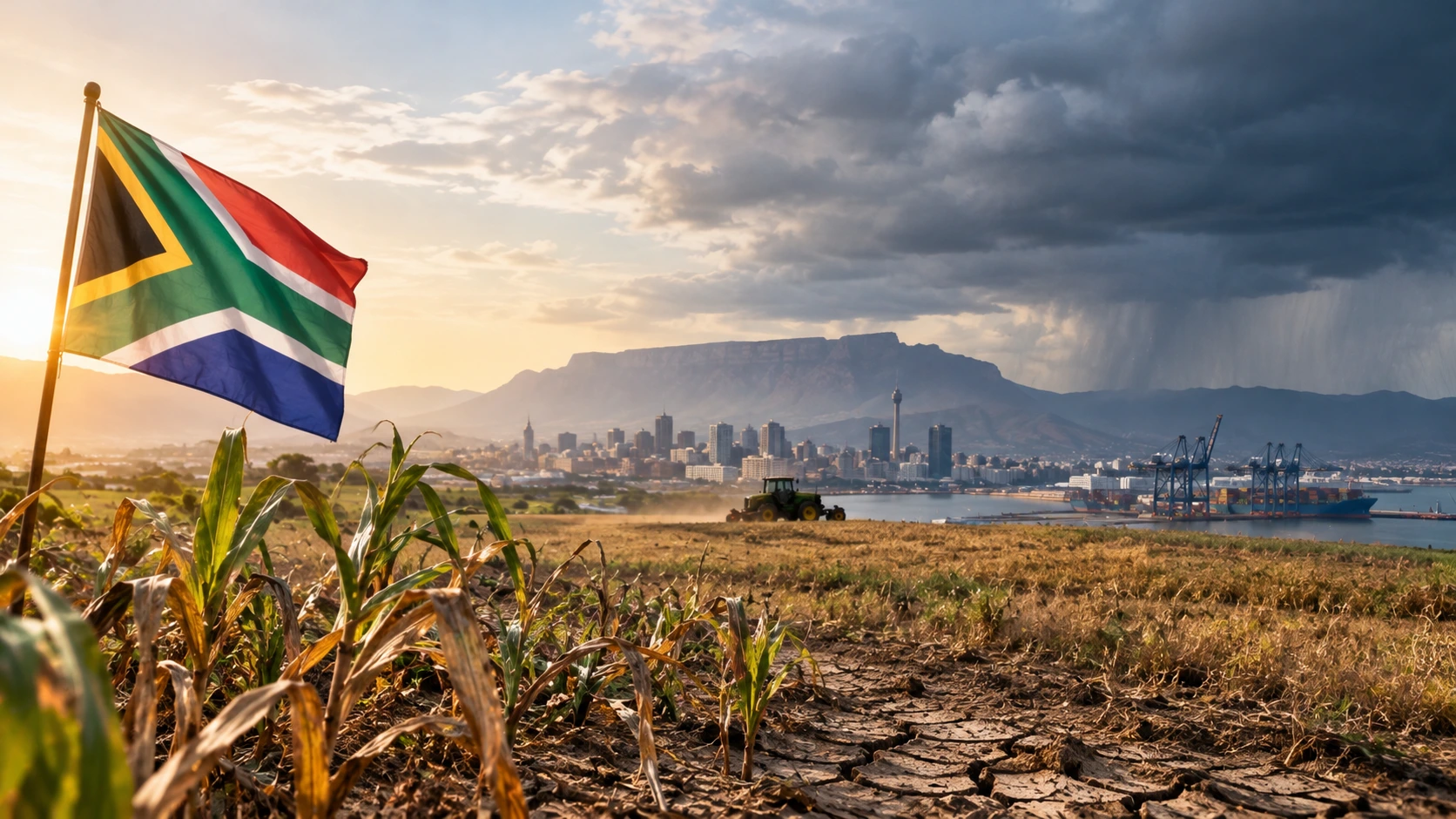
It’s going to be a hot, dry few months, and the economy could take a knock. Economists say a strengthening El Niño might shave as much as 0.2 percentage points off growth. That sounds small, but it isn’t nothing. Here’s a simple look at the el nino impact south africa economy story, and why farmers, fuel prices and interest rates all end up in the same conversation.
What is happening in the Pacific
Let’s start with the basics. El Niño is a warming of the central and eastern Pacific Ocean. It sounds far away, yet it shifts rainfall and temperature patterns across the globe, and South Africa gets its share.
The World Meteorological Organization (WMO) says El Niño is now firmly in place and still gaining strength. Its latest update gives a near 100% chance that it will last through February 2027. Forecasters rarely sound that sure.
The Pacific is expected to hit record temperatures in the fourth quarter, with the peak due in December. After that, a wetter La Niña pattern is expected to take over.
You’ve probably seen the phrase “super El Niño” in the headlines. The WMO doesn’t actually use it. Its official scale runs from weak to moderate, strong and very strong. So the easy way to read the headlines is this: it’s a very strong event, and it’s getting stronger.
The el nino impact south africa economy in numbers
Investec Chief Economist Annabel Bishop says things are unfolding about as expected. She sees a negative but limited effect on the economy. Here are her numbers, laid out in one place.
| Item | Figure |
|---|---|
| Possible hit to growth | Up to 0.2 percentage points |
| Expected drag on GDP this year | Between 0% and 0.1% |
| Expected drag on GDP next year | No worse than 0.2% |
| Effect of the 2024 El Niño drought | Growth cut from 0.5% to 0.3% |
| Growth forecast for 2027 | 1.5%, down from 1.7% |
On paper, these are tiny figures. But South Africa’s growth is already slow, so even a fraction of a percentage point counts. Less growth means fewer jobs, weaker spending and less money flowing to the government.
Why farms feel it first
Past El Niño years have mostly meant dry weather here, and sometimes drought that hangs around far too long. Agriculture usually takes the first punch.
The timing couldn’t be worse. Farmers are putting crops in the ground right now, just as the dry spell sets in. A poor season can mean smaller harvests and thinner incomes on the farm. Over time, it can also push food prices up.
Farming matters more to the national numbers than most people realise. Last year the economy grew by 1.1%, and agriculture led the way thanks to good La Niña rains. Take the farm sector out and growth was just 0.7%. So when farming slips, the whole country feels it.
Fuel prices pile on the pain
Farmers aren’t only fighting the weather. They’re also paying more to run their operations.
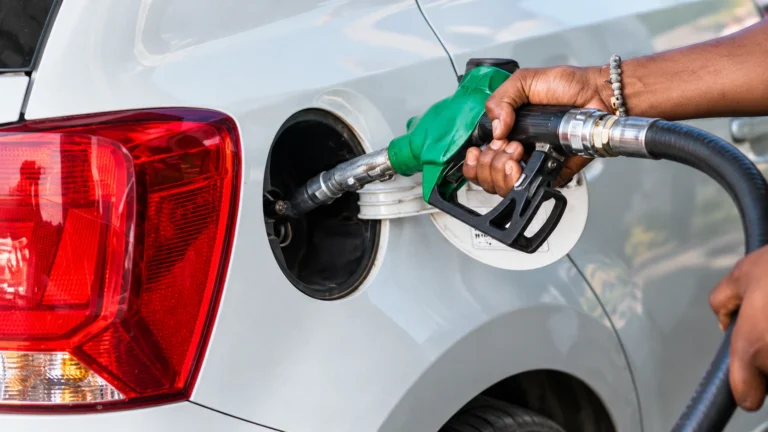
Petrol and diesel jumped by about R3 per litre in October. For the first time ever, pump prices went above R30 a litre. November doesn’t look kinder, because under recoveries are building again at about the same level.
Think about what that means on a farm. Tractors, irrigation pumps and delivery trucks all run on fuel. When diesel gets dearer, the extra cost moves along the supply chain and often lands on the supermarket shelf. Bishop calls the mix of dry weather and rising fuel costs a double whammy, and it’s hard to argue with her.
Inflation and interest rates
This is the part that reaches your wallet. Bishop warns that inflation could climb above 5.0% once the dry period begins, driven mainly by fuel and weather.
If that happens, the South African Reserve Bank (SARB) may have to keep rates higher for longer, or even raise them. For anyone with a bond, car finance or a credit card balance, that means a heavier monthly bill. It also means less spending and less investment, which drags on growth again.
So the economy could get stuck in a loop. Weather and fuel push prices up. Higher prices make rate decisions harder. Tougher rates slow growth even more. That’s why Bishop says the 2027 forecast of 1.5% could end up lower still.
Why South Africa may cope better this time
There’s some good news here, so it’s worth saying clearly. Bishop expects the damage to be less severe than in earlier El Niño events, even though global conditions look worse this time.
Three things are helping. The latest rainfall forecast for South Africa is neutral to only slightly below average, not sharply dry. Soil moisture is higher than usual after last year’s La Niña rains. And dam levels are healthier too, which gives both farms and cities a cushion.
Compare that with 2024, when the drought cut growth from 0.5% to 0.3%. Bishop thinks this round will likely be a little better, though still a negative for the economy. It’s an easy detail to lose in scary headlines. A bad outcome is possible, but it isn’t the main forecast.
The bigger picture
Weather is only part of the story. Bishop also stresses that a lot depends on the global economy and on how quickly South Africa can push through reforms that support growth. She points to good governance and steps that clear away old barriers to expansion. Put simply, the climate sets the mood, but policy decides how well the country responds.
What readers can keep an eye on
Nobody can change the weather, but a few simple habits can help. This isn’t financial advice, just general common sense.
Watch the monthly fuel price announcements, because they affect your transport costs and, indirectly, your grocery bill. Follow the SARB decisions too, especially if your home loan or car payment moves with the interest rate. Keep an eye on food prices as well. If the dry season hurts harvests, some products could get more expensive. And check official weather updates now and then. The WMO and local weather services put out outlooks that are fairly easy to read.
A little planning helps. If you can trim some spending or build a small buffer now, you’ll be in a better spot if prices start to rise.
What happens next
The next few months will show how big the problem really is. El Niño is expected to peak in December and stay until February 2027. Rain during the planting season is the big test for farmers. Fuel prices and inflation readings are the big tests for households.
For now, the el nino impact south africa economy picture looks manageable but real. Fuller dams and damp soil offer some protection. Still, costly fuel, a dry spell and the risk of higher interest rates leave little room for mistakes. It’s worth following the updates, because a forecast that looks simple on paper can feel very different once the rains, or the lack of them, actually arrive.
About the Author






1 thought on “Super El Niño: Impact on South Africa’s Economy”