If you’ve been wincing every time you fill up, this one’s for you. There’s a real chance of relief at the pumps, and the government is already talking about it. On top of that, South Africa has just done something the world hasn’t seen before on the rails. Transnet Freight Rail ran the longest train ever, and it’s now officially a world record.
Could petrol prices ease soon?
President Cyril Ramaphosa has said that National Treasury is looking at ways to take some pressure off households. The cost of living is hitting people hard, and the government knows it. One idea being discussed is a move on the fuel levy. That’s the tax built into every litre of petrol and diesel you buy, so even a small adjustment can show up quickly at the pump.
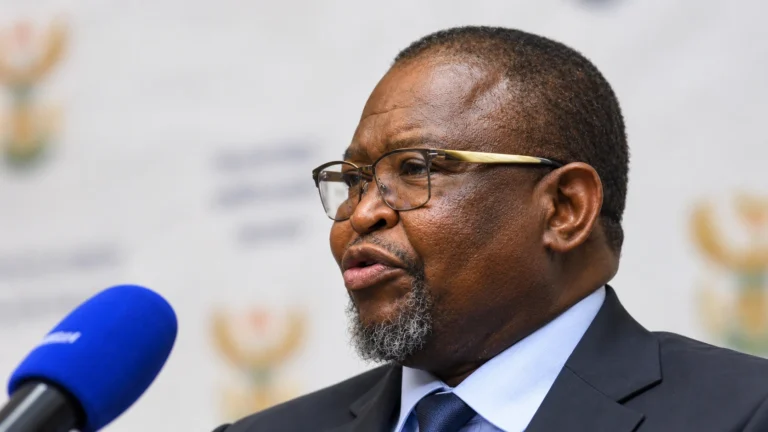
Let’s be clear, though. Nothing has been confirmed. We’ll likely hear more on Wednesday, 21 October 2026, when Finance Minister Enoch Godongwana delivers the medium term budget policy statement. If you want the official word, the National Treasury website is the place to check.
Why does this matter so much? Because fuel touches almost everything. It affects your taxi fare, the price of bread, and what it costs to get stock onto shop shelves. When fuel goes up, everything else tends to follow. When it comes down, you feel it in lots of small ways.
Why fuel matters for inflation
The timing is interesting. On that same Wednesday, Statistics South Africa will release the latest inflation and retail sales numbers. Economists at Nedbank think headline inflation will climb to 4.8% for September. It was 4.4% in August.
What’s behind the jump? Nedbank points mainly to transport costs. Fuel has been getting dearer and the rand has weakened, and together they push up the cost of moving goods around. It’s a simple chain really. If trucks pay more to drive, shops pay more for stock, and you pay more at the till.
Nedbank also expects retail sales to cool off. The forecast is 2.5% growth for August, down from 3.4% in July. People may simply be spending a bit more carefully.
Oil isn’t making life easy either. It’s trading at around $109.90 a barrel, which is steep for a country that imports so much of its fuel.
The numbers to watch this week
Here’s a quick snapshot so you don’t have to hunt for the figures:
| Item | Latest figure |
|---|---|
| Rand against the dollar | About R16.40 |
| Rand against the pound | About R21.87 |
| Rand against the euro | About R18.43 |
| Oil price | About $109.90 a barrel |
| Gold price | About $4,142.35 |
| Expected September inflation | 4.8% |
| Expected August retail sales growth | 2.5% |
On Monday the rand gained about 0.2% and traded near 16.4475. Investors are in wait and see mode. Many hope the budget statement will show a healthier budget balance and point to a better credit ratings outlook for the country. Meanwhile the 2035 government bond barely budged, with its yield sitting around 8.7%.
What would a fuel levy cut mean for you?
Honestly, it’s too early to say. Treasury has only said it’s weighing its options. But if the government does act on the fuel levy, it would be one of the quickest ways to help ordinary people. You don’t need a degree in economics to see the benefit. A lower price at the pump is easy to notice.
So what should you do for now? Keep it simple:
- Tune in to the budget statement on 21 October.
- Listen for any mention of the fuel levy.
- Watch for the next official fuel price announcement.
- Remember that the rand and oil still have a big say in the final price.
South Africa sets a world record on the rails
Now for the feel good part. Transnet Freight Rail says it has set a new world record for the longest train operation. The train pulled 696 wagons across 861 km in one trip.
It started in Saldanha, north of Cape Town, and ended at the Sishen Iron Ore Mine near Kathu in the Northern Cape. The run took place on 17 and 18 October. The train was roughly 7.6 km long and weighed 15,830 tonnes. That’s hard to picture, but think of a line of wagons stretching well past seven kilometres.
How did they pull it off?
It wasn’t as simple as hooking up more wagons and hoping for the best. Transnet used a system called radio distributed power. Instead of keeping all the engines at the front, they spread 13 locomotives along the train. These were a mix of 15E electric and 43DE diesel electric units, all linked electronically so they worked as one.
The benefit is that pulling power and braking force are shared along the whole length of the train. Transnet says this made such a long train much safer to handle. The company also said the run came after plenty of planning, with simulations, route checks and live monitoring along the way.
Who held the record before?
That would be BHP Iron Ore in Western Australia. Back in 2001, they ran a train with 682 wagons that stretched about 7.35 km. The record stood for 25 years.
Interestingly, South Africa has held it before. Transnet set the record in 1989 on the very same Sishen to Saldanha line, and Australia took it later. So in a way, it’s come home. If you’re curious about how records are verified, the Guinness World Records page has the details.
A bigger comeback story for Transnet
This record comes at a nice moment for the state owned company. Transnet has had a rough few years. State Capture, the pandemic and ageing infrastructure all took their toll.
But the numbers are turning. On 10 September, Transnet reported its first full year profit since 2022. The profit for the 2026 financial year came in at R4.6 billion. Compare that to a R1.9 billion loss in 2024/25 and a R7.3 billion loss the year before that.
A few things helped. Rail and pipeline volumes went up, and tariffs improved. A one off deal also played a part, which was the sale of Transnet’s stake in the Durban Container Terminal. CEO Michelle Phillips has been driving a recovery plan since October 2023, supported by a R51 billion government guarantee.
Why should you care? Because working rail means goods move more reliably, mines and ports run better, and costs have a better chance of staying down. It’s an easy link to make. A stronger Transnet helps the wider economy.
Other stories making headlines
A few other items caught our eye this week:
- JSE under the spotlight: It’s been a year since the Competition Commission sent allegations of exclusionary conduct against the JSE to the Competition Tribunal. If the JSE is found guilty, it could face a fine of up to 10% of its South African turnover.
- Temu and Shein: COSATU says it will push for a ban on the online retailers Temu and Shein, arguing it would protect local jobs.
- Police without licences: Almost a quarter of provincial police officers don’t have a valid driving licence. Acting Police Minister Firoz Cachalia revealed this in reply to a parliamentary question from Christiaan Smit.
The bottom line
It’s shaping up to be a big week. The budget statement on 21 October might bring some fuel relief, but we’ll only know when the minister speaks. The inflation figures will show how much strain households are really under. And while we wait, the Transnet world record gives South Africans something to be proud of.
Don’t just read the headlines when the budget lands. The small print will matter. And if the fuel levy does get trimmed, it could be one of the easiest wins drivers and commuters have seen in a while.
About the Author