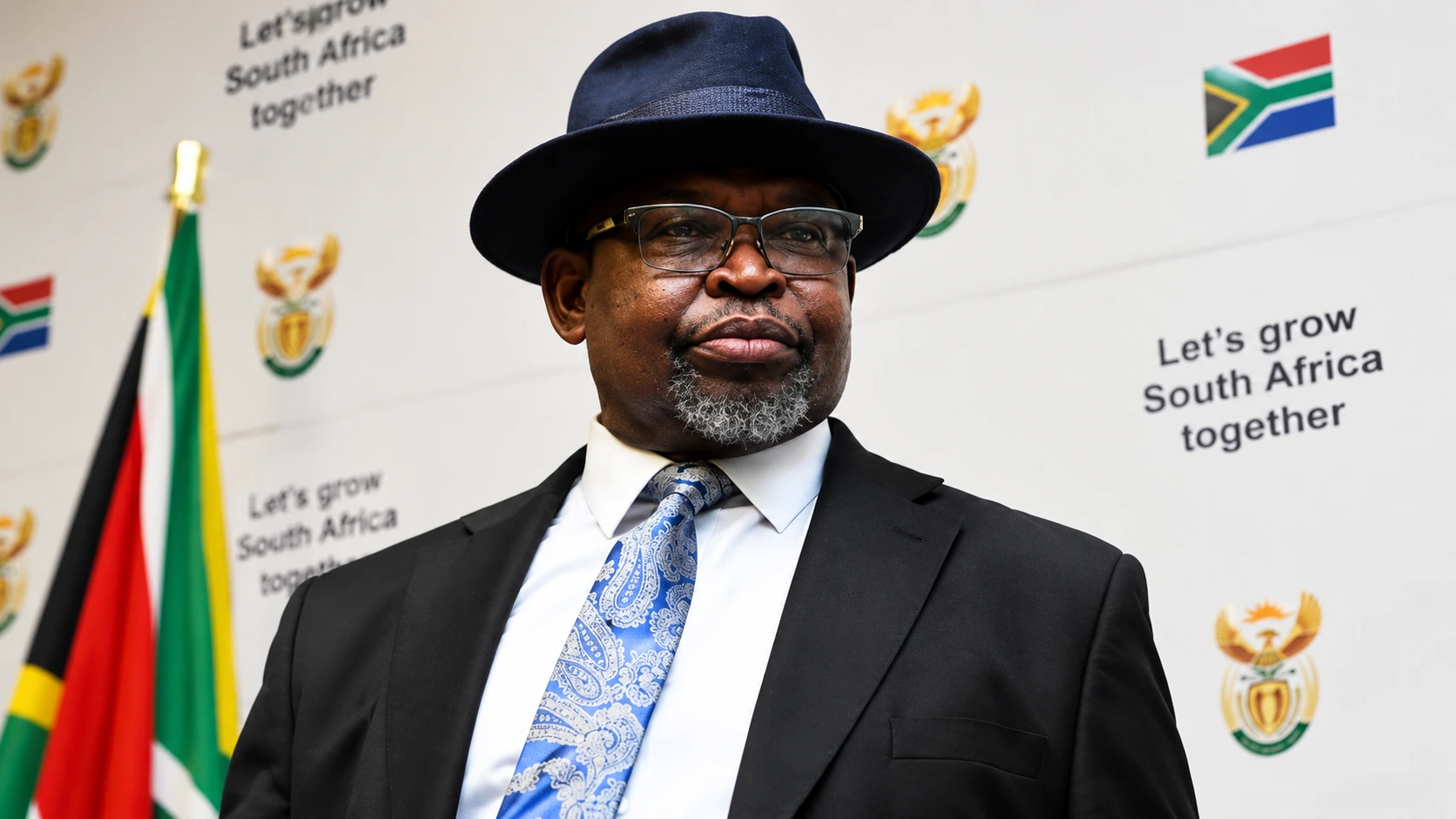
If your local council has ever left you wondering where your money goes, this news is for you. Finance Minister Enoch Godongwana has announced the first update to the Municipal Finance Management Act (MFMA) in 23 years. He shared it on 22 October 2026 while presenting the Medium Term Budget Policy Statement (MTBPS).
His message was plain. South African municipalities need to do better, and the rules are about to get stricter. Here’s a simple look at what’s coming.
Why the government is stepping in
Godongwana didn’t dress it up. He said the financial and operational performance of many municipalities is still weak, and he called that untenable. When councils struggle with money, basic services suffer. Local business takes a knock too, and residents slowly lose faith in the people running their towns.
He also made a point that might surprise you. A review of municipal funding found that most municipalities have enough money for day to day operations. The trouble is that they spend too much on running costs. So it isn’t always about having too little cash.
What the MFMA actually does
Think of the MFMA as the rulebook for local government money. It sets out how a municipality draws up its annual budget, collects revenue and handles its debts.
That’s why an update matters so much. This law hasn’t had one in 23 years, and the minister clearly feels it’s overdue.
Budgets must be properly funded
This is the change that’s easiest to grasp. Municipalities will have to prove that their budgets are genuinely funded.
For years, some councils approved budgets built on numbers they couldn’t count on. Some leaned on debts they had no control over. Others used inflated income projections. The outcome was often a pile of large water and electricity bills that residents never paid. The spending went ahead, but the money never showed up.
Under the new approach, a budget will need real money behind it. It’s a simple idea, and it could change how councils plan from the very start.
Tighter control over top salaries
Municipal pay is also in the spotlight. The National Treasury will take a firmer hold on what senior officials earn.
From now on, salary increases for municipal executives will need the formal concurrence of the Minister of Finance. The same goes for chief financial officers (CFOs). On top of that, the National Treasury and the Provincial Treasuries will play a direct role in appointing CFOs.
Put plainly, councils will no longer have a free hand on top pay or on who looks after the books. Treasury gets a say.
Collecting what is owed
The minister told municipalities to collect outstanding revenue. Unpaid accounts add up fast, and that leaves councils short when it’s time to deliver services.
He also reminded them to set aside money for free basic services for poor households. Many families depend on this support because they can’t pay for water and electricity in full.
Godongwana added that municipalities must manage what they charge residents with more care. Fair billing is part of running a healthy council.
Stronger action on misconduct
Wrongdoing is part of the plan too. The minister announced better ways to investigate financial misconduct in municipalities. The goal isn’t only to find out what went wrong. It’s also to recover money that was lost or wasted.
The updated MFMA will also give the National Treasury a clearer legal footing to step in earlier when a municipality gets into financial trouble. Treasury will be able to start structured financial recovery plans before a small problem turns into a full collapse.
For residents, that could mean trouble gets caught sooner. After years of waiting, that would be an easy win.
More money for local government
It isn’t all tough talk. The government is putting more money on the table as well.
Local government will receive 10% of national spending over the medium term. Godongwana called this a major milestone for local service delivery, and said it goes a long way towards easing financial pressure at the local level.
Still, he was careful to say that cash alone won’t solve it. In his words, the issue can no longer be only about resources. It has to be about results.
The numbers at a glance
The main figures are easy to follow in one place.
| Item | Amount or detail |
|---|---|
| Share of national spending for local government | 10% over the medium term |
| Support for rising service costs and low income households | R21.8 billion |
| General fuel levy funds for metros | R13.4 billion, restoring their share to 23% |
| Smart meter rollout | R3.5 billion |
Help with rising service costs
A total of R21.8 billion has been set aside to help local governments cope with the rising cost of water, electricity, sanitation and waste removal. Part of this also supports low income households.
Fuel levy money for the metros
Metropolitan municipalities will get R13.4 billion from the general fuel levy. That brings their share back up to 23% over the medium term.
Smart meters for better billing
Under the Medium Term Expenditure Framework (MTEF), R3.5 billion will go to smart meters. The idea is to improve revenue collection and make billing more accurate. Anyone who has argued with a wrong municipal bill will see why that matters.
Grants to be combined from 2027/28
Some grants will work differently soon. From the 2027/28 financial year, two water grants and one municipal disaster grant will be merged into one.
The reason is that future grants should be tied to reliable project plans. That way, money isn’t handed out without a clear idea of how it will be used.
Every rand must show results
Godongwana said the priority now is to improve financial management, strengthen administration and cut waste. He stressed that every rand sent to municipalities must turn into visible improvements in people’s daily lives.
He also spelled out what communities should expect. That means reliable water, working sanitation, well maintained roads and safe, well lit public spaces. These are basic things, yet in many places they’re still out of reach.
Elections are coming
The minister also pointed to the political calendar. With local elections on the way, he said people will judge their municipalities by how well they perform and by the quality of the services they receive.
He made it clear that the responsibility now sits with municipalities. They must show that public money is being used well and for the people it was meant to serve.
What this means for ordinary South Africans
Over time, you may notice a few things. Your council’s budget could become more honest. Senior pay will face closer checks. Treasury could step in sooner when a municipality is in trouble. Where smart meters are rolled out, bills should get more accurate. And councils will be under real pressure to fix water, roads and sanitation.
Keep in mind that these are announced plans for now. The updated MFMA still has to be put into practice, and the real test is whether services get better on the ground. Plenty of residents will want to see results before they believe the promises.
Where to find official information
If you’d like to read more about the national budget and municipal finance, the National Treasury website is the best place to start. You can also visit your own municipality’s website to see its budget and how it plans to use your rates and service fees.
The bottom line
The planned MFMA update is a major turning point for local government in South Africa. The government wants funded budgets, tighter control of executive pay, firmer action on financial misconduct and earlier intervention when a municipality is struggling. At the same time, it’s giving local government more money to work with.
The goal is simple: better services for every community. Whether municipalities can deliver is what South Africans will be watching, especially with local elections just around the corner.
About the Author