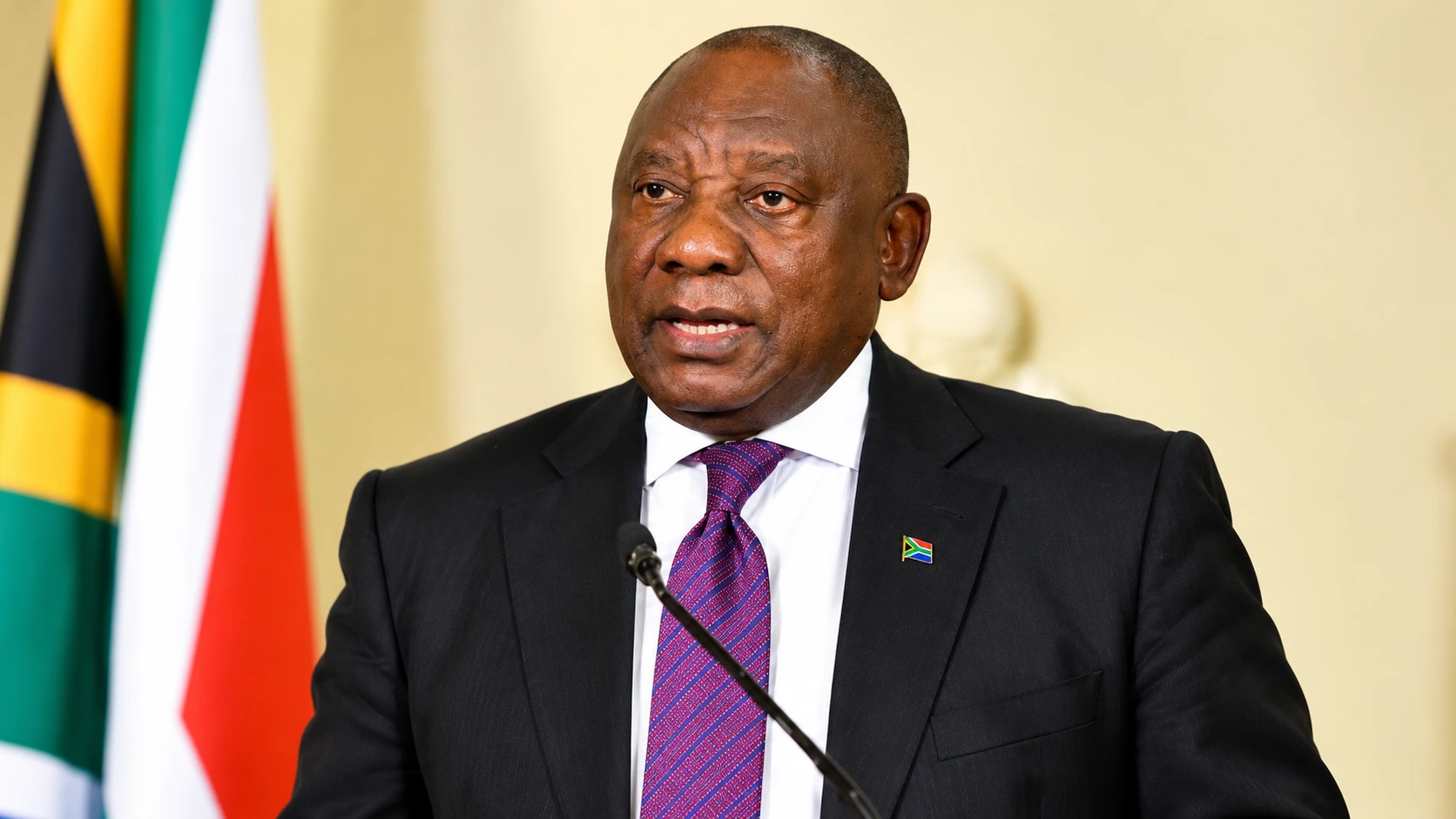
President Cyril Ramaphosa has said sorry to Tshwane residents after dirty tap water made hundreds of people sick in and around Bronkhorstspruit. At least 408 people came down with stomach illness. Most of them were little kids.
He spoke on Wednesday while campaigning in Daveyton, Ekurhuleni, with the 2026 local government elections around the corner. His point was blunt. National government had to step in because the City of Tshwane didn’t keep the water properly treated. An apology is easy to give, though. Families who went weeks without safe water want clean taps and honest answers.
What the president said
Ramaphosa told the crowd he was “very sorry” that so many people got sick. He said government had set up the National Water Crisis Committee to coordinate the response and get safe drinking water back to residents.
The message was simple. When a municipal plant fails, national government won’t sit back and watch.
How the outbreak unfolded
Health teams counted 408 cases of gastrointestinal illness between 7 and 18 October 2026. Rapid response teams from the national and provincial health departments, along with the City of Tshwane, have been on the ground since 13 October.
The worst day was 13 October, when 72 new patients showed up. By 18 October, the daily number had fallen to 16. No deaths had been reported when the official update came out.
The hardest hit areas include Zithobeni, Bronkhorstspruit, Dark City, Rethabiseng and Sokhulumi. They all sit in Tshwane’s Region 7. Officials say most patients were younger than four, which is heartbreaking for any parent to read.
Bronkhorstspruit Hospital opened an isolation area and added extra beds to cope.
Why the water was unsafe
The Department of Water and Sanitation found two big problems.
The water wasn’t chlorinated. From 24 September to 14 October, the Bronkhorstspruit Water Treatment Works ran without chlorine. The City had trouble with its chlorine supplier. Chlorine is a cheap, basic safeguard that kills many germs. Take it away and dirty water can end up in your glass.
The river was badly polluted. The plant takes its water from the Bronkhorstspruit River, and that river carries sewage. Some of it comes from broken wastewater works in the Victor Khanye municipality. Some comes from faulty sewage pump stations in Tshwane itself.
Tests found extremely high levels of E. coli and total coliforms in water from the plant and nearby reservoirs. The National Institute for Communicable Diseases found norovirus, Campylobacter and Shigella in three of the four patient samples it tested. All of them can cause cramps and diarrhoea.
A timeline at a glance
| Date | What happened |
|---|---|
| 24 September | Plant begins running without chlorine |
| 7 October | First cases in the official count |
| 13 October | Rapid response teams arrive; daily cases peak at 72 |
| 14 October | Chlorine gap ends; plant closed; tanker deliveries begin |
| 18 October | Official count reaches 408 cases |
| 19 October | Ministers brief the public on the findings |
The failure to warn residents
Here’s the part that stings most. It isn’t only about the missing chlorine. Water and Sanitation Minister Pemmy Majodina said the City never told residents their water wasn’t safe. The 2025 Compulsory Standards for Water Services say it must.
So people kept drinking the water. They had no reason not to. Small children paid for that silence. A quick alert on local radio, community WhatsApp groups or even a loudhailer could have changed things.
The department says it has started accountability steps against those responsible for the pollution and for breaking the water rules.
What the City of Tshwane is doing
Tshwane Mayor Dr Nasiphi Moya accepted that the City’s response fell short. She said Rand Water had advised isolating the plant and shutting down its supply. The City has now asked Rand Water to help speed up repairs and upgrades at the plant.
Moya said getting clean, safe drinking water back to people comes first. She added that the upgrades have to last, not just patch things up for a few months.
For now, 36 water tankers are bringing in drinking water from the Cullinan plant. Both the City and the national department tested that water in the lab, and it’s safe to drink.
The Water Research Commission has also been brought in to run independent water tests and dig into what caused the contamination. That matters. Residents are more likely to trust findings from someone who isn’t marking their own homework.
The politics behind the apology
The timing isn’t an accident. South Africans are heading to the polls, and water is a deeply emotional issue. Every burst pipe and sewage spill feels like proof that local government isn’t coping.
So Ramaphosa’s words will be read through that lens. Some people will see a leader who owns up. Others will ask why it took hundreds of sick people before national government stepped in. Both reactions are fair. The coming weeks will show whether the new committee actually delivers.
Majodina also called the Bronkhorstspruit plant a longstanding priority for the City. That hints the trouble didn’t start in September. Residents will want to know why earlier warning signs didn’t lead to action.
What residents should do now
Health authorities have shared some easy advice for people in the affected areas:
- Use tanker water for drinking and cooking.
- Get medical help early if you or your child has stomach cramps or diarrhoea.
- Report suspected cases to your nearest clinic or local health authority.
- Keep young children hydrated and watch them closely, since they’re most at risk.
For the full official update, read the joint media statement on the Bronkhorstspruit water situation on the South African government website. The SAnews report on the coordinated response also explains what government is doing.
What happens next
Government says it’s working towards a solution in the coming days. The job is simple to describe but hard to pull off. Bring back safe water, fix the treatment failures, and keep raw sewage out of the river.
In the end, residents will judge the response by what flows from their taps. The Bronkhorstspruit water crisis is a painful reminder that basics like chlorination and honest warnings save lives. When they’re skipped, it’s children who suffer first.
About the Author