
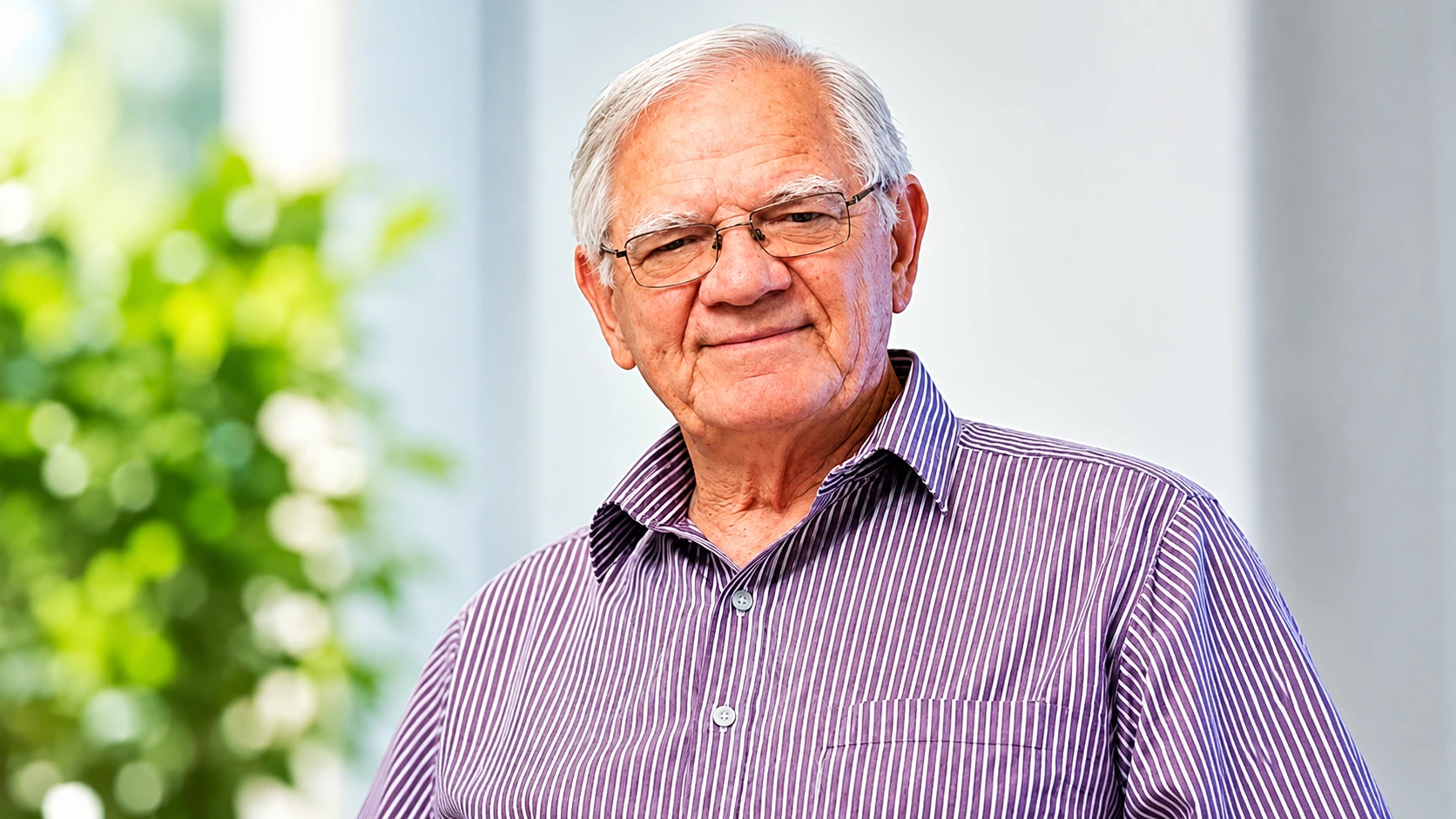
The search is over, and it ended in heartbreak. Saag Jonker, the respected Oudtshoorn ostrich farmer, was found dead in the Olifants River on Tuesday. He was 85. His brown Toyota Land Cruiser was swept off a low water bridge by floodwaters on Sunday, and teams searched for three days before finding him.
The news has hit the Klein Karoo hard. Many people knew him as a pioneer of the ostrich industry. Here is what we know so far, in simple terms.
What happened on Sunday
Sagaria “Saag” Jonker was driving home after his usual Sunday morning rounds of his farms. It was a routine he knew well. On the way, he came to a low water bridge in the Rooiheuwel area, about 3km outside Oudtshoorn.
The time was about 12.50pm. The river was in full flood. Heavy rain had fallen in the catchment area south of Beaufort West, and all that water was rushing down towards Oudtshoorn.
His family says he tried to cross. The current took his vehicle and carried it away.
Two people saw it happen. A security guard at a nearby guardhouse and a woman who lives close to the river watched the bakkie being pulled into the water. Both raised the alarm quickly. That is how the search and rescue effort began.
Three days of searching
The search was large and it did not stop. Many groups joined in:
- Police divers
- K9 search and rescue teams
- Oudtshoorn fire department crews
- Local police officers
- An AMS helicopter
- Drone operators
- Farmers and volunteers from the area
They combed the river and its banks for three days. The water was fast and dangerous, which made the work slow and difficult.
On Tuesday morning, the divers, K9 teams, local police and firefighters went back into the river early. By about 3pm, they had found the Land Cruiser. It lay at the bottom of the river, about 300m from the bridge where he was last seen. The body of a man was recovered with the vehicle.
What police have said
Warrant Officer Christopher Spies, a police spokesperson, confirmed that a vehicle and the body of a man were pulled from the river near Oudtshoorn. An inquest has been opened. A postmortem will take place later this week to find out the exact cause of death.
Police have not said more than that. Until the postmortem is done, the official cause will not be known.
A timeline of the events
A table makes the sequence easy to follow.
| Day | What happened |
|---|---|
| Sunday | Saag Jonker tried to cross the low water bridge at about 12.50pm. His Land Cruiser was swept away. |
| Sunday | A security guard and a nearby resident saw it and raised the alarm. |
| Sunday to Tuesday | Police, rescue teams, farmers and volunteers searched the river and its banks. |
| Tuesday | The vehicle and body were found at about 3pm, roughly 300m from the bridge. |
| Tuesday night | The Jonker family confirmed his death. |
| Later this week | A postmortem is expected. |
The family speaks
The Jonker family confirmed his death on Tuesday night. Their words showed both pain and peace. They said their hearts were very sore. They also said they felt gratitude and acceptance, because he had been found. It means they can bring him home and say a proper goodbye.
For any family, the wait is the hardest part. Three days of not knowing is a long time. Now they can begin to grieve.
Who was Saag Jonker?
To understand why this loss is felt so widely, you need to know what he built.
Saag Jonker started his business in 1976. It began from a modest base. Over the years, it grew into the Saag Jonker group. The group farmed ostriches, processed them, and exported ostrich products from the Klein Karoo to markets around the world.
That is not a simple achievement. Oudtshoorn is known as the heart of the ostrich industry, and his name became part of that story.
His work was also recognised by his peers. In 2000, the Agricultural Writers’ Association of South Africa named him Farmer of the Year.
Tributes from Oudtshoorn
Johan Allers, an Oudtshoorn councillor who leads the Freedom Front Plus in the town, spoke about the loss. He described it as a huge blow for the local business and farming community and for the whole Klein Karoo.
Allers said Jonker helped build Oudtshoorn’s name as the centre of the ostrich industry. He said his influence went well beyond his own farms. He built a large business, created jobs, and showed what hard work, perseverance and faith in the region could achieve.
Allers also pointed to the people behind the business. Jonker’s farms gave a living to employees and their families. That is why, he said, the loss is felt so widely.
He also shared a story from a 2011 farm awards ceremony. A worker won a prize that day. Jonker announced that the farm would write off the man’s car loan. The family had supported the worker and his siblings when their mother died. It is a small story, but it says a lot about the man.
Allers sent his thoughts to Hazel, Jonker’s children and the whole family. He said a community can honour a man for his achievements, but for loved ones the loss is deeply personal.
Thanks to the search teams
Allers also thanked everyone who helped in the search. That included police divers, emergency workers, farmers, farm workers and volunteers. He said their willingness to help showed how the Klein Karoo stands together in a time of need.
It is a fair point. Many of these people gave up three days to stand on a riverbank or work in dangerous water. Some were strangers to the family. They came anyway.
A hard reminder about flooded crossings
This tragedy is also a warning. Low water bridges are common in rural South Africa. In dry weather they are easy to cross. After heavy rain, they can turn deadly within minutes.
A river can be in full flood even when it is not raining where you are. In this case, the rain fell in a catchment area far south of Oudtshoorn. The water then travelled downstream. A driver near the bridge might see a clear sky and still face a raging river.
Here are some simple steps that can save lives:
- Never drive through a flooded low water bridge, even if it looks shallow.
- Check the weather warnings before you travel in rainy seasons. The South African Weather Service publishes forecasts and warnings that are easy to use.
- Ask locals or farm workers about river levels if you are unsure.
- Wait on the safe side. Water levels often drop after a few hours.
- Take another route if you can, even if it is longer.
Fast water is stronger than it looks. It can move a heavy vehicle quickly. If you are ever in doubt, turning back is the safest choice. Information on disaster preparedness is also available from the National Disaster Management Centre.
What comes next
The family now plans to bring Saag Jonker home. The postmortem will follow, and the inquest will continue. Police say the cause of death will be confirmed through those processes.
For Oudtshoorn, the coming days will be a time of mourning and remembering. Farmers, workers and business owners will reflect on what he built and how he treated the people around him.
The story of Saag Jonker is one of hard work, faith and generosity. He grew a small business into a name known far beyond the Klein Karoo. He gave people work, and he stood by them in hard times. His death is a sad end to a long and full life, but his legacy in Oudtshoorn remains.
About the Author