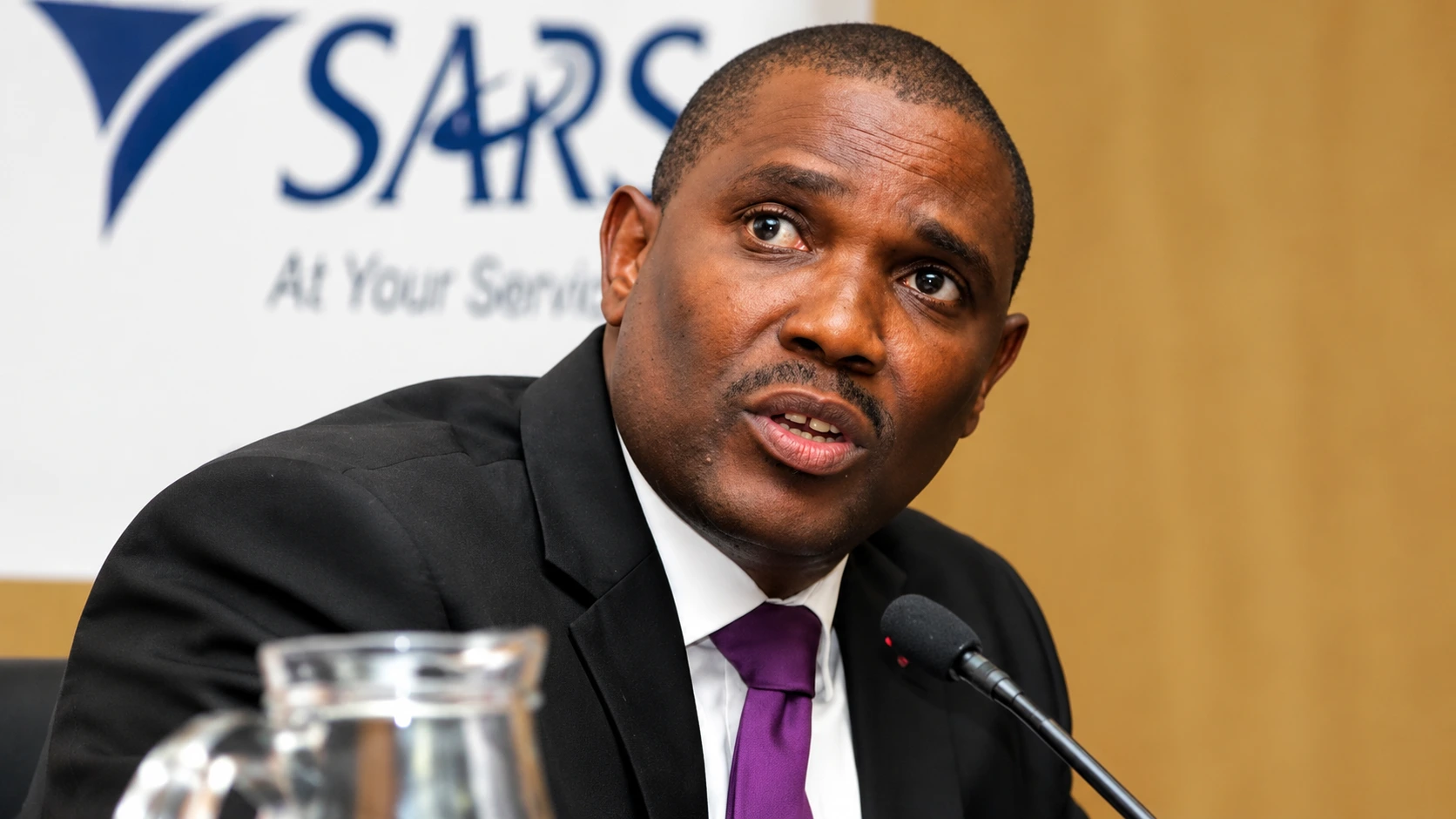
The South African Revenue Service (SARS) wants to make life much harder for criminals who sell smuggled and fake goods. The tax agency is working on smart security markers, similar to those used on banknotes, for cigarettes, alcohol and other taxed products. Commissioner Ngobani Johnstone Makhubu shared the plan this week. Here is a simple look at the johnstone makhubu sars illicit trade tender plan and why it matters to South Africans.
What SARS has announced
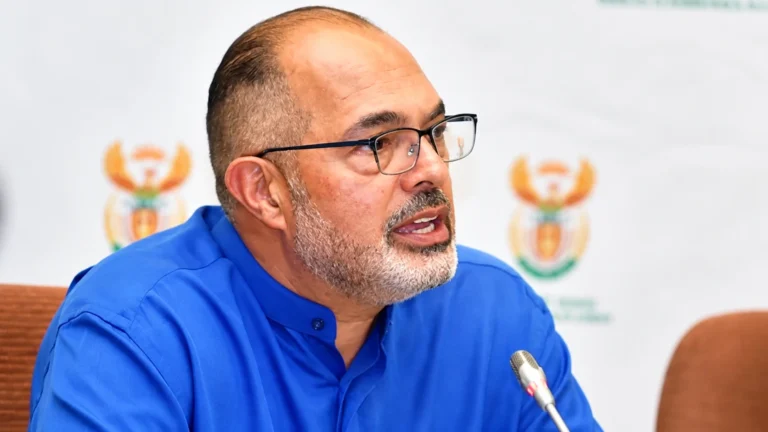
Makhubu spoke at a breakfast hosted by RMB after the Medium Term Budget Policy Statement. He said SARS is looking for a partner to help build an advanced marking system. The system would place smart, traceable labels on goods that carry excise duty.
The goal is simple. SARS wants to tell legal goods from illegal goods quickly and with confidence. Makhubu said the system must be easy for honest producers to use. It must also be impossible for criminals to copy.
SARS also wants stronger checks inside factories. The agency believes the best place to stop illicit trade is where products are made, not only where they are sold.
Why banknotes are part of the story
The idea has a clear logic. Banknotes carry security features that are very hard to fake. SARS wants to use the same type of protection, or something even better, on taxed goods.
Makhubu said SARS has been talking to the South African Bank Note Company, which is a subsidiary of the South African Reserve Bank. He said the government has been generous in opening this conversation. According to him, the markers found in banknotes are the same, or even better, than what SARS wants on excisable products.
This is not a random choice. The country already has experience with tough security technology. SARS now hopes to borrow that knowledge for the fight against illicit trade.
The tender is expected soon
Reports say SARS plans to issue a tender before the end of the calendar year. The tender will be for a technology solution that tracks products subject to excise duty and helps spot illicit trade.
The plan is not limited to one industry. The table below shows the products mentioned so far.
| Product group | Why it matters |
|---|---|
| Cigarettes | Long a target of smuggling and illegal factories |
| Alcohol | Subject to excise duty and exposed to diversion schemes |
| Pharmaceuticals | Named as part of the planned tracking solution |
| Sugary drinks | Covered by the Health Promotion Levy |
A tender is a formal call for companies to submit proposals. Reports so far do not say which company will win it. They also do not say how much it will cost. The full details should become clearer once the tender is published.
Smart counters to stop tampering
The marker system is only one part of the plan. SARS also wants smart counters that criminals cannot easily hack.
There is a reason for this. In 2021, SARS installed counters at tobacco manufacturers to monitor how many cigarettes were being produced. Those counters were later tampered with. That experience showed SARS that basic tools are not enough.
Makhubu has also raised another problem. Some companies, he said, keep two sets of financial books. One set goes to SARS. The other shows the real numbers. Better monitoring at production level could make that kind of trick much harder to hide.
SARS has tried this path before. In 2019, it issued a tender for track and trace marker technology for cigarettes. The aim then was to follow cigarettes from factories to shops. The new plan is bigger. It covers all excisable products, not just tobacco.
A multibillion rand problem
Makhubu says the illicit goods economy is worth about R280 billion. That is a huge sum. Every rand lost to illegal trade is a rand that cannot fund schools, clinics and roads.
SARS has said illicit alcohol schemes cost the state billions of rands each year. The agency also says illegal trade creates unfair competition for businesses that follow the rules. Honest traders must pay their taxes while others dodge them and sell cheaper.
There is also a safety side. SARS has warned that illegal alcohol can expose consumers to unsafe products. Nobody knows what is inside a bottle that never passed through proper controls.
Recent action shows the pressure
SARS has been busy on the ground too. In July 2026, SARS and the Hawks raided a warehouse in Kempton Park in Gauteng. They found thousands of litres of suspected ethanol with an alcohol content of 96%. Ethanol of that strength is commonly used as a base for making liquor. SARS said that, had the ethanol been legally imported, it would have attracted about R9.1 million in excise duties and taxes.
Makhubu said the operation showed the value of intelligence led enforcement. He said SARS aims to make breaking the rules hard and costly. He also warned that SARS will not tolerate brazen alcohol smuggling and tax evasion.
In 2023, SARS began destroying smuggled cigarettes worth R43 million at the Beitbridge border post. That included 2,000 master cases, or about 20 million cigarettes. SARS said at the time that it had zero tolerance for people involved in illicit trade.
These cases show a pattern. SARS is catching criminals after the fact. The new marker system aims to stop problems earlier.
What this could mean for ordinary South Africans
For most shoppers, the change should be easy to live with. A marker on a pack or bottle would simply be another layer of protection. It should not change how you buy your goods.
Still, the benefits could be real:
- More tax revenue for public services
- Fairer competition for legal shops and producers
- Fewer unsafe products on shelves
- Less room for criminal networks to profit
For honest producers, Makhubu said the system should be easy to access and use. That matters. A tool that is too hard to use would punish the wrong people. SARS says it wants the opposite, a tool that helps compliant businesses prove their goods are legitimate.
What to watch next
Several questions remain open. When exactly will the tender be published? Which companies will compete for it? How fast can the markers be rolled out across different industries? SARS has not yet answered all of these in public.
What is clear is the direction. SARS wants technology to do more of the heavy lifting. Instead of chasing smugglers on roads and borders, the agency wants to build checks into the product itself.
If the johnstone makhubu sars illicit trade tender moves ahead as planned, it could become one of the biggest changes to excise control in recent years. For now, the plan is still at an early stage. The coming weeks should show how serious and how detailed it really is.
You can read more about customs and excise on the official SARS website at www.sars.gov.za. For background on the national banknote system, visit the South African Reserve Bank at www.resbank.co.za.
About the Author