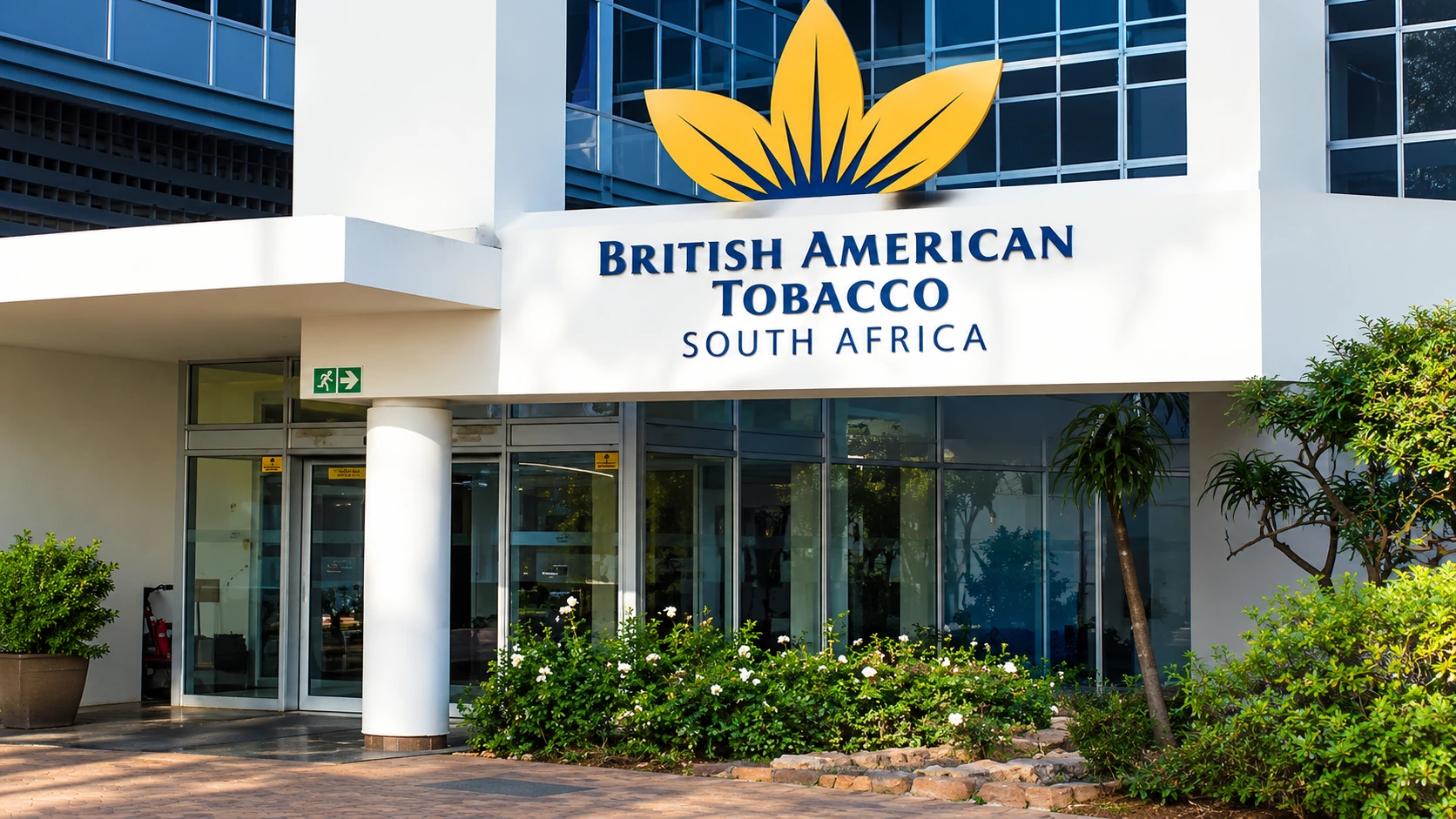
British American Tobacco (BAT) is about to close its only cigarette factory in South Africa. The company says the illicit cigarette trade has made local production impossible. It blames criminal networks for wrecking the legal market.
This is the R2 trillion international company that shut down its plant in South Africa because of crime, according to its own account. BAT is valued at more than R2 trillion on the Johannesburg Stock Exchange (JSE). Its warning is simple: if nothing changes, other industries could face the same fate.
What is happening at the BAT factory?
BAT makes well known brands such as Peter Stuyvesant, Pall Mall and Dunhill. Its Heidelberg plant in Gauteng was once the eighth biggest factory in the group’s global network. It also supplied customers across Southern Africa.
Things changed fast. Cheap illegal cigarettes flooded the market, and the plant ended up running at only 35% of its capacity. That is far too low for a factory to make money.
BAT announced the closure in January. The formal process started on 15 January, with talks involving affected workers and unions. BAT says it will still serve the South African market, but with imported products instead of locally made ones.
New research raises fresh alarm
Closing the factory is not the end of the story. On 13 October 2026, BAT South Africa released new research done by the research firm Ipsos. The company paid for the study, so readers should keep that in mind. Even so, the numbers are hard to ignore.
The study checked whether shops were selling cigarettes below the minimum collectable tax (MCT). This is the lowest price at which a pack could be sold while still covering the tax owed. It currently sits at R27.12 per pack. Selling below that figure suggests the tax was never paid.
Here is what the research found:
- About 75% of the shops surveyed sold packs below the MCT.
- Packs priced under R20 were on sale in almost two thirds of shops.
It is easy to see the problem. A legal manufacturer cannot compete with a pack that costs less than the tax alone.
A crackdown that has not worked yet
The findings arrive only months after President Cyril Ramaphosa announced the National Illicit Economy Disruption Programme. It is also called Operation Ukubusa. The plan aims to fight organised crime, illegal trade and economic offences across the country.
BAT says the shelves tell a different story. In its view, the crackdown has not yet slowed the illegal cigarette trade.
Johnny Moloto, BAT’s head of corporate and regulatory affairs for Sub Saharan Africa, said the president had rightly seen the danger. However, he argued that illegal manufacturers are still operating freely and selling below the tax due on each pack.
He also called on the South African Revenue Service (SARS) to show that there are real consequences for companies that profit from illegal trade.
How big is the illegal market?
BAT estimates that illicit cigarettes now make up about 75% of all cigarette sales in the country. That is a huge share. It means only about one in four packs sold is likely to be fully legal.
The company warns that the legal industry could disappear altogether if enforcement does not get better. Moloto put it bluntly. He said South Africa is losing the fight against illicit tobacco and could end up with a market that is entirely illegal.
The cost to the country
The damage goes beyond one company. BAT says the illegal trade costs the state around R30 billion every year in lost excise tax. That is money that could pay for schools, clinics and roads.
There is also the question of jobs. Legal factories employ people, pay taxes and follow rules. When they shut, workers lose income and communities feel the impact. Criminal operators do none of those things.
Moloto described the Heidelberg closure as a warning sign. In his words, it shows the rest of the economy what could happen if officials do not get serious about illicit operators. In other words, tobacco may only be the first industry to feel the pressure.
What BAT wants the government to do
BAT has made two main requests. Both are meant to make enforcement easier.
A minimum retail price of R38
The company has repeatedly asked for a minimum retail price (MRP) of R38 per pack. It says the idea is simple. If a pack sells for less than the set price, it is a red flag.
BAT argues that the current system is far too complicated. Police must read through several laws and often need experts from other departments to prove that cigarettes are illegal. A fixed price floor would give officers an easy way to spot suspect products.
SARS has also spoken about this kind of measure in the past. It described a minimum price as a way to level the playing field in the tobacco market.
Tougher action against tax cheats
BAT also wants manufacturing licences taken away from companies that repeatedly under declare production or dodge tax. This is a fair point for many people. If rule breakers keep their licences, honest firms are left at a disadvantage.
Why this matters to ordinary South Africans
You may not smoke, and you may not care about cigarettes. Still, the story is bigger than tobacco.
When illegal goods take over a market, three things tend to happen. First, tax revenue falls, so the state has less to spend. Second, legal jobs disappear, because formal businesses cannot survive. Third, criminal groups grow stronger, because they earn cash with little risk.
That is why the closure of a major factory matters. It shows how fast a legal industry can collapse when crime pays better than following the rules.
You can read more about how tax rules work on the official SARS website. For details on government programmes and announcements, visit the South African Government portal.
What happens next?
The Heidelberg plant is only months from shutting for good. Whether the government can turn things around remains to be seen. The president’s plan is still fairly new, and enforcement takes time.
BAT, for its part, says the tools already exist. Moloto said the government has the means to fix this and that the time to act is now. He also pointed out that the international community is watching.
It is worth remembering that these claims come from a company with its own business interests. The research was commissioned by BAT, and SARS or other officials may see things differently. Still, the main facts are clear. A major plant is closing, a large share of cigarettes sold may be illegal, and the state is losing billions in tax.
The bottom line
The R2 trillion international company has made its decision. After years of pressure from the illicit cigarette trade, BAT will end local production and rely on imports. For workers in Heidelberg, that is hard news.
For the rest of the country, it is a wake up call. A simple rule applies: when criminals can undercut honest business, honest business eventually leaves. Fixing that will take stronger enforcement, clearer pricing rules and real consequences for those who break the law. None of this is easy, but BAT believes it is possible.
About the Author