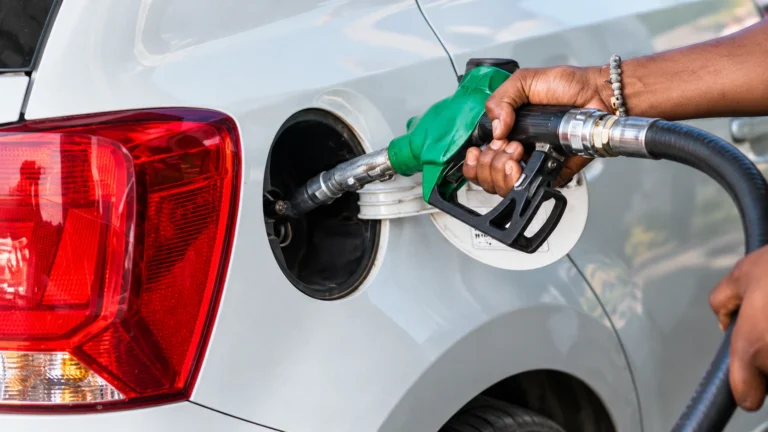
Motorists have barely absorbed the October increase, and a bigger one may already be on the way. Early data points to a south africa november petrol price hike that could be the biggest single jump of the year. Petrol could rise by about R4.60 a litre, while diesel could go up by roughly R2.60 a litre.
It is still early, and the numbers can change. But the warning signs are strong, and they matter to anyone who drives, commutes or buys groceries. Here is a simple breakdown of what is happening.
Where fuel prices stand right now
The October adjustment, which took effect on 7 October, pushed petrol and diesel to the highest levels ever recorded in the country. This is not a small bump. Petrol has gone up by about a third since January.
Diesel has taken an even heavier hit. It has roughly doubled this year, from about R17 a litre in January to more than R34 a litre now. That is the largest yearly rise on record.
So the south africa november petrol price hike would land on a base that is already painfully high. That is why economists are sounding the alarm so early.
What the early data shows
The warning comes from the Central Energy Fund (CEF). The CEF tracks something called the under recovery. In simple terms, this is the gap between what South Africans currently pay at the pump and what it actually costs to import fuel.
Right now, the CEF figures show a petrol gap of about R4.60 a litre. That gap has two parts:
- More than R4.00 a litre comes from higher international fuel prices.
- Around 50c a litre comes from a weaker rand.
Annabel Bishop, Chief Economist at Investec, says the main driver is the global oil price. Oil has stayed above $100 a barrel. Before the Iran War, it sat near $65 a barrel. A weaker rand makes things worse, because South Africa buys its fuel in dollars.
Bishop warned that these two forces together point to more large fuel price increases next month.
The early projections at a glance
It is easy to lose track of the different fuel grades, so this table keeps it simple. These are early CEF projections and are not final.
| Fuel type | Projected increase per litre |
|---|---|
| Petrol 93 | R4.29 |
| Petrol 95 | R4.58 |
| Diesel 0.05% (wholesale) | R2.56 |
| Diesel 0.005% (wholesale) | R2.91 |
| Illuminating paraffin | R5.00 |
Paraffin stands out here. Many low income households rely on it for cooking and heating, so a R5.00 jump would hurt them badly.
If these figures hold, the November petrol increase would be larger than any petrol rise so far this year. Bishop also noted that petrol is now on track to keep climbing toward double its January level.
Why diesel matters to everyone
You may not drive a diesel car. Even so, a diesel price increase reaches your wallet in less obvious ways.
Diesel powers trucks, farm equipment and delivery fleets. When it gets more expensive, it costs more to grow food and move it to the shops. Bishop pointed out that diesel is a key driver of producer inflation. The farming and freight industries have already said their costs are rising after the October increases.
She described the situation as a very heavy burden on producers, with no renewed government support so far. That means businesses will likely pass at least some of the extra cost on to customers.
There is also the wider inflation picture. Another big petrol jump could push consumer inflation above 5.0% compared with a year ago. It would also put direct pressure on commuters, who have little choice but to pay more to get to work.
Will government step in?
Calls for relief have grown louder. Bishop says a cut to the general fuel levy is warranted again. Similar calls began in September, when petrol was approaching the R30 a litre mark.
There is precedent. In April 2026, National Treasury cut fuel levies by R3.00 a litre to soften the blow. That relief cost more than R17 billion. Back then, Treasury could cover part of that cost through stronger than expected commodity exports.
Those conditions are not in place today. In September, Finance Minister Enoch Godongwana said any further relief would have a cost to the budget, and that the money would have to be found elsewhere. Treasury has not ruled out more help, but it has played down expectations.
The trade offs are not easy. Funding another levy cut could mean:
- Budget cuts that hurt economic growth, or
- More borrowing that adds to government debt.
For the latest on levies and budget decisions, readers can follow updates from National Treasury.
How the fuel price is worked out
The process is not as complicated as it sounds. Each month’s fuel price depends on two things from the previous month: the exchange rate and international petroleum product prices.
So what happens during October decides what you pay in November. The CEF recalculates its figures every day, which means the projection moves up and down constantly.
This is why Bishop urged caution. It is still early in the review period, and the final November change may not be as large as the current signal. Even so, she stressed that the risk is clear. Big transport cost increases are again being signalled, and the October hikes have already taken local fuel prices to historic highs.
If the rand recovers or oil prices ease, the number could shrink. If the rand weakens further or oil climbs, it could grow. Official announcements come from the Department of Mineral and Petroleum Resources, so that is the place to check once the final adjustment is confirmed.
What this means for ordinary South Africans
Most households will feel this in three places.
At the pump. A R4.60 rise on a full tank adds up quickly. Anyone who fills up often will notice it straight away.
In public transport. Commuters who rely on taxis, buses or lift clubs could see fares rise if operators pass on higher fuel costs.
At the shops. Higher diesel costs usually show up in food and goods prices over time, because everything moves by truck.
There is no magic fix, but a few simple habits can help. Plan trips so you combine errands. Keep your tyres properly inflated. Avoid carrying extra weight in the boot. These are easy changes, and they will not solve the problem, but they can take a little pressure off your budget.
It also helps to watch the daily CEF data trend in the weeks ahead. If the projected increase shrinks, you will know relief may be coming. If it grows, you can plan ahead.
The bottom line
The early signs point to a heavy south africa november petrol price hike, driven by expensive oil and a weak rand. Petrol could rise by about R4.60 a litre and diesel by about R2.60, on top of record highs already reached in October.
Nothing is final yet. October’s exchange rate and oil price movements will decide the real outcome. For now, the message from economists is simple: prepare for the possibility of another painful month. The final figure will be announced officially, and we will keep you updated as the picture becomes clearer.
About the Author