A deadly crash on the N1 at Gyser, near Astron Garage in Limpopo, has left three women dead and four other people in hospital. A truck carrying passengers and goods overturned after a tyre puncture, and the road is now only partly open. If you’re travelling through the area, expect a slow, frustrating trip.
What happened on the N1 at Gyser
The Limpopo Department of Transport and Community Safety confirmed the crash. It happened on Wednesday night, 7 October 2026, on the N1 at Gyser in the Capricorn District, close to Astron Garage.
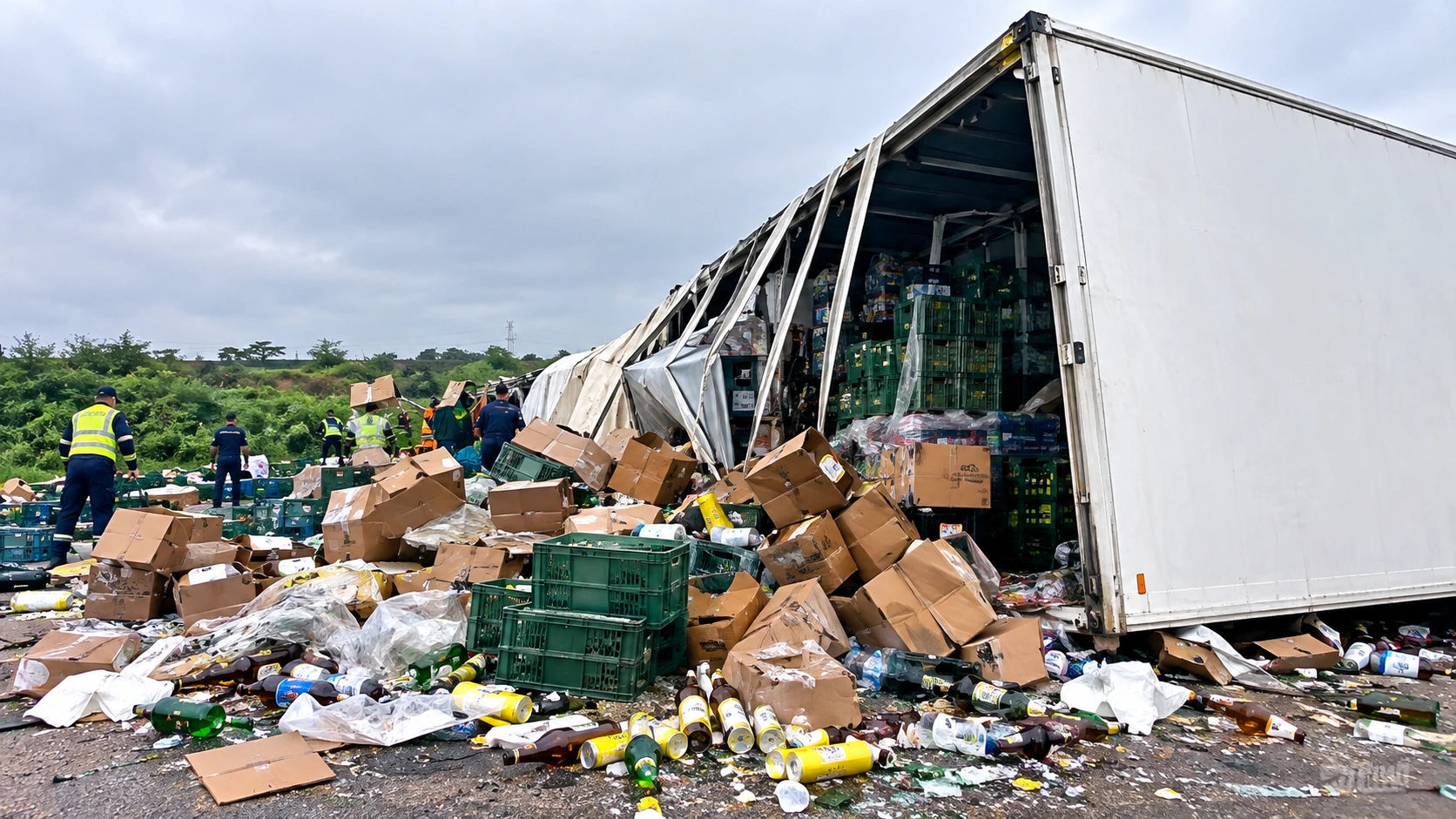
According to early reports, the truck was carrying both passengers and goods when a tyre burst. The driver lost control, the truck rolled over, and a big part of the road ended up blocked.
Anyone who uses the N1 regularly knows how busy it gets. Trucks, taxis, buses and family cars share the same road all day and night. So when a heavy vehicle goes over, the ripple effect is quick. Queues build, tempers rise, and a simple trip turns into a long wait.
Who was hurt
Three women, aged between 26 and 35, died. Officials say they suffered fatal injuries in the crash.
The male driver and three children were hurt too, and all four were taken to hospital. We don’t yet know how serious their injuries are, and the department hasn’t said. These are preliminary details, so things may change once the investigation moves forward.
Behind every figure in a report like this is a family that has just had its life turned upside down. That’s worth remembering before we scroll past.
Which lanes are blocked
The N1 isn’t fully closed, but it’s close to it in practice. Here’s what the department reported:
| Direction | Situation |
|---|---|
| Mokopane towards Polokwane | One lane is open to traffic |
| North to south direction | Two lanes are blocked |
| South to north direction | Part of the lane is blocked |
Traffic officials are at the scene, and the N1 Brigade is doing point duty. In plain terms, officers are standing on the road and waving vehicles through the gap one by one. It’s slow, but it’s the safest way to keep things moving while the scene is still active.
Why a heavy recovery vehicle matters
Drivers have been warned that more delays are coming. A heavy duty recovery vehicle is on site to lift the overturned truck off the road.
That sounds like an easy job, but it really isn’t. A truck on its side can be unstable, especially if it still has cargo on board. The crew has to move it slowly and carefully so nobody else gets hurt. They also need room to work, and that’s why the lanes stay shut for hours instead of minutes.
So don’t count on a quick fix. If you haven’t left yet, check for updates first. Official road authorities usually post changes as they happen.
Alternative routes to use
The department has pointed drivers to the R101 as an alternative route. The plan is fairly simple:
- Going from Mokopane to Polokwane, take the R101.
- Going from Polokwane towards the south or Mokopane, use the R101 and join the N1 again in Mokopane.
Keep in mind that lots of other drivers will have the same idea. The R101 may get busy, so give yourself extra time even on the detour. If you don’t know the road well, open a map app before you set off. It takes half a minute and can save you a very long wait.
What may have caused the crash
For now, the possible cause is the tyre puncture. Investigators believe the burst tyre made the driver lose control.
They’re also looking at overloading. To be clear, that hasn’t been confirmed as the cause. It’s simply one of the things being checked. Still, we all know that a heavily loaded truck is harder to steer and slower to stop. If a tyre fails on a vehicle like that, there’s very little room for error.
Let the investigators finish their work. Until they do, it’s best not to guess or pass around rumours on WhatsApp and social media. The families don’t need that.
Why tyre safety is so important
Most of us only think about our tyres when something goes wrong. But they’re the only part of your vehicle that actually touches the tar, so they deserve a bit more attention.
A few simple habits go a long way. Check your tyre pressure often, and always before a long trip. Look at the tread, because worn tyres grip badly. Run your eyes over the sidewalls for cuts, cracks or bulges. Don’t carry more than your vehicle is built for. And if a tyre is old, replace it, even if it still looks fine.
None of this takes long. For truck and taxi operators, a quick tyre check should be part of the daily routine, just like fuel. It’s an easy habit that can save lives.
The danger of carrying people on goods trucks
This crash is also a sad reminder of why people shouldn’t travel on trucks built for goods. These vehicles have no proper seats, no seatbelts and no crash protection for passengers. When one overturns, people can be thrown out or trapped under the load.
The law sets out clear rules on how people may be transported. If you’d like to read more about road safety and the work of the Road Traffic Management Corporation, visit the RTMC website. The RTMC works with provinces and municipalities on road safety and enforcement across the country.
Passengers can help too. If a vehicle looks overloaded, damaged or just unsafe, you’re allowed to say no. A cheaper fare isn’t worth your life.
Advice for drivers on the N1 today
If you have to use the N1 near Gyser, a few things will make your trip easier.
Slow down early, because queues can appear suddenly around bends and rises. Listen to the traffic officers and the N1 Brigade, since they know the safest way through. Leave a decent gap between you and the vehicle in front. Don’t overtake where you shouldn’t, no matter how long the line looks.
It also helps to plan ahead. Take water, charge your phone, and tell someone when you expect to arrive. And if the R101 works for your trip, use it. A simple detour is almost always better than sitting in a queue for hours.
One last thing. Please don’t stop to film the scene. It slows everyone down, it puts you at risk, and it’s disrespectful to the victims and their families.
Staying informed about road conditions
Things can change quickly after a serious crash. A lane that’s closed now might open later, or another one might close if the recovery work needs more space.
For news on national roads, you can check the South African National Roads Agency at SANRAL. The Limpopo Department of Transport and Community Safety, which issued the notice about this crash, is also a good source to follow on its official channels.
If you’re travelling for work, send a quick message to your customers or colleagues about the possible delay. It takes a minute, and it stops you from rushing later to make up the time.
A shared responsibility
The department ended its notice with a short line: road safety is a shared responsibility. After a crash like this one, it’s hard to argue.
Drivers need to keep their vehicles in good shape and respect load limits. Operators must make sure their trucks are roadworthy. Passengers should speak up when something feels wrong. And authorities have to keep enforcing the rules.
Three women have died. A driver and three children are in hospital. Their families now face an extremely hard time. The least the rest of us can do is learn from this and drive with more care.
Final word
The N1 at Gyser near Astron Garage is still partially closed after the fatal crash. One lane is open from Mokopane towards Polokwane, while the others are blocked. The R101 is the suggested alternative route, and a heavy duty recovery vehicle is working to remove the overturned truck, so more delays are likely.
A tyre puncture is the possible cause, and overloading is also under investigation. Until the full facts come out, stay patient, slow down and follow the officers on the road.
Check your tyres, respect load limits and plan your trip before you leave. These are simple steps, but they help keep our roads safer for all of us
About the Author