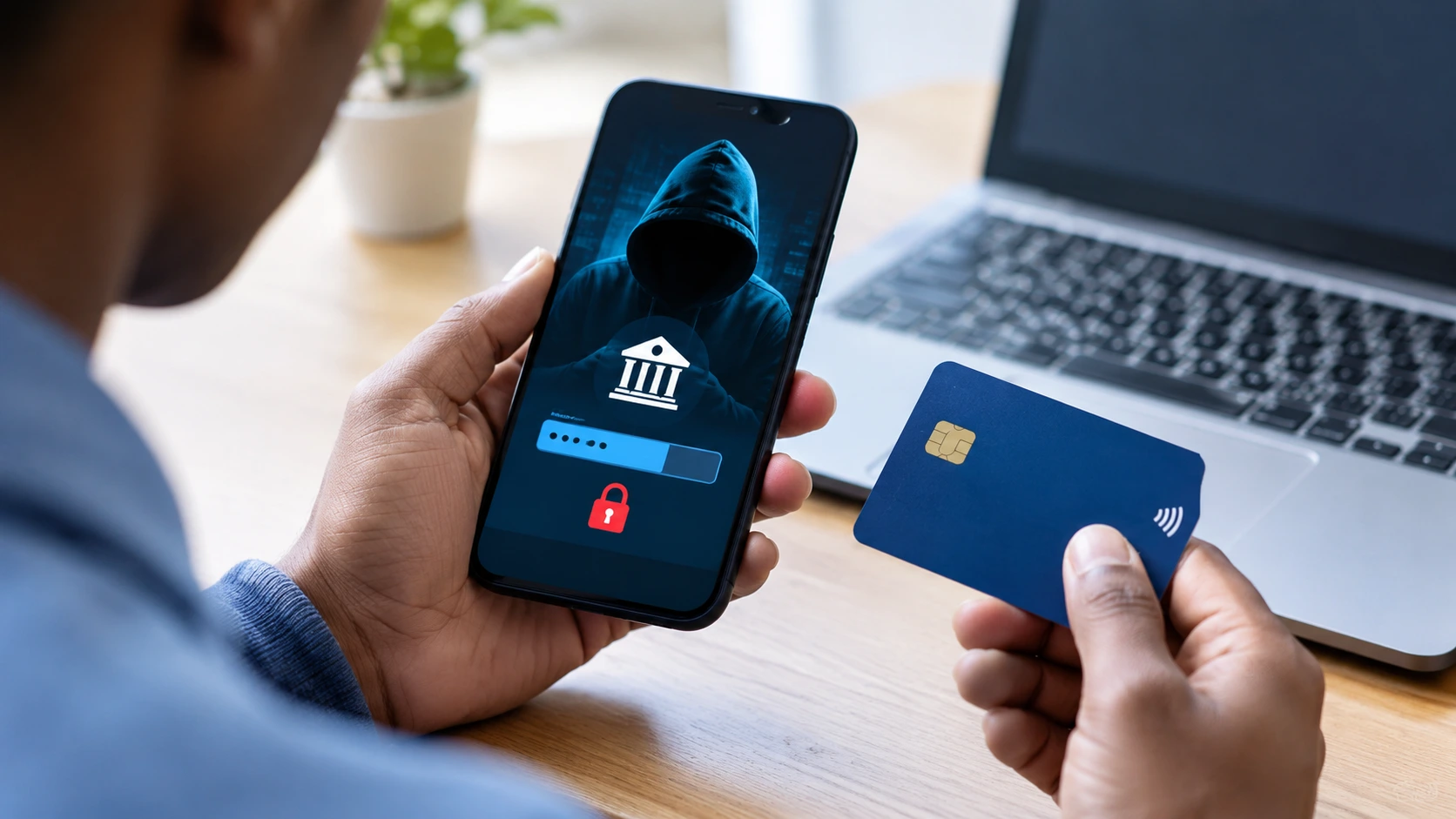
South Africans lost about R2.4 billion to digital banking fraud in 2025. That’s according to the South African Banking Risk Information Centre, better known as SABRIC. Its 2025 Annual Crime Statistics Report doesn’t sugarcoat it. The report calls digital banking crime the biggest threat the sector faces.
Big numbers can feel distant. They shouldn’t. Every rand in that total belongs to someone who picked up a call, tapped a link or answered a message. Below, we’ve kept things simple so you can see what’s going on and what to do about it.
What the SABRIC report says
Client claims for digital banking crime came to about R2.4 billion. They came from 110 074 reported incidents, which puts the average loss at around R21 865 per incident.
A quick word on that average. It counts incidents, not people. Some victims get hit more than once, and plenty of cases involve small amounts. So don’t read it as what a typical victim lost. It’s a simple way to gauge the scale, nothing more.
The direction matters more. Claims were roughly R1.09 billion in 2023 and about R1.9 billion in 2024. The 2025 figure is around 29.2% higher than 2024, though outlets round the 2024 base a little differently, so you may see slightly different percentages. Either way, the south africa digital banking fraud losses recorded in 2025 are more than double the 2023 level.
Where the money is being lost
Banking apps are where most of it happens. App related crime made up about 89% of cases and 70.5% of the claim value. That makes sense when you think about it. Apps are easy to use, and lots of people bank on their phones every day.
The table lays out the split in an easy way.
| Channel | Share of cases | Share of claim value |
|---|---|---|
| Banking apps | About 89% | About 70.5% |
| Internet banking | Under 9% | About 28.6% |
| Mobile banking | Under 3% | Under 1% |
Internet banking is the odd one out. It accounted for under 9% of cases but almost 29% of the value, which suggests the losses per case are bigger there. Mobile banking was a tiny slice, although SIM swap fraud is linked to it.
How the scams actually work
Most of these attacks target people, not bank systems. The criminals aren’t hacking their way in. They’re talking their way in. The reports list a few favourite methods:
- Impersonation, such as a caller posing as your bank
- Voice phishing, meaning scam phone calls
- Remote access software that lets a fraudster take control of a device
- False payment instructions
SABRIC also warns that artificial intelligence is making scams harder to spot.
The script usually starts with a false emergency. Your account is “compromised”, and they need your PIN, password or one time PIN to fix it. Other tricks include WhatsApp messages from unknown numbers pretending to be a relative, fake competitions, and investment offers promising big returns with no risk. Some scammers pose as retirement officials and offer to unlock your two pot retirement money for an upfront fee.
The trick is usually simple. Scare people or excite them, then rush them.
Cards, ATMs and other fraud
It’s not only digital channels. Card fraud losses climbed 18% to R1.7 billion, and SABRIC calls card not present fraud one of the most significant fraud types hitting consumers.
ATMs tell the opposite story. ATM attacks dropped 46%, and cash losses from them fell 63%. Physical crime against banks is shrinking, while fraud aimed at customers keeps growing.
Lending fraud moved too. Fraudulent vehicle asset finance applications rose 41%, and the value of those declined went up 43.8%. Fraudulent unsecured lending applications fell 34%.
A R800 000 loss and the risk for older South Africans
One case shows how convincing these calls can be. A representative of NMG Benefits shared how his mother was targeted by people pretending to be her bank’s fraud department. They asked for her PINs, then used them to approve the theft. She lost R800 000. He said the criminals knew enough about her accounts to sound credible.
That’s one family’s story, and it isn’t part of the SABRIC statistics. But it shows how an easy phone call can turn into a life changing loss.
Christopher Boxall, head of card transact at FNB, says cases involving customers over 55, and especially over 60, are climbing month by month. He says it’s an industry wide trend. The report adds that older customers may be less familiar with authentication steps and more likely to trust someone who sounds official. Keep in mind these are views from a bank executive, not SABRIC findings.
Simple steps to protect yourself
The advice is practical, and most of it is easy to follow.
- Never share PINs, passwords or one time PINs with anyone claiming to represent your bank.
- If a call or message feels off, hang up. Then phone the bank on a number you found yourself.
- Use strong, unique passwords.
- Turn on two factor authentication wherever it’s offered.
- Protect your personal details and dispose of sensitive documents safely.
Here’s a simple rule worth remembering. Nobody who truly represents your bank needs your security codes. If they ask, that’s your red flag, however calm or professional they sound.
Slow down too. Scammers rely on speed. Hanging up and calling back is an easy habit, and it could save you a lot of money.
What businesses should keep in mind
If your business pays staff, suppliers or contractors through banking apps, you’re exposed to the same tricks. False payment instructions are on the list of tactics, so an urgent request to change bank details or send money fast deserves a second look.
A simple check does the job. Call the person or supplier on a number you already have, not the one in the message. It takes a minute, and it’s easy to build into your payment routine.
The bottom line
The story of south africa digital banking fraud losses in 2025 comes down to trust. Criminals aren’t smashing through bank walls. They’re getting people to open the door. With R2.4 billion gone across 110 074 incidents, that trust has become very expensive.
The good news is that the main defences are easy to use. Guard your codes, verify contacts on your own, and be wary of anything urgent. And if you have older relatives, talk to them this week. It’s a simple conversation, and it might protect their savings.
About the Author