Johannesburg drivers know the feeling. You head down a busy road, pass under a bridge and never think twice. But what if that bridge is not as safe as it looks?
That is the question Helen Zille wants voters to ask. The DA Johannesburg mayoral candidate has launched a campaign that points at the city’s ageing bridges. It has also landed her in a row with the Johannesburg Metro Police Department. Here is a simple breakdown of what happened.
What Zille did on the M1
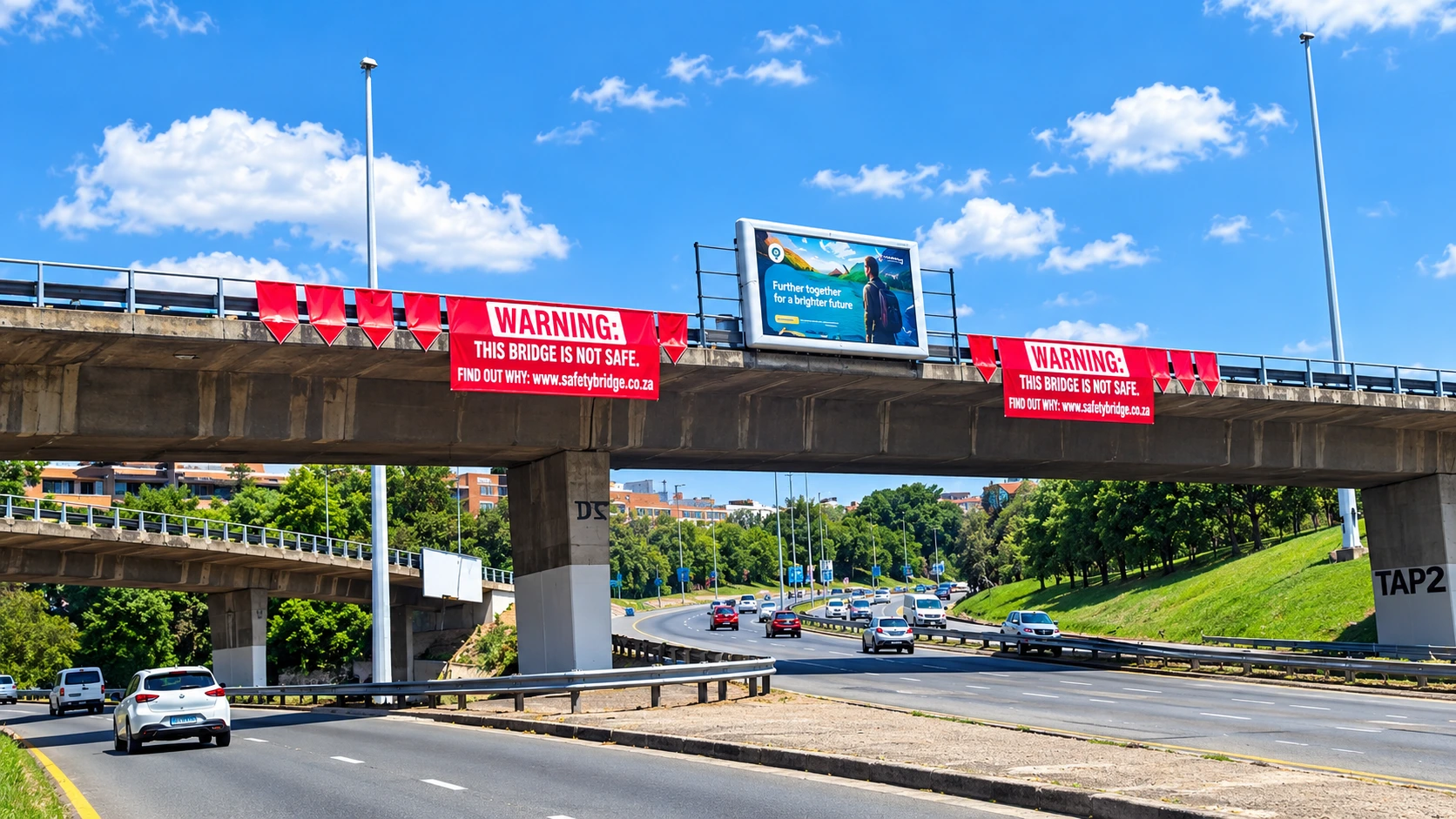
On Saturday, 3 October 2026, Zille held an event on a worn stretch of the M1. She stood in front of a bridge that, in her words, is crumbling. She also said the exit ramp next to it is in even worse shape.
Her message to drivers was easy to follow. Many bridges in Johannesburg are in poor condition, and most motorists have no idea. People drive over them and under them every day without a second thought. She called that a safety hazard.
She did not stop at one bridge. She said the M1 structure is only one of many across Joburg, and some are in a worse state.
The audit she keeps pointing to
Zille leaned on an old report to make her case. She said the City carried out an audit of bridges about eight years ago. According to her, the audit warned that the structures needed quick attention. The reason was a lack of maintenance, which was pushing them towards unsafe conditions.
She then quoted a figure that grabbed attention. By her account, the City’s own statistics show that 78 percent of its bridges need urgent maintenance and repair. They are rated either bad or very bad.
That is a big number. If it is correct, it means most bridges in the city need work. Readers who want to follow up can check the City of Johannesburg website at joburg.org.za for official notices, reports and service contacts.
It helps to be clear on one point. The figure comes from Zille’s statement at the event. She said it is based on the City’s own data. Anyone who wants to verify it should ask the City for its latest bridge condition report.
Why drivers and pedestrians should care
Bridges are not just concrete and steel. They carry thousands of people every day. Some carry cars on top. Others shelter pedestrians and traffic below.
Zille made this point herself. She said both motorists and pedestrians often do not realise what state a bridge is in. You cannot easily spot a weak structure from the driver’s seat. A bridge can look fine from far away and still have deep problems.
That is why regular inspections matter so much. They are a simple and low cost way to catch faults early. Ignoring them can lead to bigger repair bills later. Worse, it can put lives at risk.
The posters that caused the problem
The campaign did not go smoothly. Part of the event involved putting posters on the bridge. This is where the JMPD stepped in.
JMPD spokesperson Xolani Fihla said placing posters on bridges is not allowed. He said the DA would be fined for it. He also said the metro police would speak to the Independent Electoral Commission, known as the IEC, to look at what further steps could be taken.
Fihla was blunt about the rules. Political parties, he said, must follow municipal bylaws. He added that the posters on the bridge would be removed and that the matter would be taken forward.
The IEC is the body that oversees elections in South Africa. If you want to understand how election campaigns are meant to run, the IEC website is the best place to start.
Zille’s response
Zille did not deny the permission issue. She admitted the party had not asked for official approval for the event. She also said it was organised by the national DA together with the provincial DA.
Still, she stood by the campaign. She rejected the idea that this was a gimmick. In her view, telling the public that a bridge is dangerous is a public service. She said the aim was to warn drivers about a very risky bridge so they know what they are driving under and over.
So there are two sides here, and both are easy to understand.
One side says warning the public about unsafe infrastructure is useful and urgent. The other side says rules are rules, and parties cannot pick which ones to follow.
A quick look at the key facts
Here is a simple summary of the main points from the story.
| Issue | What was said |
|---|---|
| Who launched the campaign | Helen Zille, DA Johannesburg mayoral candidate |
| Where it took place | A damaged section of the M1 in Johannesburg |
| Main concern | Crumbling bridges that may be unsafe for motorists |
| Audit mentioned | A City bridge audit from about eight years ago |
| Claim on bridge condition | 78 percent need urgent repair, based on City statistics |
| JMPD position | Posters on bridges are not allowed, so the DA faces a fine |
| Next step from JMPD | Talks with the IEC about further action |
| Zille’s position | No permission was sought, but she calls it a public service |
Politics and public safety do not always mix well
It is worth stepping back. This story sits right where politics meets public safety. That is a tricky place.
A campaign event always has a political goal. The DA wants votes, and a mayoral candidate who points at city failures is making her pitch. Voters should keep that in mind.
But a political motive does not automatically make a claim false. The question that matters is whether the bridges are actually in a bad state. That is a matter of facts, not party colours. The answer should come from engineers and the City’s own records.
The same goes for the poster dispute. Whether or not you like the DA, the bylaw question is real. Fines and removals are normal steps when rules are broken. How the IEC responds will be worth watching.
What Joburg residents can do
You do not have to wait for politicians to settle this. There are easy steps any resident can take.
- Report visible damage. If you see cracks, falling concrete or exposed metal on a bridge, report it to the City. A short message with the exact location is usually enough.
- Take photos. A clear photo helps officials find the problem fast. Note the road name and the nearest landmark.
- Ask for the facts. Residents can ask the City for updated information on bridge inspections and repair plans. Ward councillors can help with this.
- Stay alert. Slow down near damaged structures. Keep away from areas where debris could fall.
- Follow the rules. If you support a cause, use legal ways to show it. Posters on bridges are not one of them, according to the JMPD.
These steps are simple and cost nothing. When many people report problems, the pressure to fix them grows.
Why this story matters beyond one bridge
Johannesburg is South Africa’s largest city. Its roads carry workers, taxis, buses and trucks every single day. When the infrastructure is weak, the whole city feels it.
A crumbling bridge is not only a repair issue. It is a trust issue. Residents pay for services and expect safe roads in return. When warnings sit in an old audit for years, people start to lose faith.
That is why Zille’s campaign has struck a nerve, even among those who dislike how it was done. The maintenance backlog is the real story underneath the noise. It will not go away because a poster was taken down.
What to watch next
Several things are still open.
First, will the DA be fined, and how much? The JMPD says a fine is coming, but no amount was mentioned.
Second, what will the IEC do after the talks with the metro police? The outcome could shape how parties run street events in future.
Third, and most important, will the City of Johannesburg respond to the bridge claims? A clear public update on the condition of its bridges would be easy to give and would help calm fears. It would also settle the argument about the 78 percent figure.
The bottom line
Helen Zille took her campaign to the M1 and warned that Johannesburg’s bridges are in trouble. She says the City’s own numbers back her up. The JMPD says she broke the rules by putting up posters and that the DA will be fined.
Both things can be true. A bridge can be unsafe, and a party can still break a bylaw while pointing it out. For ordinary residents, the lesson is simple. Keep your eyes open, report what you see and ask for facts from the people who run the city.
Safe roads should not depend on election season. They should be a basic promise, every day of the year.
About the Author